Best Electric Guitar Strings: Top Types for Every Player
The right electric guitar strings define tone, feel, and intonation. This guide highlights five top options for American players seeking bright, reliable, and long-lasting strings across common gauges. Perfect for players in rock, blues, funk, or metal, these sets balance tone and durability. The top picks are best for sessions, stage work, or casual practice. Below, find quick comparisons and asset-friendly details to help you choose the best fit for your playing style and maintenance routine.
| Product | Brand | Gauge / Set | Best For |
|---|---|---|---|
| Ernie Ball Regular Slinky 10-46 | Ernie Ball | 10-46 | All-around rock and blues players seeking a classic balance |
| Ernie Ball Super Slinky 9-42 | Ernie Ball | 9-42 | lighter feel, bend-friendly leads, funk and modern rock |
| D’Addario XL Nickel EXL110-3D | D’Addario | 10-46 (3-pack) | Versatile, bright tone with dependable intonation across genres |
| Elixir Nickel NANOWEB 10-46 | Elixir | 10-46 | Long-lasting tone and smooth playability with coated feel |
| D’Addario NYXL 10-46 | D’Addario | 10-46 | Stability, strength, and enhanced mid-range for cutting through mixes |
Ernie Ball Regular Slinky Nickel Wound Electric Guitar Strings, 10-46 Gauge

Type: Regular Slinky Nickel Wound. Gauge: 10-46. These strings are widely used by legends and cover many genres. The set is known for tuning stability, bright tone with balanced tension, and a familiar feel for players transitioning from lighter or heavier gauges. Element Shield Packaging helps prevent oxidation and prolongs life, ensuring freshness. Best for players who want an industry-standard feel and dependability in both studio and stage settings.
Best for: Classic rockers, blues players, and session guitarists who value a proven, versatile feel and reliable tuning stability. Choose this if you want a widely supported, predictable string set with a long-standing reputation.
Caution: Tension may feel stiffer for new players moving from lighter gauges; allow a short break-in period after installation.
Ernie Ball Super Slinky Nickel Wound Electric Guitar Strings, 9-42 Gauge

Type: Super Slinky Nickel Wound. Gauge: 9-42. These lighter gauges are popular for players who crave fast response and easy string bending, making them ideal for blues, funk, and lead guitar. They maintain brightness and respond quickly to picking dynamics, with strong staying power thanks to the brand’s manufacturing processes. Element Shield Packaging helps keep them fresh.
Best for: Players who want a noticeably lighter feel for quicker fret work, especially beginners refining technique or seasoned players chasing a flexible, expressive tone. Better for: jangly cleans and aggressive bend-heavy lines.
Caution: Lighter gauges can break more easily under aggressive picking or heavy tremolo use; consider a heavier gauge if you play with aggressive picking or lower tunings.
D’Addario Electric Guitar Strings, XL Nickel EXL110
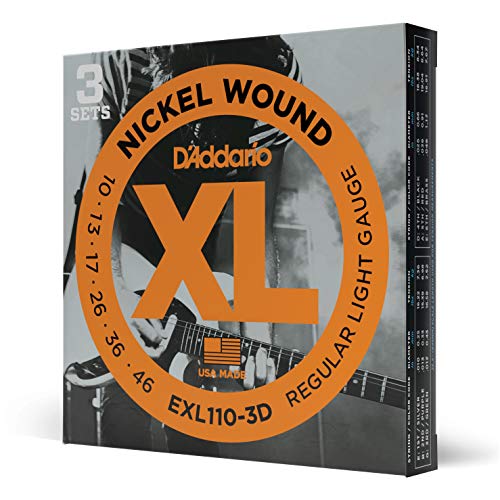
Type: XL Nickel. Gauge: 10-46. This is one of the best-selling electric strings sets, providing perfect intonation and a consistent feel across the fretboard. The wrapped wire offers a bright, versatile tone suitable for a wide range of genres. The construction emphasizes a reliable hex-core design for stable tuning and durability, making it a practical choice for players who perform in varied environments.
Best for: Players seeking a reliable all-rounder with bright tone and strong intonation, suitable for both beginners building technique and experienced players doing diverse gigs. Choose this if you want a trusted, widely compatible set with predictable performance.
Caution: Some players perceive less tension than heavier gauges; if you prefer a stiffer feel, consider a 46 gauge top with medium or heavy top gauges instead.
D’Addario NYXL Nickel Plated, NYXL1046

Type: NYXL Nickel Plated. Gauge: 10-46. NYXL strings are designed to stay in tune better than standard strings, with a stronger core for higher endurance. They are optimized for enhanced mid-range response, so they cut through the mix with more presence. The hex-core design supports consistent tension and intonation across the fretboard, making them highly reliable for performance and studio work.
Best for: Players who need strong tuning stability and a mid-range boost to help solos and rhythm parts sit prominently in a mix. Choose this if you value durability and a modern, assertive tone that remains controllable in dense arrangements.
Caution: The heightened mid-range presence may require adjustment in EQ or playing style if you prefer a darker tone or heavy gain settings.
Buying Guide
What gauge should I choose for electric guitar strings?
Gauge choices range from 9-42 to 11-52. Lighter gauges (9-42) offer easier bending and faster fret action, suitable for beginners and lead players. Medium gauges (10-46) provide a balance of tone, tension, and playability for most styles. Heavier gauges yield more tension, longer sustain, and thicker tone, ideal for downtuned or heavier styles.
What tone characteristics matter most?
Nickel-wrapped strings deliver a bright, balanced tone with strong upper harmonics. Nanoweb coatings can extend life without significantly muffling tone. Uncoated or lightly coated sets tend to feel crisper but may wear sooner in sweaty environments.
How important is durability and longevity?
Coated options (like Elixir NANOWEB) resist corrosion and tone-deadening sweat, humidity, and rust. They are best for players who gig frequently or practice in humid climates. Non-coated sets offer a brighter, more traditional feel with potentially longer immediate snap but shorter overall life in sweaty conditions.
Which brand should I prefer?
Ernie Ball and D’Addario are among the most widely used, offering consistent quality and broad availability. Elixir provides outstanding coating durability for longevity. NYXL from D’Addario emphasizes tuning stability and mid-range presence, popular in modern playing styles.
How do I install strings correctly?
- Loosen and remove the old strings, unwind and remove each string.
- Thread the new string through the bridge ferrule or tailpiece, then into the tuning post hole.
- Pull tight, wind upward around the post, leaving enough slack for tuning.
- Stretch gently to settle the string, then tune to pitch and recheck tunings after a warm-up.
Frequently Asked Questions
- Q: Which string set is best for beginners?
- A: A 9-42 or 10-46 gauge, like Ernie Ball Regular Slinky or D’Addario XL Nickel, offers easy playability for new players while maintaining good tone.
- Q: Do coated strings sound different?
- A: Coated strings like Elixir NANOWEB retain tone longer and resist corrosion, but some players feel a slightly muted brightness compared to uncoated sets.
- Q: Which strings stay in tune the longest?
- A: NYXL strings are designed to stay in tune more consistently due to their improved core construction and alloy formulation.
- Q: Are 9-42 gauges suitable for heavier genres?
- A: Lighter gauges are easier to play but may break under heavy picking. For heavier styles, consider 10-46 or 11-48 gauges.
- Q: How often should I change electric strings?
- A: For players with typical daily practice, changing every 4–8 weeks is common; frequent gigging or sweaty hands may require more frequent changes.
- Q: What is the best overall brand for durability?
- A: NYXL and XL Nickel sets from D’Addario are known for balanced durability and reliable intonation across styles.