Best Unbalanced to Balanced Audio Converter Guide for Clear Sound
When selecting an unbalanced to balanced audio converter, the goal is to preserve signal integrity while reducing noise and hum across your setup. This guide highlights five solid options, each best for different user needs—from home studios to PA system integration. Whether you’re bridging consumer gear to professional gear or improving long cable runs, these converters help maintain clean, balanced output. The top picks below cover dual-channel and single-channel needs, passive and active designs, and portable versus install-grade solutions.
Buyer snapshot: the best overall pick for flexible, reliable performance is ART CLEANBox Pro for dual channels with multiple input/output options. For budget-friendly mono conversions, Rolls DB226 is compact and simple. RDL TX-A2 offers professional isolation and balanced-to-unbalanced handling in installations. The WIHFHGZ dual-channel board provides high-speed, low-distortion performance in DIY setups. Nobsound NS-05P PRO is a USB-powered bi-directional option with independent controls ideal for home studios.
| Product | Best For | Notes |
|---|---|---|
| Dual-channel, flexible inputs/outputs | Balanced XLR + unbalanced RCA/1/8” | |
| Rolls Stereo to Mono Converter DB226 | Simple mono conversion | Compact, budget-friendly |
| RDL TX-A2 Balanced to Unbalanced Audio Converter | Installations needing isolation | Passive isolation, professional use |
| WIHFHGZ Unbalanced to Balanced Converter Board | DIY/high-performance boards | Low distortion, high slew rate |
| Nobsound HiFi XLR RCA Converter NS-05P PRO | Bi-directional, independent control | USB-powered, compact |
ART CLEANBox Pro Dual Channel Level Converter
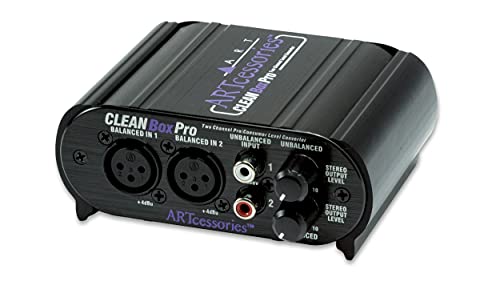
The ART CLEANBox Pro offers XLR balanced inputs and outputs with RCA and stereo 1/8″ unbalanced options. It ships with an external power supply for operation from AC mains. Best for users needing dual-channel conversion with flexible I/O and clean, noise-free performance.
Who it’s best for: small studios or live rigs needing reliable dual-channel conversion and a straightforward setup. Why selected: broad input/output flexibility reduces the need for extra adapters. Limitation: external power supply may require a dedicated outlet onstage or in a rack.
Rolls Stereo to Mono Converter DB226

The DB226 is a compact mono converter designed for simple one-to-one conversions. It’s useful when you need to bridge stereo output into mono inputs without introducing complex signal chains. Best for small setups or legacy gear that only accepts mono.
Who it’s best for: budget-conscious users or portable rigs needing straightforward mono conversion. Why selected: small footprint and easy integration. Limitation: lacks multiple channels or advanced isolation features.
RDL TX-A2 Balanced to Unbalanced Audio Converter

The TX-A2 is designed for installations that require passive isolation and level attenuation between a professional balanced source and consumer unbalanced inputs. It features a complete unbalanced line-level output module and a detachable terminal block for balanced sources. Best for fixed installations where signal integrity over long runs matters.
Who it’s best for: audio installers and venues needing transformer isolation. Why selected: reliable isolation and dedicated balanced-to-unbalanced pathway. Limitation: may require care with input/output balancing in complex systems.
Unbalanced to Balanced Converter Board, Dual Channel

This DIY dual-channel board emphasizes high slew rate and low distortion, with PCB-grade construction for stable performance. Suited for home theater and speaker setups that require careful signal integrity at a budget-friendly price.
Who it’s best for: DIY enthusiasts building a custom audio path. Why selected: high slew rate and low distortion support precise conversion. Limitation: requires soldering and assembly; reliability depends on build quality.
Kopul LT-PDI Laptop One-Channel Passive Direct Box
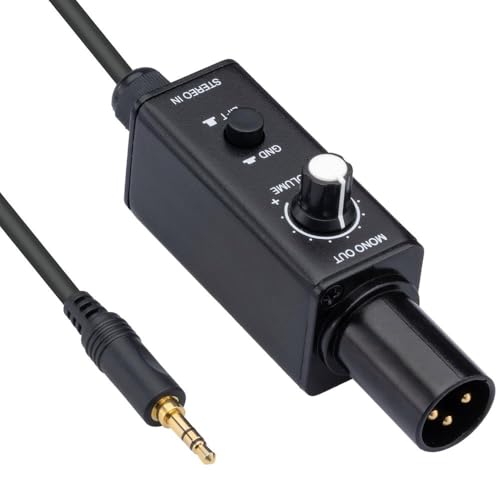
The Kopul LT-PDI converts unbalanced stereo line-level signals into balanced mono mic-level signals for PA systems and mixers. It’s especially suitable for computer and laptop setups requiring a clean, noise-free signal over longer cable runs. Best for AV integration and portable events.
Who it’s best for: users needing a compact, passive DI box for computer audio. Why selected: ground lift switch helps reduce hum; straightforward integration. Limitation: passive design requires adequate source headroom to avoid loss of signal level.
RDL TX-A2D Dual-Channel Balanced-to-Unbalanced

The TX-A2D provides transformer-isolated, dual-channel balanced-to-unbalanced conversion with terminal block inputs and RCA outputs. It supports stereo input-to-output paths with isolation to reduce hum and ground loops—ideal for professional installs where clean signal transfer is critical.
Who it’s best for: professionals needing transformer isolation and robust channel separation. Why selected: dependable isolation and easy terminal wiring. Limitation: higher price point may be a factor for hobbyist setups.
Buying Guide: Key Purchase Considerations
- Channel count: Do you need single-channel or dual-channel conversions? Dual-channel options simplify complex rigs.
- Input/output types: Look for XLR balanced, RCA unbalanced, and 1/8″ mini-jack options to minimize adapters.
- Isolation: Transformer isolation reduces hum and ground loops; essential for long cable runs.
- Power design: Active (powered) vs. passive. Powered units maintain signal strength; passive units rely on source power.
- Application context: Home studio, live PA, or fixed installation may dictate different build quality and connectors.
- Ease of use: detachable terminal blocks and pre-wired boxes can speed up installation in fixed rigs.
- Size and placement: Consider rack-friendly units for stage or studio setups.
FAQ
- What is the difference between unbalanced and balanced audio signals?
– Unbalanced signals use a single signal line (with a ground return), while balanced signals use two conductors plus a ground to cancel noise pickup over distance. - Do I need a converter for all devices?
– If your source and destination have mismatched signaling (unbalanced to balanced or balanced to unbalanced), a converter helps preserve signal integrity and reduce hum. - Is transformer isolation always necessary?
– Not always, but it’s highly beneficial in installations with long cable runs or multiple devices sharing grounds to reduce hum and ground loops. - Can I use a DI box as an unbalanced-to-balanced converter?
– Some DI boxes perform that function, but dedicated converters often provide better impedance matching and signal fidelity for professional use. - What is a direct box’s ground lift switch?
– It helps eliminate ground loop hum by lifting the ground reference between devices, reducing noise in some setups. - Are USB-powered converters safe for live sound?
– USB-powered solutions are convenient for small setups, but ensure power stability and consider powered models for demanding applications.