
Best USB 3.0 Audio Interfaces for Home Studios
For DIY musicians, podcasters, and content creators, USB 3.0 audio interfaces deliver professional sound without complex setups. This guide highlights five solid options across budgets and uses, helping you pick the right one for your needs. Best for vocalists and small studios, these interfaces emphasize clean preamps, low latency, and reliable connectivity. The top choices below cover laptop-friendly portability, studio-grade converters, and versatile compatibility with Mac, Windows, and iOS environments. Use the buying guide to compare features like preamp gain, input types, and monitoring options before you decide.
| Product | Best For | Key Benefit |
|---|---|---|
| Apogee Duet 3 | Voice, guitar, mobile studios | Premium sound with onboard DSP |
| MOTU 828 | Small to mid-size studios | High channel count and precise metering |
| Behringer U-PHORIA UMC404HD | Budget setups | Mid-range features with solid preamps |
| Antelope Audio USB Interface | Precision monitoring | 32×32 I/O with advanced clocking |
| MAONO P2 Hybrid | Mobile creators | Dual USB ports for multi-device work |
Apogee Duet 3 Premium USB-C Audio Interface
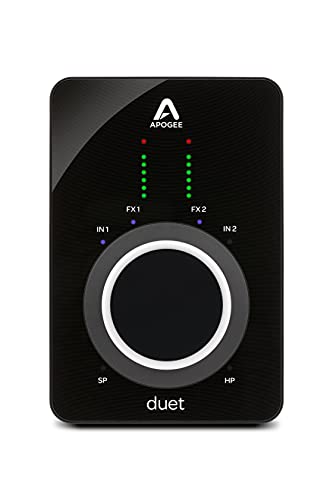
The Apogee Duet 3 is designed for vocalists, guitarists, streamers, and podcasters who demand studio-grade sound on a portable platform. It features world-class preamps with up to 65 dB of gain and 48V phantom power to capture demanding mics with clarity. Onboard DSP powers Symphony ECS Channel Strip and Clearmountain’s Domain Native software, enabling near-zero-latency monitoring and advanced tone shaping even while recording. Best for users who value premier sonic quality and integrated processing in a compact package.
- Best for: Vocalists, guitarists, and mobile producers who want top-tier sound and ready-to-use effects.
- Why chosen: Combines legendary Apogee sound with robust DSP for real-time processing.
- Limitations: Higher price point may be a consideration for hobbyists.
MOTU 828 28×32 USB3 Audio Interface

The MOTU 828 is aimed at small-to-mid-sized studios needing extensive I/O and strong metering. It offers a 28 x 32 USB3 setup with a bright 3.9-inch TFT display for precise status updates and hardware settings access. Its ESS Sabre32 DAC technology delivers high dynamic range for clean, detailed playback. Best for: studios that require many input channels and clear oversight during recording sessions.
- Best for: Multi-track recording environments with comprehensive monitoring.
- Why chosen: Large I/O, modern high-resolution metering, and reliable USB3 performance.
- Limitations: Larger footprint than basic interfaces; setup may be more involved.
Behringer U-PHORIA UMC404HD Audiophile 4×4

The Behringer UMC404HD targets budget-conscious creators who still want professional-sounding results. It provides 4×4 USB 2.0 recording, 24-bit/192 kHz resolution, and compatibility with major recording software. Best for: Home studios needing multiple inputs without a steep price. Limitation: While capable, it may not match higher-end converters in ultra-low-noise scenarios.
- Best for: Budget-friendly multi-channel recording.
- Why chosen: Solid all-around performance at an accessible price.
- Limitations: USB 2.0 bandwidth may affect very large projects.
Antelope Audio USB Audio Interface with 32 Channel Mixing

This Antelope Audio interface is ideal for users who need studio-grade precision and a larger mix environment. It supports 32 x 32 analog I/O and 130 dB dynamic range, with Thunderbolt 3 up to 192 kHz, plus USB compatibility. Best for: Producers and engineers who rely on precise clocking and flexible routing. Limitation: Thunderbolt connectivity may require additional adapters on some systems.
- Best for: Studio environments demanding high channel counts and exacting timing.
- Why chosen: Excellent dynamic range and robust digital-analog conversion.
- Limitations: Complexity in routing and setup for beginners.
MAONO P2 Hybrid USB Audio Interface

The MAONO P2 is designed for creators who need flexible, portable workflow across devices. It offers dual USB ports with MFi-certified compatibility, enabling recording on Mac, PC, iPhone, iPad, Android, and cameras. It supports 24-bit/192 kHz audio with ASIO compatibility for cleaner recordings and enables independent mute controls for monitoring. Best for: On-the-go creators and streamers who require cross-device recording. Caution: Interface controls can be compact, requiring careful adjustment in tight setups.
- Best for: Mobile and multi-device recording setups.
- Why chosen: Highly versatile connectivity and high-resolution audio.
- Limitations: Slightly more compact controls may challenge new users.
Buying Guide
Key purchase considerations help align product choice with your workflow and environment.
- Input/output needs: How many mics and instruments will you record at once? Choose a model with enough preamps and line inputs to avoid bottlenecks.
- Resolution and fidelity: Look for 24-bit/96 kHz or better for clear recordings; higher sample rates shine in critical tracking and mastering stages.
- Preamps and phantom power: If you use condensers, ensure the interface provides sufficient gain and stable 48V phantom power.
- Monitoring and latency: Zero-latency monitoring and DSP effects can simplify recording and monitoring during takes.
- Connectivity: USB 2.0 vs USB 3.0, USB-C, and Thunderbolt impact compatibility and latency. Cross-platform use should be a priority if you switch between devices.
- Software compatibility: ASIO drivers for Windows and reliable macOS support reduce driver conflicts and latency.
- Portability vs. expandability: Portables suit travel and small desks; units with many inputs suit expanding studios.
FAQ
- What is the main difference between USB 2.0 and USB 3.0 interfaces?
USB 3.0 generally offers lower latency, higher bandwidth, and more stable multi-channel recording than USB 2.0. - Do I need built-in DSP in an audio interface?
DSP helps run effects and channel strips without taxing your computer CPU, useful for real-time processing and monitoring. - Can I use a USB interface with iOS devices?
Some interfaces support iOS via compatible adapters or direct USB-C/Lightning compatibility; check each model’s specifications. - Is a higher price always better for home recording?
Not always; it depends on your needs for I/O, converters, and workflows. Higher-end models offer more features, not just better sound. - What is “latency” and why does it matter?
Latency is the delay between playing or singing and hearing it back. Lower latency improves real-time monitoring. - Which interface is best for podcasting?
Interfaces with solid mic preamps, clear monitoring, and easy setup are ideal. The Apogee Duet 3 and MAONO P2 provide strong options depending on needs.