Best USB C Audio Cables for Clear, Seamless Sound Across Devices
Answering your search for reliable USB C audio cables, this guide highlights top options that deliver high‑fidelity sound, broad device compatibility, and durable construction. Ideal for commuters, multitaskers, and audio enthusiasts, these cables connect Type C devices to car stereos, home speakers, or headphones without extra adapters. This article features five carefully chosen cables and explains who benefits most from each pick, plus practical considerations to help you decide.
| Product | Best For | Key Benefit |
|---|---|---|
| JXMOX USB C to 3.5mm | General listening with solid durability | Hi‑fi audio with a rugged, nylon braided design |
| QianLink USB C to 3.5mm (2‑pack) | Wider compatibility and multi‑device use | Advanced DAC, broad device support |
| Seulliya USB C to 3.5mm | Plug‑and‑play simplicity | Hi‑fi sound, built‑in DAC, reliable decoding |
| MORELECS Aux to USB C | Car, home stereo, and portable listening | Dedicated DAC for clearer audio, durable design |
| JSAUX USB C to 3.5mm | Premium durability and longevity | High fidelity sound with strong, flexible build |
JXMOX USB C to 3.5mm Audio Aux Cable (4ft)
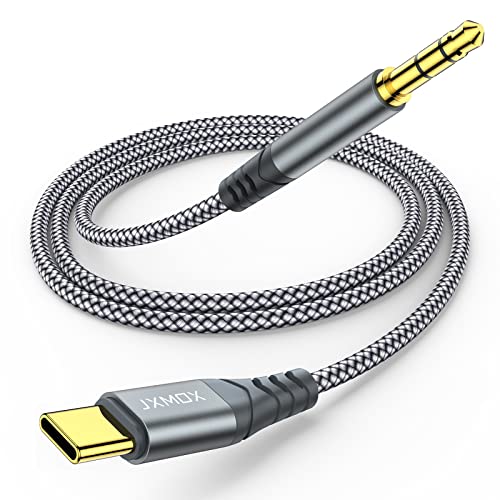
Best for: Daily listening with reliable performance. This cable connects Type C devices to car stereos, home systems, or headphones via a standard 3.5mm jack. The included DAC Smart Chip provides higher fidelity sound and effective noise reduction, making it a solid choice for users who want clear audio without extra adapters. Caution: The longer 4‑foot length may be less convenient in tight spaces like small car interiors.
QianLink USB C to 3.5mm Audio Aux Cable (3.3ft 2‑Pack)

Best for: Users who want a value pack with broad compatibility. The 2‑pack design plus a DAC chip aims to deliver high‑fidelity audio across many devices including iPhone, Samsung, Pixel, and iPad Pro. It’s a practical pick for households with multiple Type C devices. Limitation: The listing notes broader compatibility but does not include every legacy device, so verify your exact model before purchasing.
Seulliya USB C to 3.5mm Audio Cable (3.3ft)

Best for: Immediate use with no setup. The cable emphasizes plug‑and‑play functionality and a built‑in DAC with 16‑bit/48 kHz support for clean audio transmission. It’s suitable for users who want dependable sound without driver installations. Caution: It does not mention microphone or inline control support, which may matter for hands‑free call use.
MORELECS Aux to USB C (3.3ft)
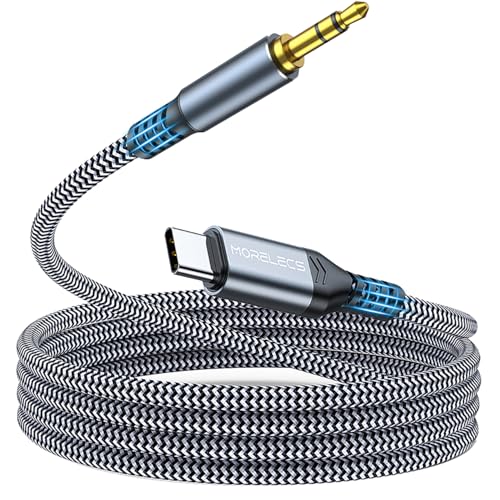
Best for: Audio enthusiasts who value a dedicated DAC and robust construction. The cable is designed for streaming music and podcasts from USB‑C devices to car stereos, speakers, or headphones, with a focus on high‑fidelity sound. It explicitly notes that it does not support calls or microphone input, which is important for users who rely on hands‑free features. Consider this when you need microphone support or in‑line controls.
JSAUX USB C to 3.5mm Audio Aux Jack Cable (3.3ft)
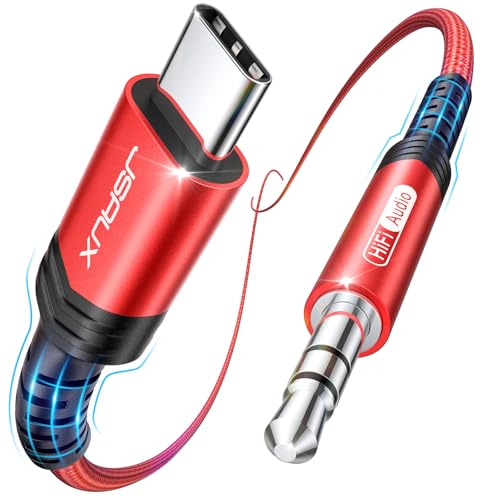
Best for: durability and long‑term reliability. JSAUX emphasizes reinforced fiber, a premium aluminum housing, and a nylon braided jacket to resist bending and tangling. It supports high‑fidelity audio with a DAC, making it a strong all‑arounder for daily use. Limitation: Actual maximum audio output depends on the connected headphone or speaker, so expectations may vary by device quality and impedance.
Buying Guide
What to consider when choosing a USB C to 3.5mm audio cable:
- Compatibility: Check device lists to ensure the cable supports your phone, tablet, laptop, or car stereo. Some cables specify “not for Lightning” or only USB‑C devices.
- DAC quality: A built‑in DAC improves sound clarity and reduces noise. Higher fidelity is beneficial for critical listening and portable setups.
- Length: Longer cables offer flexibility but may add resistance and signal loss. Shorter cables save space in cars and desks.
- Durability: Look for nylon braiding, reinforced connectors, and strain relief to withstand daily use and bending.
- Microphone and controls: If you need calls or inline controls, verify these features as several cables focus solely on audio output.
- Packaging and packs: A 2‑pack or multi‑pack offers better value for households with multiple USB‑C devices.
- Use case: For car stereos, prioritize stability and noise mitigation; for home audio, prioritize DAC fidelity and impedance compatibility.
Frequently Asked Questions
- Do USB C to 3.5mm cables support phone calls? Some do not. If hands‑free calling is essential, verify support for microphone and inline controls before buying.
- Will these cables work with iPads or laptops? Yes, many of these cables are designed to work with USB‑C devices like iPads Pro and various laptops that include USB‑C ports.
- Is the DAC in the cable necessary for good sound? A built‑in DAC can improve sound clarity by converting digital audio to analog with better signal processing, but results depend on the source and headphones.
- Can I use these cables for gaming headsets? If the headset is 3.5mm and the host device is USB‑C, a compatible DAC cable can work, but ensure the headset compatibility with the DAC and device power.
- Do these cables support 4K video transmission? No, these are audio cables; video transmission requires dedicated video cables like USB‑C to HDMI or DisplayPort.
- Are there any risks using a DAC cable with low‑quality devices? Low‑quality devices may not benefit as much from a DAC, and some combinations can introduce impedance mismatches; test with your gear.