
Best Vacuum Tube Radio Kit Projects for Home Enthusiasts
Answering the best way to enjoy retro electronics today, this guide showcases five vacuum tube radio kits and related equipment that suit hobbyists of varying skill levels. Whether you’re a beginner looking for a straightforward build or a seasoned tinkerer seeking authentic tube tone, these selections cover reception, audio quality, and hands-on learning. The top picks are best for: beginners seeking approachable kits, hobbyists chasing classic tube sound, and DIY lovers aiming to couple vintage design with modern audio features. A quick buyer’s table is provided below for fast comparison.
| Product | Best For | Why Selected |
|---|---|---|
| Eight Great Stuff to Make 2008 E67041 Eight Build Your Own Tube Radio | Beginner to intermediate | Retro-style receiver with a genuine vacuum tube and modern IC/speaker for strong reception and clear sound |
| Regenerative DC Three-lamp Shortwave Tube Radio Kit CW SSB Receiver | Education and experimentation | Three-lamp regenerative design ideal for learning tube circuits and shortwave reception |
| PCB Board DIY Tube Amplifier Kit | Audio hobbyists | Vacuum tube preamp/amp board focused on clean power and reduced noise |
| 6H1n-EB Electron Tube | Tube-amp upgrades | Reliable, replaceable tube for classic audio systems |
| GLENCREAG VTS01 HiFi Vacuum Tube Speaker Amplifier | HiFi enthusiasts | Seven-input, dual ECC82 tubes for a warm, full sound with modern inputs |
Eight Great Stuff to Make 2008 E67041: Build Your Own Tube Radio

This kit blends vintage and modern components to create a compact tube radio with world reception. Best for beginners who want a tangible build experience and a recognizable vacuum-tube voice. The combination of a genuine vacuum tube for strong reception and a modern audio IC and speaker helps ensure audible performance without extensive tuning complexity. Selection rationale emphasizes creative assembly and retro aesthetics over pure high-end efficiency.
Who it’s best for: hobbyists curious about both classic tube technology and contemporary audio integration. Why chosen: it offers a hands-on build that results in a functional, retro radio with a clear, loud output. Caution: the integration of tube and IC components may require careful layout to prevent noise coupling in compact enclosures.
Regenerative DC Three-lamp Shortwave Tube Radio Kit

Designed for learners who want to explore regenerative tube circuits and shortwave listening, this kit is best for educators and hobbyists seeking hands-on circuit experiments. The three-lamp configuration supports a straightforward approach to oscillator and detector design, making it a solid entry point for CW/SSB experimentation. Selection rationale highlights educational value and compact form factor for home benches.
Who it’s best for: students and new builders interested in learning tube-regeneration concepts. Why chosen: it focuses on a classic regenerative scheme that reveals how feedback and tube biasing shape reception. Caution: assembly may require patience with delicate alignment and calibration to achieve stable oscillation.
PCB Board DIY Vacuum Tube Amplifier Kit

This DIY plate-by-plate amplifier kit emphasizes clean power delivery with eight 470µF capacitors and DC12V filament supply. It’s well suited for audio purists who want a standalone tube preamp or a simple headphone amplifier. The kit’s emphasis on reduced hum and noise makes it a practical upgrade path for existing audio systems. Selection rationale points to noise reduction and modular design.
Who it’s best for: audio hobbyists building a small tube preamp or headphone amp. Why chosen: strong filtering and DC filament strategy help minimize digital artifacts in analog sources. Caution: requires careful wiring to maintain proper tube polarity and noise control.
6H1n-EB Electron Tube for Compatible with 6N1 ECC85 6AQ8

Pure tone is the core claim for this replacement tube, delivering warm bass and stable performance in compatible vacuum tube amps. Best for upgrading or maintaining older tube gear that uses 6N1 ECC85 6AQ8 sockets. The product stands out for straightforward compatibility and tone consistency. Selection rationale centers on reliability and easy upgrades for mid-range audio systems.
Who it’s best for: enthusiasts seeking safer, reliable tubes for existing amps. Why chosen: direct replacement compatibility reduces the risk of mismatched tubes. Caution: verify socket compatibility and pinout before installation to avoid misalignment.
GLENCREAG VTS01 HiFi Vacuum Tube Amplifier

This HiFi amplifier centers on a refined aesthetic with a precision aluminum panel and dual ECC82 tubes. It supports multiple input sources, including CD, FM, Bluetooth, USB, and digital optical, enabling versatile modern use with vintage tone. Best for audiophiles who want vintage appeal without sacrificing modern connectivity. Selection rationale highlights integrated design and multi-input flexibility.
Who it’s best for: home theater or living room setups that value nostalgic visuals with contemporary inputs. Why chosen: the multi-input design preserves compatibility with modern devices while delivering tube warmth. Caution: combination of traditional tubes and wide input options may require careful impedance matching for optimal performance across all sources.
LJJDSLYU S-Pixie CW QRP Ham Transceiver Kit
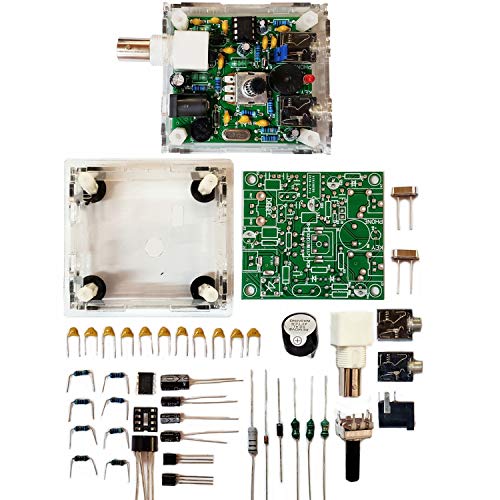
The Pixie CW QRP kit focuses on the 40-meter band with a simple, robust power approach (9–13.8V DC). It’s ideal for amateur radio hobbyists who enjoy compact, low-power operation and learning Morse code. Selection rationale emphasizes portability and ease of power management. Caution: operation requires basic radio theory and careful handling to avoid short circuits during assembly.
Who it’s best for: new and intermediate HAMs who want a compact, beginner-friendly transceiver. Why chosen: straightforward power handling and a clearly defined frequency range support steady learning progress. Better for: experiments in small-footprint operations and field use. Avoid this if: you need full-scale high-power transmission or commercial-grade accessories.
Buying Guide
What to consider when selecting a vacuum tube radio kit
- Skill level and project scope: choose kits with clear documentation and manageable power requirements for your experience.
- Sound characteristics: tubes add warmth and harmonic richness; some kits pair tubes with modern amplifiers for louder output.
- Power and noise: look for DC filament supplies and good filtering to minimize hum and digital noise.
- Compatibility and upgrades: consider whether you want a kit that supports upgrades, such as tube replacements or additional inputs.
- Support and documentation: clear wiring diagrams, component lists, and assembly steps help reduce build time and errors.
Practical questions buyers often ask
- Are these kits beginner-friendly? Some are designed for learners with straightforward circuits; others require more experience due to regenerative designs or custom payloads.
- Do these kits include all required components? Listings vary; some provide boards and tubes, while others require sourcing additional parts.
- Can I use modern inputs with a tube amplifier? Many kits support modern inputs (USB, Bluetooth, CD) alongside traditional tubes for versatile listening.
- Is tube warmth audible with compact systems? Yes, tubes typically provide a warmer midrange and smoother treble compared to solid-state equivalents.
- What safety considerations exist? Tubes operate at high voltages; follow assembly guides exactly and avoid powering a kit without proper insulation and enclosure grounding.
Key takeaways for buyers
- For pure learning: look for regenerative or simple two- to three-tube designs with clear assembly steps.
- For best tone in a small room: choose a compact amp with high-quality ECC82 or equivalent tubes and solid filtering.
- For modern convenience: seek kits offering multiple inputs like USB, Bluetooth, and optical alongside tube output.
FAQ
- What is a regenerative radio kit? It’s a tube-based circuit design that uses positive feedback to improve reception, often educational and adjustable for beginners.
- Do these kits require soldering experience? Most do; basic soldering skills help ensure reliable connections and safe operation.
- Can I mix tubes and solid-state parts? Some kits incorporate both, but verify compatibility and power requirements beforehand.
- Are vacuum tubes essential for authentic sound? Tubes contribute a characteristic warmth and smooth harmonic content but aren’t the sole determinant of audio quality.
- Is warranty available for these kits? Warranty terms vary by seller; check product pages for coverage details before purchasing.