
Best Volume Pedal for Steel Guitar: Top Picks for Smooth Dynamics
Answering the common search for a reliable volume pedal for steel guitar, these picks focus on smooth, musical control for passive and active signals. Each option suits different rigs, from compact pedalboards to studio setups. If you play pedal steel live, look for rugged build, reliable taper, and compatibility with your pickup type. For studio players, a pedal with precise control and good buffering helps maintain tone. The table below highlights five strong choices and key differences to help you compare quickly.
| Product | Best For | Notes |
|---|---|---|
| Ernie Ball VP JR 250K Volume Pedal, For Passive Signals | Passive steel guitar setups, compact boards | Jr size; mono control; taper switch for two swell rates |
| Ernie Ball 40th Anniversary Volume Pedal | Active or passive signals; classic feel | Limited edition black finish; improved Kevlar cord |
| Ernie Ball VP JR 25K Volume Pedal, For Active Signals | Active pickup rigs; tuners output | Compact design; 25K pot; suited for active signals |
| SONICAKE Passive Volume & Expression EXP Pedal | Multi-function controllers; versatile gear | 2-in-1 function; TRS cable; auto-detects function |
| Lehle Mono Volume Pedal | Studio/rigorously reliable volume control | Buffered output; adjustable gain |
Ernie Ball VP JR 250K Volume Pedal, For Passive Signals

The VP JR 250K is designed for passive signal paths, making it a practical choice for many steel players who prefer a compact footprint. It uses a 250K pot, which generally offers a smooth taper suitable for gentle swells and precise dynamic control. The pedal’s mono volume control and a taper switch provide two distinct swell rates, allowing you to tailor response for different playing styles. Best for players who want a small, straightforward pedal that preserves tone while offering adjustable response.
Who it’s best for: Steady, on-board control for passive setups; players with limited pedalboard space; those who value a simple, reliable volume sweep. Limitations: May not provide as broad a sweep as higher-capacitance pedals for extreme fades; dedicated to passive signals only.
Ernie Ball 40th Anniversary Volume Pedal

This limited-edition pedal updates a classic design with a robust Kevlar-reinforced cord and a compact chassis that’s friendly to stage use. It works well with both active and passive signals, making it a versatile choice for players who switch rigs or run a hybrid setup. The improved cord offers durable, precise volume control, and the compact form factor helps reduce clutter on crowded boards. Best for players who want a premium feel with dependable performance in various signal paths.
Who it’s best for: Steel players seeking a premium, durable pedal that stays consistent across active and passive rigs. Limitations: Limited edition finish may affect resale or availability; higher price point relative to entry-level models.
Ernie Ball VP JR 25K Volume Pedal, For Active Signals

Designed for active pickup systems, this compact VP JR pedal uses a 25K pot and includes a tuner output, which can be useful for on-stage setups that require quick access to signal management. Its smaller pot value yields a different sweep profile, often smoother at lower gain stages, which some players prefer for subtle volume control. Best for players with active electronics or those who want a lighter sweep with a compact footprint.
Who it’s best for: Players with active pickups or those who want a tuner-out option. Limitations: May feel less immediate for players who favor a wide, high-throw volume response.
SONICAKE Passive Volume & Expression EXP Pedal
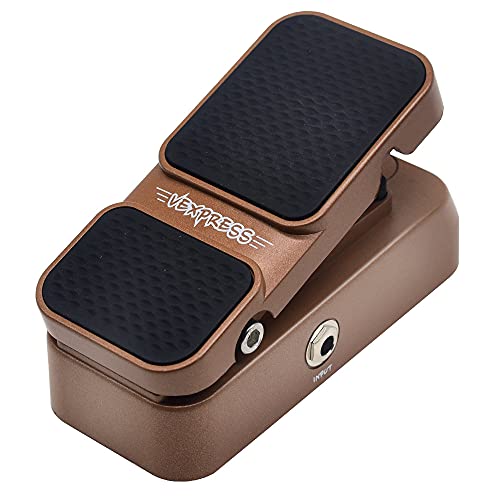
The SONICAKE unit combines passive volume control and expression control in one compact pedal. It auto-detects functionality, which can simplify setup, and works with a variety of devices including guitar, bass, keyboard, synths, and workstations. Best for players who want an affordable, flexible pedal that can serve multiple roles in a studio or live rig. A caveat is that control behavior can vary when using non-traditional TRS configurations, so test with your gear.
Who it’s best for: Multi-application players needing a 2-in-1 solution; beginners seeking a simple setup; those with limited space. Limitations: Functionality can vary with non-guitar/TRS cables; some users may prefer separate volume and expression pedals for precision.
Lehle Mono Volume Pedal

The Lehle Mono Volume Pedal emphasizes a buffered direct output and adjustable gain, helping preserve signal integrity across long cables and diverse rigs. Durable polymer bearings enhance longevity, making it a strong choice for performers who demand consistency in high-use environments. Best for players prioritizing buffering and stable tone, especially in complex pedalboard chains.
Who it’s best for: Players needing reliable buffering and consistent tone; studio and stage players who use long cables or multiple effects. Limitations: May be more expensive than basic passive pedals; some users may prefer lighter or simpler designs.
Lehle Mono Volume Pedal S

Lehle’s Mono Volume Pedal S features a magnetically controlled Blackmer VCA for precise volume control in a compact form. The design is aimed at professional setups where subtle sweet spots and repeatable sweeps matter. Best for players who need a refined, studio-grade volume response in a small package.
Who it’s best for: Advanced players and engineers seeking high-precision volume control with a professional-grade signal path. Limitations: Higher price and potential overkill for casual players; requires careful integration with other gear.
Ernie Ball 500K Stereo Volume/Pan Pedal
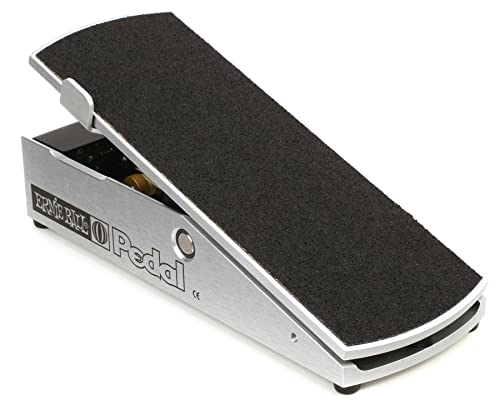
This stereo pedal combines volume and pan controls for broader effects routing, suitable for players who want enhanced spatial control in live or studio contexts. It accepts both active and passive signals, enabling flexibility across rigs. Best for players exploring stereo configurations or multi-amplitude setups; caution: its size and feature set may be overkill for straightforward volume control.
Who it’s best for: Players building a stereo or multi-channel rig; those who want integrated pan along with volume. Limitations: Heavier and larger than standard volume pedals; more complex to operate in simple setups.
Buying Guide: Key Considerations For Volume Pedals
- Signal Type: Passive vs Active — Passive pedals work well with passive pickups, while active rigs may benefit from pedals designed for active signals or with tuner outputs.
- Pot Value And Taper — Higher pot values give a broader sweep; taper controls how quickly the volume reacts to movement. Choose based on how dramatic you want the swell.
- Buffering And Output — Buffered outputs help maintain tone when chaining multiple pedals or long cables. This is important for steel guitar tones that rely on clarity.
- Build And Reliability — Look for rugged chassis, durable jacks, and strain relief on cables for stage use. If you travel a lot, a compact pedalboard-friendly unit may be ideal.
- Extra Features — Tuner outputs, expression control, or dual-function 2-in-1 pedals offer flexibility but add complexity. Decide if you need these capabilities in your setup.
- Size And Weight — A smaller pedal saves space on crowded boards; heavier pedals can be more stable on stage but less convenient to transport.
- Compatibility — Ensure the pedal’s wiring and TRS or mono compatibility work with your rig and other pedals.
Frequently Asked Questions
- What should I look for in a volume pedal for steel guitar?
A: Smooth taper, reliable build, and compatibility with passive or active pickups, plus a form factor that fits your pedalboard and playing style. - Is a tuner output important on a volume pedal?
A: It can be useful for quick tuning on stage, especially if you use on-pedal tuning or want direct access without a separate pedal. - Are stereo volume pedals better for steel guitar?
A: Not necessarily. A stereo pedal is beneficial if you’re running stereo effects or want panning control; otherwise, a mono pedal may suffice. - Do I need buffering in a volume pedal?
A: Buffering helps preserve tone when using long cables or multiple pedals, making it a preferred feature for many players. - Can I use an expression pedal as a volume pedal for steel guitar?
A: Some expression pedals can control volume when wired appropriately, but not all are designed for continuous, linear volume sweeps required by steel players.