Best Wireless Center Channel Speakers for Clear Dialogue and Studio-Quality Home Theater
Choosing the right center channel speaker is essential for crisp dialogue and a balanced front soundstage, especially in modern home theaters that mix movies, TV, and streaming music. The following selections cover wireless options and strong wired contenders to help you optimize voice clarity, tonal balance, and overall imaging. Each pick is evaluated on dialogue clarity, compatibility with AV receivers, and ease of integration into typical living room layouts.
| Product | Brand | Key Benefit |
|---|---|---|
| Klipsch Reference Wireless RW-34C Center Channel Speaker | Klipsch | True wireless convenience with WiSA compatibility |
| Klipsch Reference Next-Generation R-30C | Klipsch | Advanced horn-loaded design for precise dialogue |
| Polk Audio T30 Center Channel Speaker | Polk Audio | Affordable, full-range voice clarity and bass |
| Polk Monitor XT35 Slim Center Channel Speaker | Polk Audio | Slim profile with hi-res capability and versatile inputs |
| Klipsch R-52C Center Channel Speaker | Klipsch | Powerful, detailed center with tractrix horn |
The following sections highlight five top choices, with direct links to their Amazon listings, brief image previews, and notes on features that matter most for voice clarity and seamless integration in a home theater system.
Klipsch Reference Wireless RW-34C Center Channel Speaker

The RW-34C delivers true wireless performance designed for modern home theaters that support WiSA. The 90° x 90° Tractrix horn and a 1″ aluminum tweeter provide precise high-frequency detail, while the 4″ mid/woofers offer solid midrange and dialogue clarity. This model is ideal for setups where a minimal cable footprint and easy installation matter most, while still maintaining Klipsch’s characteristic vocal articulation and dynamic range.
Klipsch Reference Next-Generation R-30C Horn-Loaded Center
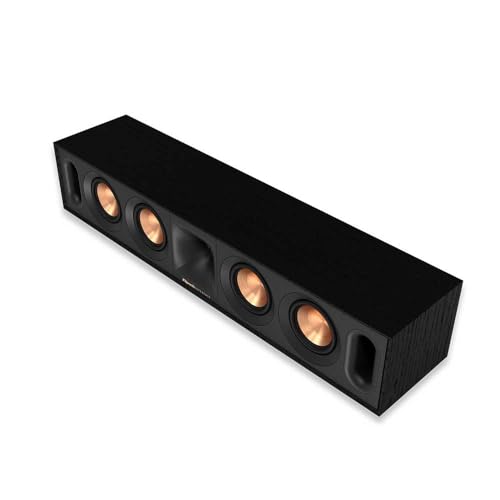
R-30C uses Klipsch’s refined Tractrix horn and a 1″ aluminum tweeter, paired with three 3″ woofers for a smooth, extended response that emphasizes dialogue without dulling the overall sound. The design minimizes distortion and improves high-frequency clarity, making it a strong wired center option for accurate voice reproduction in larger rooms or with less acoustically treated spaces.
Polk Audio T30 Center Channel Speaker
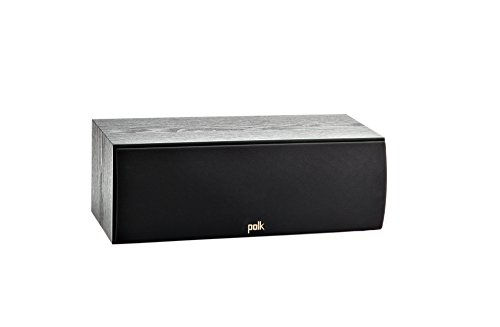
Polk’s T30 pairs dual 5.25″ woofers with a 1″ silk dome tweeter to deliver clear dialogue and a natural midrange with punchy bass. It’s designed to be timbre-matched with Polk’s broader T-Series, helping create a coherent front soundstage for both movies and TV. The T30 is well-suited for budget-conscious setups that still demand strong vocal presence and balanced overall performance.
Polk Monitor XT35 Slim Center Channel

The XT35 Slim Center Channel combines a 4″ midrange driver array with a 1″ tweeter and four 3″ woofers to deliver an engaging front-channel experience. Its slim profile minimizes obstruction near your TV, while still supporting Dolby Atmos and DTS:X with compatible inputs. The build emphasizes vocal clarity, open midrange, and a broad, room-filling sound without a heavy footprint.
Klipsch R-52C Center Channel Speaker
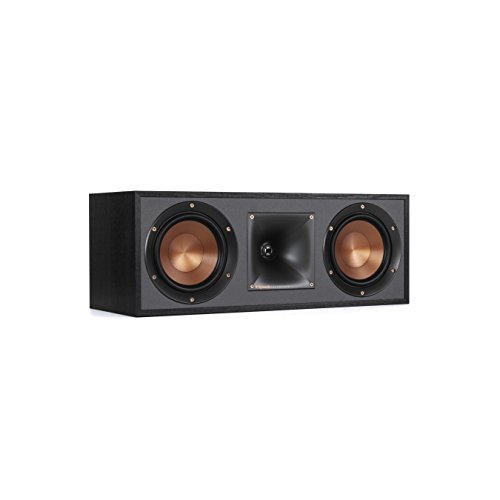
The R-52C pairs dual 5.25″ spun-copper IMG woofers with a 1″ LTS aluminum tweeter, mated to a 90×90 tractrix horn for controlled dispersion and detailed high-frequency performance. This center channel is built to anchor dialogue with accuracy while delivering a robust overall soundstage suitable for larger rooms and demanding AV setups.
Buying Guide: Key Considerations for Choosing a Center Channel Speaker
Voice clarity and dialogue intelligibility are the primary roles of a center channel, but several factors influence how well a speaker performs in a home theater system. Consider room size, seating distance, and whether you prioritize wireless convenience or the purest wired performance. Here are essential purchase considerations from multiple perspectives.
- Voice clarity versus full-range sound: Center channels designed for dialogue may emphasize crisp highs and midrange rather than booming bass. If you mainly want clear speech, prioritize models with strong midrange and a focused tweeter array (e.g., horn-loaded designs or aluminum tweeters).
- Wireless versus wired: Wireless options (like the RW-34C) reduce cable clutter and simplify placement but may require compatible transmitters and potential latency considerations. Wired models often deliver consistent, low-latency performance and higher maximum output with fewer potential interference issues.
- Dispersion and room acoustics: Horn-loaded designs can offer controlled dispersion and better imaging in larger rooms, while smaller woofers excel in compact spaces. Consider the seating layout and whether a wider or more directional soundstage is preferable.
- Compatibility with receivers: Check impedance and power handling. Many center channels support 4-8 Ohm networks and pair with modern AVRs that handle Dolby Atmos and DTS:X. Some models explicitly support hi-res audio formats and streaming services.
- Dimensions and placement: Slim center channels fit tighter spaces but may trade off deeper bass. Measures should align with your TV width and stand or shelf depth to avoid blocking sensors or remotes.
- Build quality and aesthetics: Aesthetic compatibility with your living room matters for long-term satisfaction. Metal or wood finishes and mounting options (wall-mount compatibility) can influence installation flexibility.
- Voice versus music balance: If the system will handle both movies and music, look for a center with good midrange and a broad sweet spot, plus compatibility with your other speakers for an enveloping front stage.
In practice, a wireless center like the RW-34C offers simplicity and clean aesthetics, while models like the R-30C and R-52C provide proven Klipsch imaging and horn-loaded clarity in wired configurations. Polk options such as the T30 and Monitor XT35 deliver value with solid dialogue performance and versatile placement. When choosing, align the model with your room size, listening position, and whether you prefer a minimalist setup or a fully wired home theater.