
Best Wireless Headphones With Digital Audio Out for TV Viewing
Looking for wireless headphones that deliver clear digital audio for TV watching? This guide highlights five top picks optimized for TV listening, seniors, and audiophiles alike. Each option uses a transmitter system to transmit audio with low latency and wide compatibility, helping you enjoy immersive sound without disturbing others. Suitable buyers include seniors seeking simple plug-and-play setups, multimedia fans needing precise lip-sync, and households wanting private listening without cables.
- Best overall for simple TV setup: NOUUI Wireless Headphones for TV Watching
- Best battery life: BERIBES Bluetooth Headphones Over Ear
- Best for senior-friendly use: OHAYO Wireless TV Headphones
- Best for versatile connections: Earbay Wireless Headphones for TV
- Best wired/wireless flexibility: OneOdio A70 Bluetooth Over-Ear
Overview of top picks
| Product | Highlights | Best For |
|---|---|---|
| NOUUI Wireless Headphones for TV Watching | Plug & play, multiple input options, ultra-low latency | Seniors and non-technical users |
| BERIBES Bluetooth Headphones | 65 hours playtime, six EQ modes | Audiophiles and long listening sessions |
| OHAYO Wireless TV Headphones | Low latency, crystal-clear dialogue, 100 ft range | Hearing-impaired and multi-room listening |
| Earbay Wireless Headphones for TV | 40-hour battery, low latency, docking base | Families needing long use and easy charging |
| OneOdio A70 Bluetooth Over-Ear | Dual mode, up to 72 hours, wired option | General music and TV with flexibility |
NOUUI Wireless Headphones for TV Watching
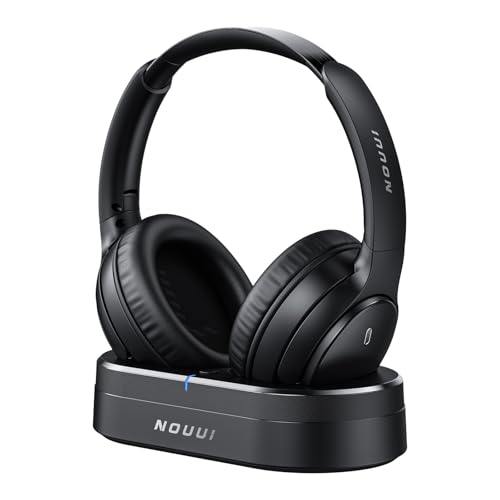
The NOUUI model emphasizes a straightforward, plug-and-play setup. It supports multiple connection methods including Optical, 3.5mm AUX, and RCA, with an optional Bluetooth connection. This makes the headphones suitable for seniors and users who prefer quick, hassle-free pairing. The included transmitter base ensures a stable link up to a notable distance, while noise-isolating ear cups help minimize domestic distractions. A potential limitation is reliance on a wired transmitter for some TVs, which can feel less flexible than fully wireless options.
BERIBES Bluetooth Headphones Over Ear
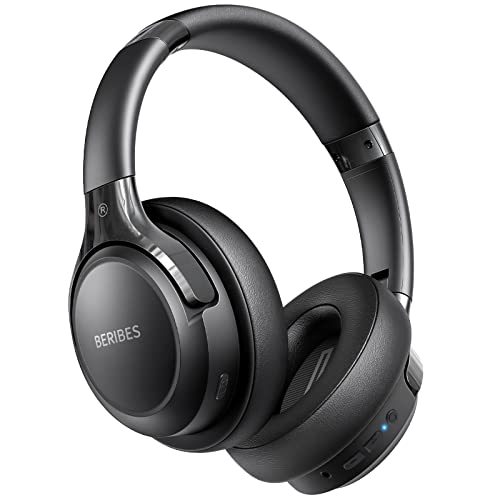
BERIBES offers an extremely long 65-hour playtime with a lightweight build and adjustable headband. It appeals to audiophiles who want customizable sound through six EQ modes and a soft, comfortable fit for extended sessions. With the included 3.5mm cable, it can be used in wired mode when the battery runs low. A consideration is that as a general-purpose Bluetooth headset, it may be less specialized for lip-sync-accurate TV use than models marketed specifically for TV viewing.
OHAYO Wireless TV Headphones

OHAYO focuses on minimal latency and reliable lip-sync, with a 100-foot range that supports moving around the house. It provides a high SNR for clearer dialogue, making it a strong choice for viewers who rely on hearing clarity. The system is easy to set up via Optical, AUX, or RCA, and it can pair with Bluetooth devices for standalone use. A potential limitation is the need to manage multiple connection cables if you use non-Bluetooth devices.
Earbay Wireless Headphones for TV

Earbay emphasizes ultra-low latency (less than 40ms) and a practical 30-meter range. It pairs well with digital optic and RCA connections and includes a charging base to simplify daily use. The soft ear cushions and memory foam provide lasting comfort. The main consideration is the reliance on Bluetooth 5.4, which may have compatibility nuances with older TVs without Bluetooth or digital optical outputs.
OneOdio A70 Bluetooth Over-Ear

OneOdio A70 offers dual-mode flexibility with up to 72 hours of wireless playtime and a wired option using included cables. It delivers high-resolution sound with 40mm drivers and a foldable, space-saving design for easy transport. It’s a solid pick for users seeking versatile use beyond TV viewing. A limitation is that some users may prefer dedicated TV-lip-sync optimization rather than general-purpose Bluetooth performance.
Buying Guide: Key Considerations For Wireless TV Headphones
- Latency and lip-sync: Choose models with low latency to ensure audio matches on-screen action. Look for codes like 27-40ms as a practical range.
- Connection options: Favor devices with Optical, RCA, and 3.5mm inputs for broad TV compatibility. Bluetooth can be convenient but may add latency if not low-latency capable.
- Range and freedom: Consider how far you need to move from the TV. A typical useful range is 30–100 feet, depending on walls and interference.
- Comfort for long sessions: Soft ear cushions, memory foam, and adjustable headbands help if you watch for hours.
- Battery life and charging: Longer battery life reduces recharging frequency. A docking or charging base adds convenience for daily use.
- Hearing clarity: Systems designed for seniors or hearing-impaired users often emphasize enhanced dialogue clarity and higher SNR.
- Wired vs. wireless flexibility: Some models offer both wired and wireless modes. Wired mode bypasses latency concerns but ties you to cables.
- Compatibility with multiple devices: If you want to use headphones with a TV, PC, or phone, ensure Bluetooth versions and auxiliary options support cross-device use.
FAQ
- Do wireless TV headphones require a dedicated transmitter?
- Which feature most improves TV dialogue clarity?
- Can I use these headphones with a Bluetooth-enabled phone?
- Is 100 feet of range practical in most homes?
- What should I consider if TVs do not have Bluetooth?
- Are these headphones good for seniors with hearing aids?
Yes, most wireless TV headphone systems use a transmitter to send audio from the TV to the headphones, with inputs like Optical, RCA, or AUX to maximize compatibility.
A high signal-to-noise ratio (SNR) and low latency directly improve dialogue clarity and lip-sync accuracy.
Many models support Bluetooth, allowing standalone use with phones or PCs. Check the specific model’s Bluetooth version and latency specs.
Yes, 100 feet is typically sufficient for multi-room listening, though walls, furniture, and interference can reduce practical range.
Ensure the headphones system includes Optical or RCA inputs, or a compatible digital-to-analog option, to connect directly to non-Bluetooth TVs.
Models marketed for seniors emphasize easy setup, enhanced dialogue, and comfortable wear, but always verify compatibility with hearing aids and personal preferences.