
Best Wireless Headphones for Small Ears: Find the Perfect Fit
Answer: These wireless headphones are selected for small ears, lightweight design, and secure comfort. They suit runners, office workers, and travelers who need a discreet, unobtrusive fit without sacrificing sound quality. The top picks emphasize compact ear tips, ultra-light weights, and secure hooks or open-ear designs. The buyer’s goal is comfort, stable wear, and reliable connectivity in active or daily-use scenarios. Below you’ll find five products most relevant to small-ear needs, followed by a practical Buying Guide and quick FAQs.
| Product | Why it’s a fit for small ears |
|---|---|
| TOZO A1 Wireless Earbuds | Ultra-lightweight with a compact, ergonomic in-ear design for small ears |
| Ear Buds Invisible Small Mini Sleep Earbuds (Yihou) | Minimally sized, nearly invisible in-ear form for discreet wear |
| MOZOTER Mini Wireless Earbuds (S8) | 10 mm drivers, compact build, Bluetooth 5.3 for tight fit and stable connection |
| Kinglucky Upgraded Clip-On Open-Ear Buds | Open-ear design avoids in-ear pressure while staying lightweight |
| Fhumsh Wireless Earbuds (Black) | Small-ear friendly with compact case, slim profile, ENC and long playback |
TOZO A1 Wireless Earbuds

Best for small ears: The TOZO A1 earbuds feature an ultra-lightweight design, with a compact profile that sits flush in the ear. They are secured for workouts and everyday use without feeling bulky. The 3.7g weight per earbud helps minimize ear fatigue over long listening sessions. Limitations: the open fit may allow more ambient noise than in-ear models, which can affect focus in noisy environments.
Key points: Ultra-lightweight, in-ear comfort, secure for active wear. Choose this for casual listening with extended wear and minimal ear pressure.
Ear Buds Invisible Small Mini Sleep Earbuds (Yihou)

Best for discreet wear: These mini earbuds are designed to be barely noticeable, ideal for office use or sleep-friendly listening. The slim profile helps reduce ear protrusion and enhances comfort for all-day wear. Caution: extremely small drivers can limit bass impact compared to larger models.
Key points: Tiny form factor, stable Bluetooth 5.3, low-profile fit. Choose this if you want invisibility and comfort over extended use.
MOZOTER Mini Wireless Earbuds (S8)

Better for small-ear users seeking quick pairing and responsive touch controls. The S8 model uses Bluetooth 5.3 for fast connection, a compact housing, and a 10 mm speaker that supports clear highs and solid bass. Limitation: the touch controls can be sensitive in rushed situations, potentially triggering unintended actions.
Key points: Bluetooth 5.3, compact, strong fit for smaller ears. Choose this for sports or daily commutes with reliable pairing.
Kinglucky Upgraded Clip-On Open-Ear Buds
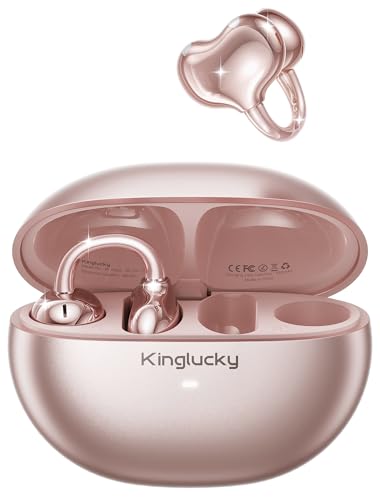
Best for those who want to avoid ear canal pressure: Open-ear design sits outside the ear canal, reducing discomfort for long wear and glasses compatibility. The 4.0 g lightweight buds and Ni-Ti memory wire offer a secure fit with flexible adjustment. Caution: sound isolation is limited due to the open-ear design.
Key points: Open-ear comfort, light weight, ENC for calls. Choose this if you prioritize situational awareness and minimal ear intrusion.
Fhumsh Wireless Earbuds (Black)
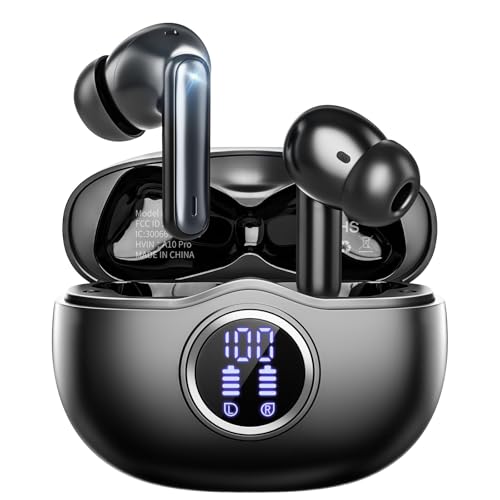
Best for gym and daily workouts: The A10 series includes an LED power display, IPX7 waterproofing, and 8 hours of playtime per charge with a total of 50 hours with the case. ENC noise cancelling helps reduce ambient noise during noise-heavy activities. Limitation: complex LED display may distract some users during workouts.
Key points: Long playtime, waterproof case, strong stability. Choose this for active use across gym sessions and commuting.
Buying Guide: Small-Ear Wireless Headphones
- Fit and comfort: Prioritize ultra-lightweights, compact shapes, and optional wing tips or memory wire for secure fit during movement.
- Ear tips and seal: For in-ear designs, look for multiple tip sizes, silicone or foam options, and stable seal to reduce ear fatigue and improve sound isolation.
- Open-ear vs. in-ear: Open-ear models preserve ambient awareness and reduce ear pressure; in-ear models typically offer better noise isolation but may cause discomfort for long wearers.
- Weight and balance: Lighter earbuds reduce fatigue during long listening sessions; check weight per earbud and how it feels with glasses or headbands.
- Battery life: Consider total playtime with the case; for workouts or travel, aim for at least 30–40 hours total if possible.
- Connectivity: Bluetooth 5.0+ and low-latency codecs are beneficial for video and gaming; ensure the device supports your phone or computer.
FAQ
- Are open-ear headphones better for small ears? Answer: They avoid canal pressure and can be more comfortable for some, but they do not block ambient noise as effectively as in-ear models.
- What is the best option for sleep? Answer: Ultra-small in-ear or discreet mini earbuds designed for comfort during lying down are typically best for sleep, with soft tips and low protrusion.
- Can I wear small-ear earbuds with glasses? Answer: Yes, especially open-ear designs or compact in-ear tips that don’t press against the ear cartilage.
- Do small-ear earbuds have good battery life? Answer: Many compact cases still deliver substantial total playtime; check case capacity and per-earbud battery life.
- Is ANC necessary for small ears? Answer: ANC helps in noisy environments, but smaller or lighter earbuds may have trade-offs in noise isolation compared to larger models.
- How to choose for workouts? Answer: Look for a secure fit, IP rating, and a lightweight design to minimize movement or slippage during activity.