
Best Wireless Microphone Systems for Saxophones in 2026
Answering the needs of modern saxophonists, these wireless microphone systems deliver reliable, low-latency audio for live performance, teaching, or practice. They’re best for players seeking freedom of movement, clear tonal pickup, and easy setup. The top picks below suit touring musicians, teachers conducting classes, and students needing dependable in-class systems.
| Product | Best For | Key Benefit |
|---|---|---|
| NUX B-6 Saxophone Wireless System | Pro saxophonists and gigging players | High-resolution audio and 20 m range |
| SGPRO TR15 Wireless Clip-On | Multiple brass/wind players | Wide instrument compatibility with long-range transmission |
| Lefiko 2.4G Wireless Sax System | Teachers and small gigs | Low latency and 360° gooseneck pickup |
| NUX B-6PRO 2.4GHz System | Stage performers and ensembles | Auto pairing, frequency hopping, long range |
| Xvive U7 Saxophone System | Live performers and classrooms | Long range with multiple simultaneous systems |
NUX B-6 Saxophone Wireless System

Best for: Professional saxophonists and serious players who need reliable, high-fidelity wireless audio during performances. Why selected: This system emphasizes a dedicated saxophone focus with a custom condenser mic and three EQ scenes designed for different sax types, supporting natural tone capture and easy tonal shaping. Caution: The 20-meter range is solid for most venues, but very large outdoor stages may benefit from an additional antenna or higher-gain setup.
SGPRO TR15 Wireless Clip-On Saxophone Microphone System

Best for: Players needing universal brass instrument compatibility and a robust wireless link for stage use. Why selected: It supports soprano through baritone saxophones and other brass instruments, with a signal range up to 60 meters and a clip design meant to minimize contact with the instrument. Caution: Clip design avoids scratches but check padding if you frequently switch mouthpieces or reeds.
Lefiko 2.4G Wireless Saxophone Microphone System

Best for: Teachers, students, and small gig scenarios needing low latency and solid positioning. Why selected: Lefiko offers 12 ms latency and a 360° adjustable gooseneck for precise tone pickup. It supports multiple brass and wind instruments with reliable 2.4 GHz performance. Caution: Ensure proper channel selection in busy environments to avoid interference in crowded classrooms.
NUX B-6PRO 2.4GHz Wireless System for Saxophones
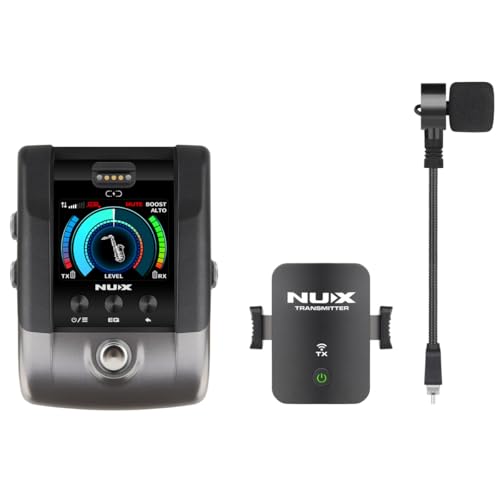
Best for: Stage performers and ensembles seeking seamless auto-pairing and stable long-range wireless transmission. Why selected: The B-6PRO uses frequency hopping and auto pairing to minimize setup time and interference, with a claimed 50 m range and ultra-low latency. Caution: Real-world range can vary by environment; large venues with dense RF traffic may require extra channels or antennas.
SGPRO BM333 Wireless Gooseneck Saxophone Microphone

Note: This product is included here as a relevant alternative for brass instrument miking with an emphasis on a gooseneck design. Best for: Performers valuing a fixed position pickup with a clear 262 ft (80 m) wireless range and multiple preset channels. Why selected: It combines a flexible gooseneck with a robust wireless interface and user-friendly controls. Limitation: The focus is more on the gooseneck mic than the entire system for buyers seeking a fully integrated transmitter/receiver package.
Xvive U7 Saxophone System
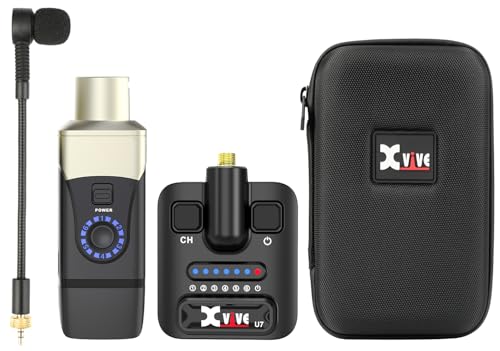
Best for: Musicians seeking a multi-system setup with reliable stage performance. Why selected: The Xvive U7 operates on 2.4GHz, offers 100 ft range, and claims sub-5 ms latency, with capacity for using up to four systems simultaneously. Caution: While compatible with saxophones, verify compatibility with your specific receiver before combining with other gear on a busy stage.
Buying Guide: What to Consider When Choosing a Wireless Saxophone Mic System
- Latency and range: Look for sub-10 ms latency for real-time response and a range that fits your typical performance space.
- Instrument compatibility: Some systems are sax-specific; others handle multiple brass or wind instruments. Choose based on your needs.
- Pickup method: Clip-on mics vs gooseneck mics impact comfort and tone. Clip-ons may be lighter; goosenecks offer flexible aiming.
- Interference resistance: Frequency hopping or digital transmission helps avoid RF interference in crowded venues.
- Clips and attachment: Gear that protects the instrument’s finish and remains secure during movement is important for stage work.
- Setup and pairing: Auto-pairing reduces setup time; consider whether you need simultaneous systems in a class or ensemble.
- Output options: Check connectivity to your mixer or DI box, and whether the mic requires phantom power or battery operation.
Frequently Asked Questions
- What is the typical range for a saxophone wireless system? Range varies by model and environment, with many systems offering 50–100 meters in ideal conditions and up to 260 feet in some designs.
- Will any clip-on mic damage my sax? Modern sax mics are designed to minimize instrument damage, but always use the provided clamps and padding as directed by the manufacturer.
- Is latency a concern for live performance? Yes, lower latency (preferably under 10 ms) helps maintain timing accuracy with backing tracks and other musicians.
- Can multiple wireless systems operate simultaneously on the same stage? Yes, many systems support multiple channels; check the number of preset frequencies and the ability to scan for interference-free channels.
- Do these systems require special receivers or mixers? Most systems include a receiver; ensure your mixer or PA system has compatible inputs and proper gain staging.
- Are there any best practices for teaching with wireless sax mics? For classrooms, prefer systems with auto-pairing and stable channels to reduce setup time between students and to minimize accidental channel changes.