
Quick Overview: This guide compares top wireless subwoofer adapter kits to help you add bass without running cable. Below is a summary of the selected products and their key attributes for quick comparison.
| Product | Brand | Wireless Type / Band | Notable Feature |
|---|---|---|---|
| DYNASTY PROAUDIO WSA-5TR-V2 | DYNASTY PROAUDIO | 5.2 / 5.8 GHz dual-band | 106 RF channels, lossless-focused |
| KEF KW1TXRX Wireless Subwoofer Adapter Kit | KEF | 5 GHz high-bandwidth | 24bit/48kHz support for KEF Kube subs |
| Klipsch WA-2 Wireless Subwoofer Kit | Klipsch | Proprietary Klipsch WA-2 port | Plug-and-play for compatible Klipsch subs |
| 1Mii 2.4GHz Wireless Audio Transmitter Receiver (B09MCGQ8S2) | 1Mii | 2.4 GHz | Long range (320ft outdoor), subwoofer compatible |
| Audioengine S8 With W3 Wireless Kit | Audioengine | Proprietary W3 wireless adapter | 250W powered sub with included wireless adapter |
DYNASTY PROAUDIO WSA-5TR-V2 Wireless Subwoofer Speaker Kit

Key Features: Dual-band 5.2 & 5.8GHz selectable transmission, total 106 RF channel auto switching, near-lossless audio, range up to 100 feet line-of-sight/50 feet through walls, designed to reduce interference and latency.
This kit emphasizes interference avoidance through many RF channels and dual-band selection. Installation is presented as straightforward: connect transmitter to source and the powered subwoofer to the receiver. The stated range and channel switching are targeted at stable placement flexibility in typical living spaces.
KEF KW1TXRX Wireless Subwoofer Adapter Kit
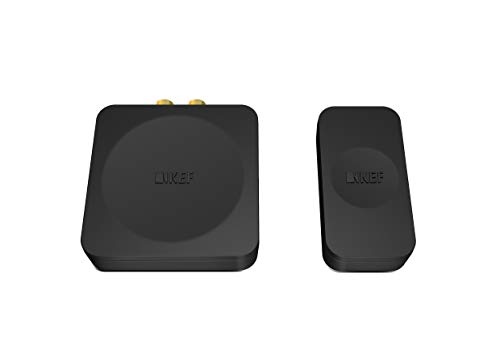
Key Features: Designed for KEF Kube8b/Kube10b/Kube12b and KF92 subwoofers, operates in 5GHz high-bandwidth band, supports up to 24bit/48kHz transmission for detailed bass reproduction.
This adapter kit is purpose-built for select KEF subwoofers, offering a specified high-bandwidth 5GHz link with 24bit/48kHz capability. Its targeted compatibility means a plug-in wireless upgrade for KEF users without general cross-brand guarantees.
Klipsch WA-2 Wireless Subwoofer Kit With Easy Installation

Key Features: Proprietary WA-2 port compatibility (Klipsch, Jamo, Energy, Mirage), simple setup intended for Klipsch-branded subwoofers, designed for plug-and-play bass extension.
This kit focuses on brand-specific convenience. If you own a Klipsch-compatible subwoofer with the WA-2 port, the WA-2 kit offers a straightforward wireless conversion with minimal setup steps. Cross-brand use is limited by its proprietary connector.
1Mii 2.4GHz Wireless Audio Transmitter Receiver For Subwoofer

Key Features: 2.4GHz transmission, long range up to 320ft outdoors (100-200ft indoors), <20ms low latency, RCA/3.5mm inputs and outputs, designed to work with powered subwoofers, stereo systems, and amplifiers.
This 1Mii model highlights long-range coverage and low delay, making it suitable for larger homes or installations where the subwoofer is distant from the source. Multiple analog connection options increase compatibility with a range of subwoofers and receivers.
Audioengine S8 250W Wireless Subwoofer With W3 Adapter

Key Features: 250W powered 8″ subwoofer with built-in amplifier, includes W3 low-latency wireless adapter, auto-sleep power saving mode, compatible with Audioengine powered speakers and variable line-level outputs.
Rather than an adapter-only solution, the Audioengine S8 pairs a dedicated powered subwoofer with a matched wireless adapter (W3). This integrated approach simplifies compatibility and placement while providing an all-in-one option for users seeking both hardware and wireless link together.
Buying Guide: How To Choose A Wireless Subwoofer Adapter Kit
Choosing the right wireless subwoofer adapter kit depends on compatibility, audio quality expectations, and room layout. Below are practical considerations to compare options effectively.
Compatibility
- Brand-Specific Vs. Universal: Some adapters (Klipsch WA-2, KEF KW1) are designed for specific subwoofer models. Universal adapters (1Mii, Dynasty) use common analog inputs/outputs (RCA, 3.5mm, optical) for broader compatibility.
- Input/Output Types: Verify your subwoofer accepts the adapter’s outputs (line-level RCA, LFE, or proprietary port).
Wireless Band And Interference
- 2.4 GHz: Longer range in many environments but more prone to WiFi and Bluetooth interference. Good for long-distance indoor/outdoor runs if vendor implements robust error handling.
- 5 GHz / 5.8 GHz: Typically less congested with higher bandwidth and lower interference potential, suitable for higher-fidelity transfers and lower-latency performance.
- Channel Selection: Kits that offer multiple channels or auto-switching can reduce dropouts in crowded RF environments.
Latency And Sync
- Low Latency Matters: For home theater use, subwoofer timing relative to on-screen action matters. Look for latency specs (20–25ms or less preferred) and user reports of lip-sync performance.
- Delay Compensation: Some AV receivers and subs include delay settings to help align wireless links; check if your setup supports this.
Range And Placement Flexibility
- Indoor vs Outdoor Range: Advertised outdoor ranges are often greater; expect reduced distance through walls. Match range claims to your room size and typical obstructions.
- Antenna Design: External antennas and higher-gain designs generally improve penetration through walls.
Audio Quality And Bandwidth
- Sample Rate And Bit Depth: Higher specs (e.g., 24bit/48kHz) indicate the potential for more detailed transfer, though sub-bass content is less demanding than full-range audio.
- Lossless/HiFi Claims: Evaluate whether the adapter preserves low-frequency dynamics and avoids noise artifacts; check for digital wireless vs analog transmission methods.
Installation And Convenience
- Plug-And-Play: Brand-specific kits often provide the simplest install. Universal kits may require attaching RCA/aux cables and power adapters at both ends.
- Power Requirements: Most kits need AC power for transmitter and receiver; ensure proximity to outlets or plan for extension options.
Use Case Perspectives
- Home Theater Enthusiast: Prioritize low latency, stable 5GHz links, and accurate timing options.
- Music-Focused Rooms: Look for higher bandwidth and decent bit-depth support to retain bass nuances.
- Large Or Multi-Room Homes: Favor long-range 2.4GHz or high-gain 5GHz solutions with strong channel management.
- Brand Owners: If you own matching-brand subs (Klipsch, KEF), consider their proprietary kits for simplified setup and guaranteed compatibility.
Final Notes On Selection: Compare connector types, wireless band, latency specifications, and whether you prefer an adapter-only upgrade or a combined subwoofer-and-adapter package. Matching the kit to your existing subwoofer and room layout ensures the best performance and fewer surprises during installation.