
Best Wireless Wrap Around Headphones for Open-Ear Comfort and Safe Awareness
Looking for wireless wrap-around or open-ear headphones that stay secure during workouts and daily activities? This guide highlights five top options ideal for runners, cyclists, and commuters who value situational awareness, comfort, and solid sound. Each pick is explained with who it’s best for, plus practical trade-offs to help you decide quickly.
The following table summarizes the five best picks for open-ear or wrap-around use, based on design, battery life, comfort, and audio performance.
| Product | Best For | Key Benefit | Limitations |
|---|---|---|---|
| Bayhanc Bone Conduction Headphones | Runners and commuters | Open-ear design with long battery life | May have less bass than in-ear models |
| PSIER Bone Conduction Headphones | Outdoor enthusiasts | 6.0 Bluetooth, large drivers | Open-ear can leak sound in loud environments |
| RTUSIA Small Wrap-Around Headphones | Those who dislike ear pressure | Compact, lightweight, over-ear wrap | Controls on right ear only |
| Ortizan Open Ear Headphones | Active workout users | Air conduction with IPX6 resistance | Soundstage can be environment-dependent |
| Soundcore V20i Open Ear | Everyday open-ear wearers | Adjustable positions for secure fit | May require form factor adaptation for very small ears |
Bayhanc Bone Conduction Headphones

Open-ear bone conduction design prioritizes comfort for long wearing periods. The 16mm dynamic drivers aim to deliver crisper vocals and balanced, full-range sound. The built-in battery supports up to 10 hours of playback, with USB-C fast charging achieving a full charge in about two hours. Best for runners, cyclists, and commuters who want to stay alert to surroundings without ear canal pressure. Caution: some users may experience less bass impact compared with traditional over-ear or in-ear headphones.
Who it’s best for: Users who want a comfortable open-ear experience, safety while outdoors, and reliable all-day listening. This model suits those who place a premium on awareness and long run-time.
PSIER Bone Conduction Headphones, 2026 Upgrade

PSIER’s open-ear design pairs bone conduction with a lightweight frame and a 13 mm driver setup for balanced audio and clear voices. The headset uses Bluetooth 6.0 for fast pairing, claims about low latency, and a solid wireless range. It’s suited for runners and hikers who need situational awareness and reliable connectivity. Caution: as with many open-ear devices, external noise can bleed into the listening experience in very loud environments.
Who it’s best for: Outdoor enthusiasts who want strong Bluetooth performance, a light form factor, and good vocal clarity during calls or GPS cues.
RTUSIA Small Wrap Around Headphones
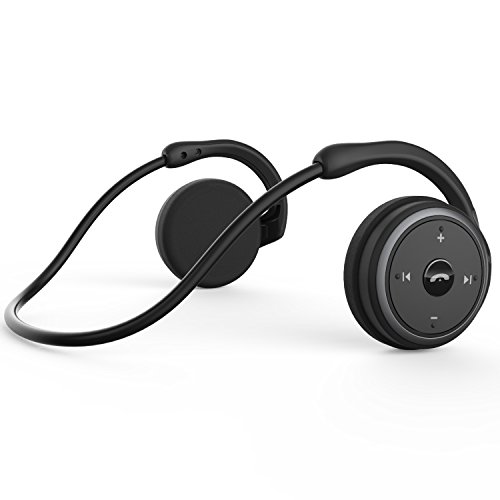
This wrap-around design sits outside the ears, providing a comfortable fit for long workouts or daily wear. It’s noted for lightweight construction and easy portability, with four control buttons for music and calls. Best for users who wear glasses or dislike canal-intrusive devices. Caution: button layout may take time to master, especially during high-intensity activity.
Who it’s best for: People seeking a compact, behind-the-ear style that stays secure during runs and gym sessions, with straightforward physical controls.
Soundcore V20i By Anker Open Ear Earbuds

Soundcore V20i emphasizes comfort with an open-ear design and four adjustable positions to secure a stable fit for daily wear. It is designed for situational awareness and practical everyday use, offering open-air playback suited to urban and outdoor settings. Caution: some users may prefer deeper bass from closed-back models, as open-ear drivers emphasize balance over strong low-end.
Buying Guide: Key Purchase Considerations
- Open-ear vs wrap-around design: If you want maximum situational awareness, open-ear or bone conduction can be best. Wrap-around styles often prioritize secure fit for movement-heavy activities.
- Battery life: Look for 8–10+ hours of playback for long workouts or commutes. Check charging time to plan usage around charging breaks.
- Connectivity: Bluetooth version (6.0 or newer is common) and codec support affect pairing reliability and latency during calls or video work.
- Comfort and fit: Consider weight, ear canal pressure, and whether you wear glasses or hats. Adjustable fittings and multiple positions improve comfort over extended use.
- Water and sweat resistance: IPX ratings help determine suitability for rain or intense workouts. More rugged models tend to perform better outdoors.
- Sound balance: Open-ear and bone conduction typically offer less deep bass than in-ear models; choose based on your priority for bass vs. ambient awareness.
Frequently Asked Questions
- Q: Are open-ear headphones safe for running at night? A: Yes, they help you hear surrounding traffic and signals, improving situational awareness.
- Q: Do bone conduction headphones block ambient noise? A: They allow ambient sound in, which can improve awareness but may reduce perceived bass.
- Q: Can these wrap-around headphones be worn with glasses? A: Many models are designed to accommodate glasses; check the fit and comfort notes for specifics.
- Q: How long do the batteries last on a single charge? A: Most listed models offer 8–10 hours or more depending on usage and volume levels.
- Q: Is water resistance important for workouts? A: Yes, IPX ratings help determine durability during sweat or rain.
- Q: Do these devices require special apps? A: Some may offer companion apps for firmware updates or EQ tuning, but many work via standard Bluetooth.