
Best XLR Audio Isolation Transformers for Clean Studio Sound
If you’re seeking to eliminate ground-loop hum and noise in professional or home audio setups, these XLR isolation devices are designed to improve signal integrity. They are ideal for quieting noise in studios, home theaters, stage rigs, and on-the-go setups. The top picks below are best for different user types—from compact, portable solutions to robust, dual-transformer boxes for multi-channel systems.
| Product | Brand | Best For | Key Benefit |
|---|---|---|---|
| CERRXIAN XLR Ground Loop Noise Isolator | CERRXIAN | Home studios and live stages | Effective ground loop elimination with wide compatibility |
| AUX to XLR Isolation Box (RQG) | RQG | PCs, laptops, mobile devices | Volume control and ground lift for flexible use |
| Whirlwind ISOXL Line-Level Isolation Transformer | Whirlwind | Professional audio racks | Durable isolation with dual XLR connectors |
| WisWinDa 3Pin XLR Ground Loop Isolator | WisWinDa | Home theater and car audio | Dual transformers for low-noise performance |
| Pyle Compact Mini Hum Eliminator Box | Pyle | Portable setups | Passive, 1:1 isolation for two channels |
CERRXIAN Ground Loop Noise Isolator

The CERRXIAN device provides XLR balanced/unbalanced input and output. It effectively eliminates ground loop hum when the audio source and speakers share a power supply. This makes it suitable for studio apps, home audio, and live stages. Best for users who need a simple, reliable hum cancellation between mixers, amps, and speakers.
Best for: small to mid-size studios, home theaters, and stage setups where ground-loop hum is a common issue. Choose this if you prioritize stable performance and broad compatibility.
Caution: The unit is passive; ensure proper cable routing to avoid introducing new ground paths.
AUX to XLR Isolation Box (RQG)

This box converts unbalanced AUX signals to balanced XLR with a built-in transformer and a ground lift switch. It includes volume control and is designed to reduce hum and noise even when connecting portable devices like PCs, iPods, or laptops. It’s an excellent option for compact systems needing cleaner signals without external power.
Best for: computer desktops, DJ rigs, or portable setups where you need a quick fix for hum with adjustable levels. Better for users who want volume control in the isolation path.
Caution: It relies on internal transformers and may introduce minimal signal loss compared to active solutions.
Whirlwind ISOXL Line-Level Isolation Transformer
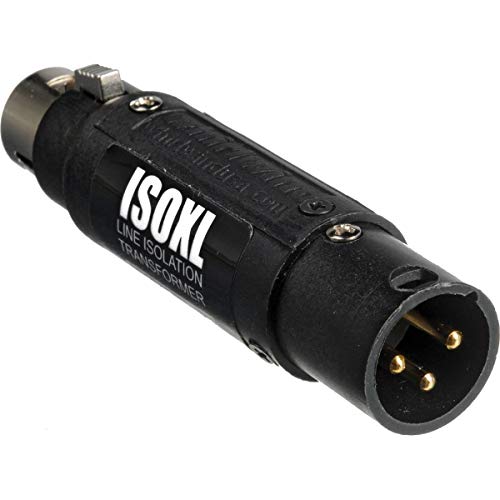
Whirlwind ISOXL is built for line-level isolation with 3-pin XLR male/female connectors. It carries a lifetime warranty and is designed for solid, reliable performance in professional contexts. Best for users who need a robust, rack-friendly isolation solution for one-to-one audio paths.
Best for: professional studios and live sound rigs where durable, dependable isolation is essential. Choose this for long-term reliability and straightforward signal routing.
Caution: It supports standard XLR connections; verify compatibility with any non-XLR gear in the signal chain to avoid mismatches.
WisWinDa 3Pin XLR Ground Loop Isolator (WDISO016S-XLR)
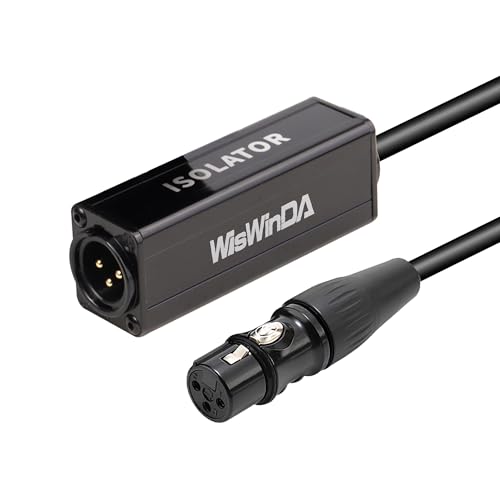
WisWinDa’s dual-transformer design targets hum and buzz eliminations with a sturdy aluminum shell for durability. It’s designed to reduce noise from car and home audio systems, while preserving HiFi signal integrity. Best for multi-device environments where consistent noise suppression is needed across channels.
Best for: home theaters and car audio integration where ground-loop noise is a recurring issue. Consider this if you value a two-transformer approach for stronger isolation.
Caution: Heavier build may affect portability in very compact setups.
WisWinDa Upgrade Pro XLR Ground Loop Isolator

This pro model adds a durable aluminum shell and dual audio transformers to reduce hum and buzz across professional setups. It’s designed to handle theater and home stereo noise challenges with solid build quality. Best for users expanding to more demanding environments or multiple inputs.
Best for: mid-to-large home theaters or small venues needing reliable, extended isolation. Choose this if you anticipate higher usage and need a sturdy enclosure.
Caution: Higher price point and size compared to basic models; evaluate space and necessity before upgrading.
WisWinDa 3Pin Pro XLR HiFi Isolation Box

The 3Pin Pro XLR HiFi version provides a balanced signal path with a robust aluminum shell and dual transformers. It targets cars and home audio systems that require substantial hum reduction while preserving HiFi sound quality. Best for users dealing with persistent ground-loop issues in mixed environments.
Best for: enthusiasts and integrators who demand consistent noise suppression across varying setups. Use this when you need reliable, long-term performance in both car and home audio contexts.
Caution: May be heavier than ultra-portable options; plan installation accordingly.
AUX to XLR Isolation Box (WQV)
WQV’s AUX to XLR isolation box offers a volume control and a built-in transformer with ground lift. It helps convert unbalanced AUX to balanced XLR with minimal loss and interference. It’s well-suited for laptops, MP3 players, and other portable sources in mixed signal chains.
Best for: portable studios, travel setups, and point-to-point connections where you need adjustable output levels without introducing noise. Choose this if you require on-the-go isolation for unbalanced sources.
Caution: As a compact accessory, it may not support very long cable runs without additional amplification in larger rooms.
Buying Guide
What is XLR isolation and when do you need it?
XLR isolation devices use transformers to break electrical ground paths that carry noise between components. Use them when you encounter hum, buzz, or crackling in audio chains with shared power or ground connections.
Single-channel vs. multi-channel considerations
Single-channel boxes are compact and easy to integrate for a direct path between one source and one destination. Multi-channel or dual-transformer boxes suit larger rigs and venues where several signals are simultaneously protected from interference.
Passive vs. active designs
Passive devices do not require power and are simple to deploy. Active designs may offer additional gain or impedance matching but can introduce complexity. For most standard setups, passive isolation provides reliable hum reduction with minimal maintenance.
Durability and enclosure
Aluminum housings tend to offer better durability for rack mounting or field use. If you transport gear often, consider a sturdier build to withstand handling and temperature variations.
Connector compatibility
Confirm that the device offers the needed connector types (XLR male/female, 1/4″ TRS) and that impedance matches your gear. Mismatched impedances can affect signal quality even with isolation.
Placement and cable management
Position isolation boxes close to the source or destination with clean, short runs when possible. Avoid looping power cables near signal lines to minimize radiated hum.
FAQ
- Do I need ground-lift on an isolation box? Ground-lift switches help break the ground loop path. Use them when you detect hum caused by shared grounding between devices.
- Will isolation boxes affect sound quality? Properly designed isolation boxes preserve signal integrity while reducing noise. Expect cleaner signal without significant loss when used correctly.
- Can I use these with consumer devices? Yes, many are compatible with PCs, laptops, MP3 players, and home stereo gear. Check the listed input/output options to ensure compatibility.
- Are passive solutions sufficient for professional use? For many pro setups, passive devices provide adequate hum reduction. For very noisy environments, consider additional shielding or higher-grade isolation boxes.
- How do I choose between one and two transformers? One transformer handles basic isolation; dual transformers can offer stronger hum elimination in more challenging environments.
- Do these require power? Most listed options are passive and do not require external power, simplifying deployment.