Best XLR Female to RCA Male Adapters for Audio Clarity and Versatility
Yes, an XLR female to RCA male adapter is a practical solution when you need to bridge pro-grade XLR gear with consumer RCA equipment. This guide highlights options suited for home studios, live setups, DJs, and small venues. Top picks emphasize signal integrity, build quality, and compatibility across mixers, amplifiers, and receivers. The buyer intent is clear: choose adapters that preserve audio quality while fitting your gear and workflow. The table below summarizes five strong choices to compare at a glance.
| Product | Brand | Best For |
|---|---|---|
| WJSTN XLR to RCA Cable XLR Female to RCA Male Adapter | WJSTN | Budget-friendly, unbalanced connections |
| PNGKNYOCN RCA to XLR Adapter RCA Male to XLR Female | PNGKNYOCN | Sturdy metal shell, durable build |
| belipro Dual Female XLR to RCA Cable | belipro | Dual-channel, studio or live use |
| Cardas Audio MRCA-FXLR Adapters | Cardas | Premium signal integrity, USA-made |
| YYTCG 24K Gold Plated XLR to RCA Adapter | YYTCG | Hi-fidelity listening, color-coded ease |
In the sections below, each product is evaluated for who benefits most, why it stands out, and any limitations to consider. This structure helps you compare quickly and choose the adapter that best matches your gear and workflow.
WJSTN XLR To RCA Cable: 2-Pack, 6 Inches

Best for budget-conscious setups where you need quick, unbalanced XLR-to-RCA bridging. This 2-pack leverages an XLR female to RCA male design with XLR pin 2 linked to the RCA positive and pins 1 and 3 to the RCA negatives. The unbalanced format keeps costs low and minimizes complexity for consumer-grade PA or home studio gear. Suitable for users who want a simple, portable solution without higher-fidelity demands. A potential limitation is that unbalanced connections are more prone to hum in high-interference environments.
PNGKNYOCN RCA To XLR Adapter 2-Pack

Best for rugged metal construction and consistent signal transmission. This adapter converts RCA male to XLR female, with a sturdy die-cast zinc alloy shell and brass/nickel-plated contacts designed to minimize signal loss. It is well-suited for studio and stage environments where durability and reliable connectivity matter. It supports high-fidelity audio transmission and keeps contact resistance low. A caveat is that it is best used within its designed signal path; cross-compatibility with certain pro-audio configurations may require additional adapters or cables.
belipro Dual XLR to RCA Cable 5Ft

Best for dual-channel requirements in home studios or DJ setups. This long 5-foot cable provides two XLR-to-RCA paths, enabling more flexible routing between mixers, recorders, and amplifiers. It features 24K gold-plated connectors to minimize tarnish and maintain signal clarity, along with an OFC conductor to reduce resistance. Best for users who need balanced-feel options with robust shielding and corrosion resistance. Limitations include higher cost relative to single-channel adapters and the need to manage longer cable runs to avoid noise pickup.
Cardas Audio MRCA-FXLR Adapters

Best for premium signal integrity and USA-made craftsmanship. Cardas MRCA-FXLR adapters convert male RCA to female XLR with high-quality plating and tight connections designed to preserve audio fidelity. They emphasize secure contact and reduced signal degradation, ideal for professional studios or high-end home systems. A limitation to consider is price relative to more economical options, though the build quality and materials justify the cost for critical listening applications.
YYTCG 24K Gold Plated XLR to RCA Adapter
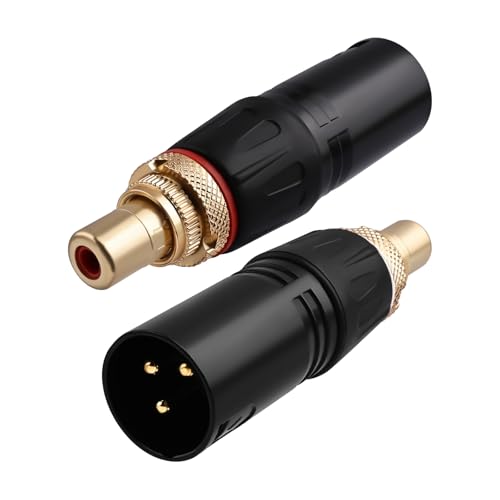
Best for audiophiles seeking minimal signal loss and color-coded convenience. YYTCG provides 24K gold-plated contacts and a zinc alloy shield designed to reduce resistance and EMI. The dual-color (red/white) coding helps avoid channel misconnection during setup. This adapter suits home theaters and high-fidelity systems where precise channel identification and low noise are priorities. A consideration is that color-coding aids setup but does not replace careful wiring and cable management to prevent crosstalk in complex rigs.
Buying Guide: Key Considerations For XLR Female To RCA Male Adapters
What connector path do you need? If you must bridge a mixer or microphone preamp to an RCA-equipped stereo or powered speaker, a dedicated XLR female to RCA male adapter is essential. For dual-channel needs, a two-channel cable simplifies routing and reduces clutter. Consider the transmission direction and whether you require bidirectional compatibility for your setup.
How important is shielding and build quality? Heavier metal shells and gold plating reduce resistance, minimize oxidation, and improve longevity in live environments. If your gear lives near electrical devices or in a busy venue space, choose options with robust shielding and durable connectors.
What about length and flexibility? Short cables reduce signal degradation but may limit placement. Longer options add flexibility but require careful management to avoid interference. Match length to your room or stage layout and plan for cable management.
Are color codes or labeling helpful? Color-coded adapters help with quick left/right identification in complex rigs. They are especially beneficial in live performances or multi-channel recording setups.
What is your budget and intended use? If you only need a temporary, budget-friendly bridge for home use, a basic unbalanced adapter may be adequate. For professional studios or live sound, investing in a higher-grade connector with shielding and durable construction is preferable.
Frequently Asked Questions
- What is the primary difference between XLR to RCA adapters and cables? A: They provide unbalanced or semi-balanced signal paths to link XLR-equipped gear with RCA inputs. Adapters are typically single connectors, while cables may incorporate two connectors per channel for longer runs.
- Are these adapters suitable for professional audio? A: Yes, many are designed for studio and live use, but performance depends on shielding, connectors, and the rest of your signal chain.
- Can RCA and XLR interfaces be used together safely? A: They can, but ensure the signal path matches unbalanced (RCA) or balanced (XLR) expectations to avoid noise and phase issues.
- Do I need two adapters for stereo channels? A: If your setup uses stereo signals, you may need a dual-channel adapter or two single-channel adapters to carry left and right signals separately.
- Will these adapters affect sound quality? A: Quality differences come from connector materials, shielding, and contact resistance. Higher-end adapters generally preserve signal integrity better in challenging environments.
- Is color-coding essential for setup? A: It helps reduce mis-wiring and speed up setup, especially in multi-channel environments or live performances.