
Best XLR Plugs and Sockets for DIY Audio
Answering the most common buyer question: which XLR plugs and sockets deliver reliable signal transmission for DIY recording, stage setups, and studio work? This guide highlights five well-suited options and explains who they’re best for. Each pick prioritizes solid construction, ease of use, and compatibility with standard XLR cables. Ideal buyers include home studio enthusiasts, live performers upgrading old cables, DIY cable builders, and hobbyists seeking durable, easy-to-assemble connectors.
| Product | Best For | Key Benefit |
|---|---|---|
| SZLliyxs 10 Pack XLR Connectors (B0GRW4KLXK) | DIY cable builders | Strong zinc-alloy housing, reliable locking end |
| MFL. 3-Pin XLR Cable Connector Male/Female (B0B2DYY1DZ) | Home studios | Brass contact finish, standards-compliant |
| SZLliyxs 10 Pack XLR Connectors (B0D3J2H6RN) | Stage setups | Professional-grade die-cast shell, secure clamping |
| MFL. 3-Pin XLR Cable Connector (Yellow) 10 Pairs (B0B2DZS6LL) | Live performances | Bright yellow for quick identification, solid construction |
| Zhengmy 40 Pcs 3 Pin XLR Solder Type Connectors (B0D1FNLTSY) | Spare parts and bulk projects | Large quantity, zinc alloy, versatile for various uses |
SZLliyxs 10 Pack XLR Connectors
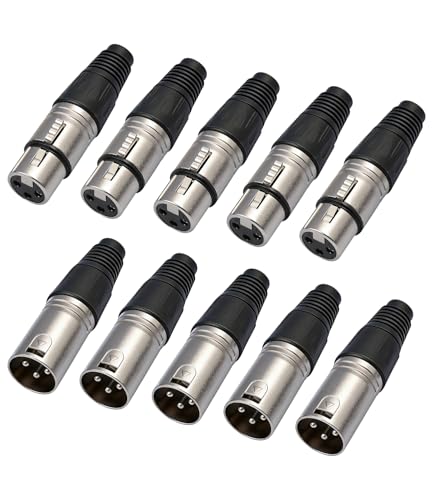
The SZLliyxs 10 Pack XLR Connectors deliver a robust, professional-grade option for builders assembling new cables or upgrading old ones. The design uses a high-strength zinc alloy die-cast housing with a polished black finish, combining durability with an attractive look. These plugs comply with common mechanical and electrical standards and are compatible with standard XLR sockets.
Best for: DIY cable projects and studio setups where reliability and easy assembly are priorities. The locking metal end with a rubber grommet helps snaps into place, reducing looseness during movement or transport.
Why chosen: The kit emphasizes a secure clamp of cables and a solid shell, which helps minimize microphonic noise and wear. The included 5-pair configuration supports multiple channel builds, making it a versatile choice for connector lovers who value long-term durability.
Limitation: Detailed specs on the exact mating standard beyond general compatibility aren’t provided; users should verify their cables match the described dimensions and pinouts before use.
MFL. 3-Pin XLR Connector (Male/Female) With Nickel Housing

The MFL. 3-Pin XLR set features durable nickel housing and brass contacts designed for stable signal transmission. The connectors are described as fully compliant with mechanical and electrical standards and easily fit standard plugs and sockets, making them a reliable choice for upgrading existing cables or building new ones.
Best for: Home studios and rehearsal spaces where dependable, easy-to-assemble connectors are needed. The brass contact finish suggests good conductivity and reduced signal loss at typical gig or studio distances.
Why chosen: This option emphasizes compatibility with standard XLR sockets, which reduces the risk of misfit and ensures broad interoperability across gear. It’s a practical pick for those who want straightforward, reliable performance without specialty tooling.
Caution: The data does not specify plating thickness or a locking mechanism beyond standard fit; verify your cable jacket thickness to ensure a proper clamping fit.
SZLliyxs 10 Pack XLR Connectors (Black)

This 10-pack mirrors the robust, metal-constructed design with a black zinc alloy shell for a premium, professional appearance. The XLR plugs are built to mate with standard sockets and include a sturdy die-cast housing that supports secure cable clamping, which is essential for stage or studio use where repeated connections are common.
Best for: Pros or hobbyists who want a consistent, professional build quality across several cables. The black finish helps blend with most equipment and reduces visibility of wear over time.
Why chosen: The combination of compact profile and durable insert materials makes it a reliable option for people converting older cables or creating new multi-channel runs. The design emphasizes fast assembly and long-term durability.
Limitation: Some users may prefer color-coded variants for easier routing; this set is primarily black and may require labeling elsewhere in the rig.
MFL. 3-Pin XLR Connector (Yellow) 10 Pairs
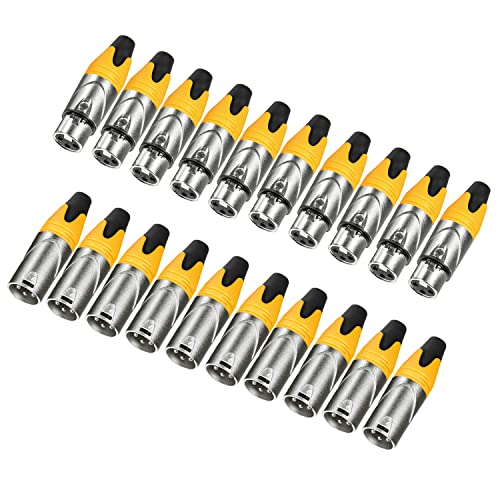
This yellow-labeled 10-pair set from MFL. is designed for quick visual identification during live shows or busy studio setups. It mirrors the brass-to-brass contact approach with zinc alloy housing and a robust finish intended to withstand repeated plug-in cycles. It maintains compatibility with standard XLR plug sockets.
Best for: Live performances or complex rigs where quick cable routing is important. The color cue helps crew members distinguish lines at a glance, reducing misconnections.
Why chosen: The combination of durable construction and color coding supports practical workflow in fast-paced environments. It’s a sensible pick for technicians who value organization as part of reliability.
Caution: Color alone should not substitute for verifying cable pinouts and length; always test for continuity and correct phase alignment before critical use.
Zhengmy 40 Pcs 3 Pin XLR Solder Type Connectors
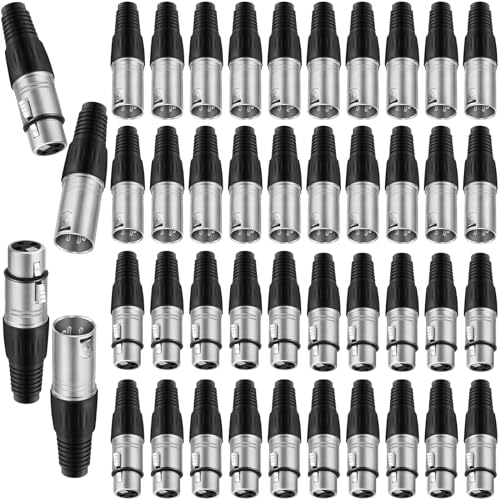
The Zhengmy package provides a large supply of 3-pin solder-type XLR connectors, including 20 male and 20 female pieces. Made from zinc alloy, these connectors emphasize durability and good conductivity, suitable for multiple applications such as home theaters, studios, or live setups. They’re intended to be a straightforward option for bulk projects or replacements.
Best for: Projects that require many connectors, replacements, or custom cable builds in bulk. This is a practical choice for classrooms, studios building multiple runs, or touring rigs where spare parts are valuable.
Why chosen: The high quantity per pack lowers the per-unit cost and ensures availability when multiple cables are in service. The zinc alloy construction supports long life in demanding environments.
Limitation: The description notes solder-type construction, which may require soldering tools and skill; hobbyists seeking plug-and-play inserts may prefer crimp-style variants.
Buying Guide
What should I consider before buying XLR plugs and sockets?
- Material and durability: Zinc alloy shells and brass contacts generally offer good longevity and stable connections. Consider whether the equipment will travel or endure frequent plugging and unplugging.
- Locking mechanism: Some connectors feature rubber grommets and locking ends to prevent loosening. If you move a lot or set up and tear down often, locking variants can save reliability.
- Compatibility: Ensure the plugs match the mating sockets on your cables and gear. Most XLR pins are standard, but pinouts or shell dimensions can vary slightly.
- Quantity and cost: Bulk packs save money for multiple cables but assess whether you need many identical connectors or mixed types for different channels.
- Color-coding and labeling: For complex rigs, color-coded housings or labeled connectors help with quick identification and reduce setup errors.
How to choose between solder-type and crimp-type connectors?
- Solder-type: Requires soldering to connect wires; provides a potentially durable joint but needs skill and proper equipment.
- Crimp-type: Quick and repeatable; often favored for field maintenance and workshop builds where speed matters.
How many connectors should I buy?
Consider the length of your runs and the number of channels you manage. If you plan to reconfigure frequently, buying a few spare connectors for both male and female ends is prudent.
What about color coding and identification?
Color-coded options (like yellow variants) can simplify live-sound workflows by helping crew distinguish lines during setup and soundcheck.
Quick comparison at a glance
- Best all-around durability: SZLliyxs 10 Pack (B0GRW4KLXK)
- Best for home studios: MFL. 3-Pin XLR (B0B2DYY1DZ)
- Best for stage work: SZLliyxs 10 Pack (B0D3J2H6RN)
- Best for color coding: MFL. 3-Pin Yellow (B0B2DZS6LL)
- Bulk spare parts: Zhengmy 40 Pcs (B0D1FNLTSY)
Frequently asked questions
- What is a 3-pin XLR plug used for? – It connects microphone or line-level signals in balanced audio setups, providing low-noise performance.
- Are XLR connectors universally compatible? – Most standard XLR plugs and sockets are compatible, but confirm pinout, cable gauge, and shell dimensions for your gear.
- Do solder-type connectors require special tools? – Yes, you’ll need a soldering iron and basic soldering skills to complete connections.
- Should I buy a color-coded set? – Color coding helps with quick identification in busy environments, but always verify electrical specs first.
- Is bulk purchasing worth it for home studios? – For multi-channel setups or frequent replacements, bulk packs can reduce per-unit cost and simplify inventory.
- What maintenance helps extend connector life? – Keep connectors clean, avoid bending wires sharply near the connector, and ensure proper mating alignment to prevent wear.