
Best XLR Snake 16 Channel Solutions for Live Sound and Studios
Find the right 16-channel XLR snake for clean, organized stage and studio connections. This guide highlights top choices for different setups—from small venues to large studios—so you can pick the best fit for your needs. The products below are best for live bands, churches, or recording facilities that require reliable, multi-channel audio runs with clear labeling and minimal noise.
Summary of selected products:
| Product | Length | Key Benefit |
|---|---|---|
| Seismic Audio SARLX-16×25 | 25 ft | Balanced, shielded channels; fast setup |
| GEARit 16 Channel XLR Snake 50 ft | 50 ft | Clear channel labels; high-quality OFC conductors |
| Seismic Audio SARLX-16×15 | 15 ft | True 16-channel straight-through; organized |
| GEARit 16 Channel XLR Snake 30 ft | 30 ft | Compact length with numbered labels |
| PRORECK 16-Channel Low Profile Snake | 50 ft | Circuit board for reduced noise; clear channel numbering |
Seismic Audio SARLX-16×25 25-Foot XLR Snake

16-channel XLR snake with 25-foot length and clearly labeled channels. Best for small to mid-size venues or studios needing a compact, organized multi-channel run from stage to mixer. The design prioritizes balanced, shielded audio to minimize hum and interference, supporting clean live sound and studio tracking.
Who it’s best for: small to medium venues, solo acts, or project studios needing quick setup with reliable signal integrity. Why selected: its shorter length makes setup faster while preserving channel separation through shielding and color-coded labeling.
Caution: While compact, it may require additional extension if your stage layout needs longer runs. No split or multi-path routing—one-to-one channel design remains standard.
GEARit 16 Channel XLR Snake 50 ft

50-foot balanced multicore XLR snake with 16 channels, ideal for longer stage-to-mixer runs or larger venues. Features 100% oxygen-free copper conductors with shielding and color-coded, labeled channels for quick setup and troubleshooting in dim lighting.
Who it’s best for: mid-to-large venues, houses of worship, or touring setups needing longer distances without sacrificing signal clarity. Why selected: the long run plus OFC conductors provide robust performance and easy identification in busy environments.
Caution: Longer cables can introduce more potential for physical wear; ensure proper cable management to protect the bulk length.
GEARit 16 Channel XLR Snake 30 ft

30-foot XLR snake designed for studio-to-stage workflows or compact stages. It offers numbered channels for fast setup and includes balanced analog paths with OFC conductors and reliable metal connectors.
Who it’s best for: small to mid-sized studios or venues that require a shorter, more portable snake without sacrificing channel integrity. Why selected: balance of length and labeling supports efficient rehearsals and performances.
Caution: Not the longest option; plan for additional length if your space requires extra distance between the desk and stage.
PRORECK 16-Channel Low Profile 50-Foot Snake
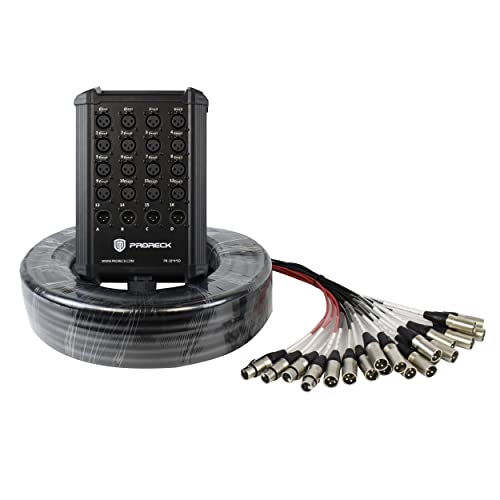
50-foot, low-profile XLR snake with 16 onboard channels and a circuit board design to reduce external noise. The setup emphasizes clear channel mapping with numerically labeled ends, making it a strong choice for multi-room studios or live rigs with extended stage distance.
Who it’s best for: larger studios and mid-to-large venues that require longer runs and stable signal path. Why selected: the low-profile design minimizes footprint and the circuit board helps preserve signal integrity across all channels.
Caution: While it features a circuit-board design for reduced noise, true performance depends on careful handling to avoid connector wear and shielding gaps.
Buying Guide: How to Choose a 16-Channel XLR Snake
- Length vs. venue size: Choose length based on stage-to-m mixer distance. Shorter snakes (15–25 ft) fit small stages; longer snakes (30–50 ft) suit larger stages or rooms.
- Channel labeling: Opt for color-coded, clearly labeled channels to simplify setup and troubleshooting in low light.
- Conductor material and shielding: 100% OFC conductors and shielding improve signal integrity and reduce hum or interference.
- Connector quality: Metal XLR connectors with solid latching or locking mechanisms protect against accidental unplugging during performances.
- One-to-one channel routing: True 16-channel straight-through snakes avoid channel mixing, reducing confusion during patching.
- Portability and footprint: For mobile gigs, consider a low-profile box design to save space on crowded stages or racks.
- Durability: Look for rugged construction and reinforced strain relief for touring or active rehearsal spaces.
- Maintenance: Check if channel labels are printable or replaceable, and ensure ends are accessible for quick re-labeling if setups change.
FAQ
What is a true 16-channel straight-through snake?
It means 16 female XLR connectors on one end map directly to 16 male XLR connectors on the other end without splitting or mixing channels.
Why label channels on an XLR snake?
Labels help identify which signal goes where, speeding setup and troubleshooting, especially in dim environments.
Are longer snakes more susceptible to signal loss?
Longer runs can introduce more potential for signal loss or interference if shielding or conductor quality is poor. Look for high-quality OFC conductors and shielding to mitigate this.
Should I choose a snake with a low-profile box?
Low-profile designs save space on crowded stages and racks, useful for mobile setups and smaller venues.
Is it okay to use a 50 ft snake on a small stage?
It’s feasible, but consider weight, manageability, and the potential for tripping hazards. For small stages, a shorter length may be more practical.
What maintenance helps extend an XLR snake’s life?
Store properly, avoid sharp bends, inspect connectors for wear, and label integrity; replace damaged ends promptly to preserve signal quality.