
Best XLR to 1/4 Speaker Cable Options for Clear Audio and Easy Setups
Answering the need for reliable XLR to 1/4 connections, these cables suit home studios, podcasters, live sound, and conferencing setups. The top picks below are best for different buyers: professionals seeking durable, low-noise cables; hobbyists needing value-packed packs; and performers requiring color-coded or split-cable solutions. The quick-reference table helps compare core specs at a glance.
| Product | Best For | Length | Type | Notes |
|---|---|---|---|---|
| Cable Matters 2-Pack Premium XLR to XLR Cable | Studio/Stage backups | 1 ft | XLR to XLR | Two-pack for versatility |
| Conable XLR Cables (4 Pack, 1 ft) | Multi-mic setups | 1 ft | XLR to XLR | Color-coded rings for quick ID |
| Mygatti XLR Microphone Cable (4 Pack, 1 ft) | Podcastes/Small studios | 1 ft | XLR to XLR | Gold-plated connectors; dual shielding |
| SZLliyxs XLR Splitter Cable (4 in to 1 out) | Multi-mic recording | Variable | XLR splitter | 4-in to 1-out; heavy-duty |
| Cable Matters XLR Splitter Cable (1.5 ft) | Live sound/rec | 1.5 ft | XLR Y split | Bi-directional flexibility |
Cable Matters 2-Pack Premium XLR to XLR Cable

Best for: small studios and on-the-go setups needing a dependable extra cable. These XLR to XLR cables use 21 AWG OFC conductors and a soft PVC jacket to minimize interference and maximize audio fidelity. The two-pack adds value for spare or alternative devices in varied rooms.
Key features: professional audio quality, 3-pin XLR connectors, low noise, durable build. Limitation: length is fixed at 1 ft, which may require adapters or longer cables for distant gear.
Conable XLR Cables (1 ft) 4 Pack
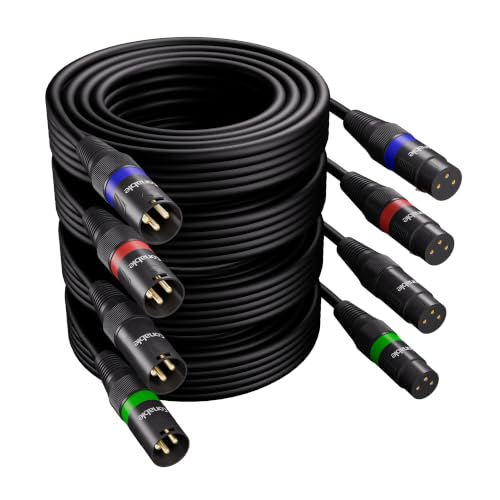
Best for: multi-mic setups in small studios and stage environments. These color-coded XLR cables feature 22 AWG OFC conductors with shielding to reduce EMI and hum. Gold-plated pins offer oxidation resistance for reliable long-term use.
Caution: while color-coding helps organization, the shorter length may require extra routing in larger rooms.
Mygatti XLR Microphone Cable (1 ft, 4 Pack)

Best for: compact studios, podcast setups, and portable rigs needing reliable, noise-free connections. These cables use OFC conductors with dual shielding (copper braid + aluminum foil) to minimize EMI and RFI.
Why chosen: sturdy gold-plated connectors and a flexible high-elastic PVC jacket provide durability and ease of use. Limitation: 1 ft length may not suit larger rooms without extension cables.
SZLliyxs XLR Splitter Cable (4 In to 1 Out)
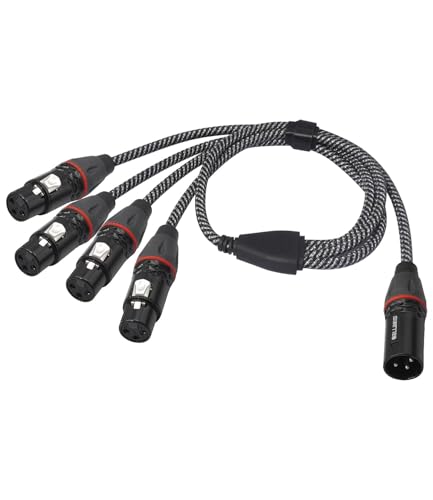
Best for: recording with multiple mics into a single destination, such as a mixer or audio interface. This 4-in, 1-out arrangement helps consolidate signals without extra adapters.
Why chosen: heavy-duty metal shell and dual shielding protect against interference; color-coded 22 AWG OFC conductors keep signals clean. Caution: splitting can affect levels; ensure the single output feed matches device expectations.
Cable Matters XLR Splitter Cable, 1.5 ft
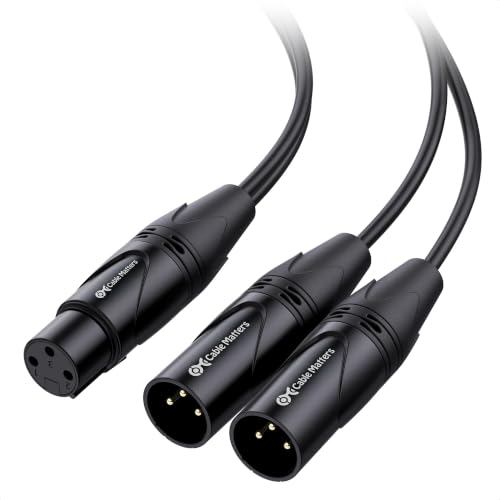
Best for: live sound or studio setups needing to split a single XLR output to two inputs. This Y-cable design supports balanced signals and helps route a mic to two devices like an amplifier and mixer.
Why chosen: reliable XLR male to female configuration with a flexible 1.5 ft length. Limitation: Y-cables can introduce loading effects if both outputs are heavily loaded; test in your environment before deploying widely.
Buying Guide: Key Purchase Considerations
- Purpose and compatibility: If you need XLR to XLR, prioritize balanced, low-noise cables with OFC conductors and good shielding. For signal splitting, choose dedicated splitter cables and ensure outputs won’t overload the receiving gear.
- Length and routing: Short cables reduce clutter and noise but can constrain placement. Longer runs may require reinforced shielding to minimize interference.
- Durability and connectors: Gold-plated connectors resist corrosion and maintain contact quality. Look for flexible jackets and robust housings for frequent plugging and unplugging.
- Color-coding and identification: For multi-mic setups, color-coded rings or jackets help keep connections organized and reduce setup time.
- Noise management: Cables with dual shielding or OFC cores typically deliver lower EMI and RFI, particularly in environments with electrical noise.
- Budget vs. versatility: Multi-pack options offer savings and spare cables, which is valuable for quick swaps during sessions or events.
Frequently Asked Questions
- What is the main difference between XLR to XLR and XLR splitters?
Answer: XLR to XLR cables transfer a signal from one device to another. XLR splitters take one XLR output and feed multiple inputs, useful for sending a mic signal to two devices. - Are gold-plated connectors necessary?
Answer: Gold plating improves corrosion resistance and long-term contact reliability, especially in frequent plug/unplug scenarios. - Do shorter cables affect sound quality?
Answer: Shorter cables generally preserve signal integrity better and reduce potential interference, but only if they meet your setup’s placement needs. - Can I use XLR to 1/4″ adapters for compatibility?
Answer: Adapters exist, but purpose-built cables reduce risks of impedance mismatches and noise. Use adapters only when necessary. - What should I consider when mixing several cables in one rig?
Answer: Ensure shielding, conductor quality, and proper grounding to avoid hum. Label cables and manage routing to minimize cross-talk. - Is a multi-pack always better?
Answer: Multi-packs are cost-efficient and convenient for backups, but ensure the included lengths match your typical setups.
For buyers seeking to connect XLR microphones to various inputs or to drive multiple destinations, the selections above cover common needs—from compact studio configurations to portable live setups. Each option emphasizes durability, shielding, and ease of use, with clear guidance on when to choose one style over another.