
Best XLR to RCA Subwoofer Cable for Clean, Low-Frequency Sound
When shopping for an XLR to RCA subwoofer cable, look for cables that preserve signal integrity while reducing hum and noise. This guide highlights five carefully chosen options suited for different setups, from home studios to professional systems. Best for balanced-to-unbalanced conversions, these cables help connect XLR sources like mixers or DACs to RCA inputs on powered speakers or subwoofers. Choose based on length, shielding, and connector quality to suit your listening environment and equipment.
| Product | Length | Best For |
|---|---|---|
| Monoprice 104779 Premier Series | 15 ft | Long runs with solid shielding |
| Monoprice XLR Male to RCA Male 6 ft | 6 ft | Compact setups, reliable build |
| Cable Matters XLR to RCA Cable | 6 ft | Balanced-to-unbalanced conversion |
| YYTCG Audiophile 6.56 ft (2-Pack) | 6.56 ft | Premium sound with strong shielding |
| Cable Matters Dual RCA to XLR Cable | 10 ft | Dual-channel stereo connections |
Monoprice 104779 15-Feet Premier Series XLR Male to RCA Male 16AWG Cable
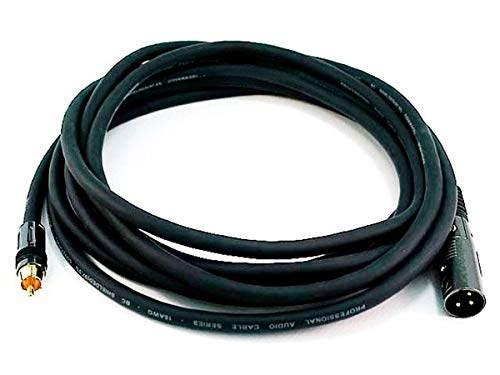
Best for long-distance connections in a studio or home theater setup. This 15-foot Premier Series cable uses two 16 AWG oxygen-free copper conductors with full-length copper braid shielding (97.5% coverage). It preserves signal clarity when routing XLR sources to RCA inputs, reducing noise over longer runs. Best for buyers needing extended reach without compromising fidelity.
Who it’s for: Ultrasensitive environments or rooms where the subwoofer is far from the audio source. Why selected: Strong shielding and heavier gauge conductors minimize hum and maintain signal integrity over distance.
Caution: Bulkier cables can be stiffer; ensure your setup has smooth routing to avoid kinks.
Monoprice XLR Male to RCA Male Cable – 6 Feet

Best for compact studio or small-room theater setups needing a dependable, mid-length connection. This 6-foot cable features E21Gold plated connectors and 16 AWG shielded construction. It converts a balanced XLR signal to an unbalanced RCA signal and is suitable for sending audio from an XLR source to an RCA input, or vice versa.
Who it’s for: Small to mid-size rooms where run length is limited. Why selected: Solid dual-conductor design with gold-plated contacts for corrosion resistance and reliable contact.
Caution: Not ideal for very long runs due to higher potential for minimal signal loss over distance.
Cable Matters XLR to RCA Cable, 6ft

Balanced to unbalanced conversion with shielded XLR and RCA conductors. This 6-foot cable is designed to connect a mixer or DAC with XLR outputs to an amplifier or powered speaker with RCA inputs. It emphasizes noise reduction through oxygen-free copper conductors and braided shielding, aiding pristine signal fidelity in typical studio or home theater layouts.
Who it’s for: Users needing a dedicated balanced-to-unbalanced path between mixer/DAC and powered speakers. Why selected: Clear shielding and conductor quality help minimize hum in shared environment setups.
Caution: Some interfaces may require additional ground management to eliminate residual buzz in highly electronic rooms.
YYTCG Audiophile HiFi 6.56ft RCA to XLR Cable (2-Pack)
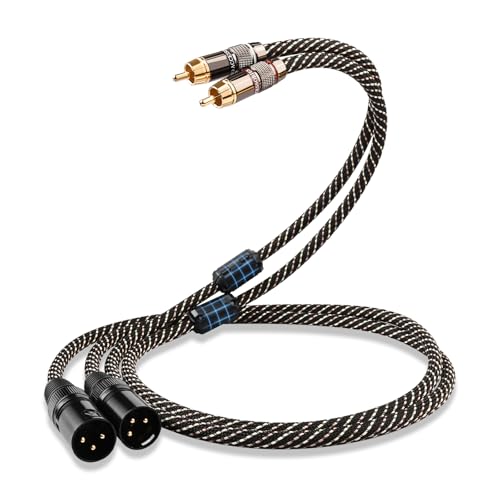
Premium option designed for high-fidelity subwoofer connections. This 6.56-foot RCA to XLR cable uses 4N oxygen-free copper conductors with multi-shielding, including a high-density tinned copper braid, shielding, and ferrite cores to reduce EMI and RFI interference. The 24K gold-plated connectors provide corrosion resistance and reliable insertion longevity, suitable for demanding studio and home theater installations.
Who it’s for: Audiophiles and professionals seeking best-in-class shielding and conductor quality. Why selected: Enhanced shielding and premium connectors help deliver cleaner bass and less noise.
Caution: Higher price point and bulkier build may not be necessary for casual listening setups.
Cable Matters Dual RCA to XLR Cable, Dual RCA Male to Dual XLR Male, 10ft
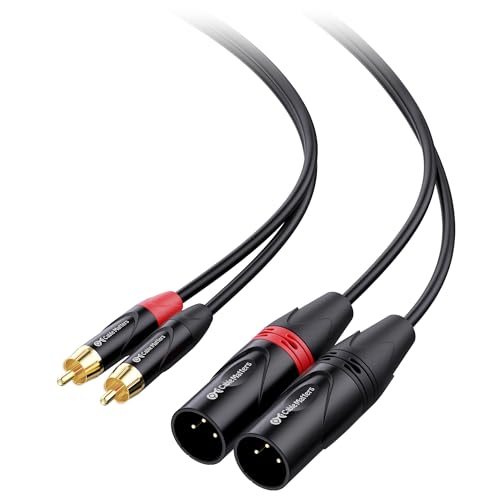
Best for stereo applications where two RCA channels must drive two XLR inputs on an amplifier or subwoofer. This 10-foot cable carries left and right unbalanced audio signals with dual RCA ends converting to dual XLR inputs. It uses oxygen-free copper conductors and braided shielding to minimize interference and noise, making it suitable for DJ setups or home theaters with XLR-powered subs.
Who it’s for: Users needing two-channel, balanced-from-unbalanced conversion in longer runs. Why selected: Clear separation of left and right channels with shielded construction supports cleaner stereo subwoofer feeds.
Caution: Not a true signal balancer; it preserves unbalanced signals, so hum reduction depends on shielding and ground quality in the system.
Buying Guide
What is the difference between balanced and unbalanced cables?
Balanced cables (XLR) carry two signal lines and a shield, reducing noise and hum, especially over longer distances. Unbalanced cables (RCA) are simpler but more prone to interference. When using an XLR to RCA arrangement, the cable typically performs a signal conversion rather than maintaining balance, so shielding and run length become key factors.
How long should the cable be?
Longer runs can introduce more signal loss and potential interference. Choose lengths that minimize excess slack and routing complexity. For subwoofers near the source, 6 to 10 feet is often sufficient; for studios or larger rooms, 15 feet or more may be necessary, with robust shielding.
Why is shielding important?
Shielding reduces EMI and RFI from power supplies, lighting, and other equipment. Cables with braided copper shielding and multiple shielding layers offer better noise rejection, which is essential for preserving low-frequency clarity in subwoofer paths.
What about connector quality and plating?
Gold-plated or high-quality connectors resist corrosion and ensure stable, low-resistance connections. This matters for longevity and consistent performance, especially with frequent insertions and removals.
Should I choose a single cable or a dual-channel option?
Single-channel cables suit mono sources or a single subwoofer. Dual-channel cables are beneficial when sending stereo subwoofer outputs or when connecting two inputs on a single amp or sub. Consider your system’s input configuration and routing needs.
What common limitations should buyers note?
These cables convert or adapt signals rather than improving inherent source quality. The effectiveness of hum reduction relies on system grounding, room acoustics, and the overall cable chain. For very noisy environments, consider additional grounding, isolation, or active noise-reducing solutions in the signal path.
Quick comparison questions
- Which cable is best for long runs? Monoprice 104779 15-Feet Premier Series due to shielding and length.
- Which is best for compact setups? Monoprice XLR to RCA 6 ft or Cable Matters 6 ft options.
- Which offers premium shielding for critical listening? YYTCG Audiophile HiFi 6.56 ft (2-Pack).
FAQ
- Q: Do XLR to RCA cables convert balanced to unbalanced signals? A: Yes, typically they convert balanced signals to unbalanced ones, preserving signal integrity but not restoring balance.
- Q: Can I use these cables to connect a subwoofer with RCA input to an XLR source? A: Yes, but verify that the subwoofer supports unbalanced input and that the source provides compatible levels.
- Q: Will longer cables necessarily degrade audio quality? A: Not if the cable has adequate shielding and quality conductors; in some cases, excessive length can introduce minor losses or noise.
- Q: Are dual-channel cables necessary for stereo subs? A: Not always; use them if your setup requires separate left and right feeds to corresponding inputs.
- Q: Is gold plating essential? A: It improves corrosion resistance and longevity, but the audible impact is usually minor compared to shielding and conductor quality.