
Best XLR to XLR Connection Cables for Studio and Live Use
Answering the needs of audio professionals and enthusiasts seeking reliable XLR to XLR connections. These cables are best for studio microphones, live sound, and stage setups where low noise, durable builds, and solid connectors matter. The top picks below are suited for different buyers: home studio owners, live performers, and event technicians. The quick-reference table highlights the five selected products and who they’re best for.
| Product | Best For |
|---|---|
| Cable Matters 2-Pack Premium XLR to XLR Cable | Home studios and multiple-microphone setups |
| Amazon Basics XLR Male to Female Cable | Budget-friendly PA and basic recording |
| Warrky XLR Cables 6.6ft 2 Pack | Professional studios and live performances |
| VANDESAIL XLR Cables 3ft 2 Pack | Compact setups and quick on-the-go use |
| AuxLink XLR Cable 6ft 2 Pack | Stage rigs with stable connections |
Cable Matters 2-Pack Premium XLR to XLR Cable

Best for: small studios and setups needing backup cables. These cables use high-quality 3-pin XLR connectors and 21 AWG OFC conductors for clear, balanced audio. The two-pack bundle gives spare or replacement options without extra shopping. The soft PVC jacket helps with flexibility, reducing kinks during use. A potential limitation is that the data does not specify connector plating beyond standard nickel, which may be a consideration for long-term corrosion resistance in harsh environments.
Amazon Basics XLR Male to Female Cable

Best for: basic PA systems, practice studios, and learners on a budget. This cable uses all-copper conductors with inner copper shielding to minimize noise. Zinc alloy connectors with nickel plating provide durable housing. The 6-foot length is versatile for most small to medium rooms. A limitation is that the product description does not detail the exact shielding layers beyond inner spiral shielding, which could matter in highly EMI-prone spaces.
Warrky XLR Cables 6.6ft 2 Pack
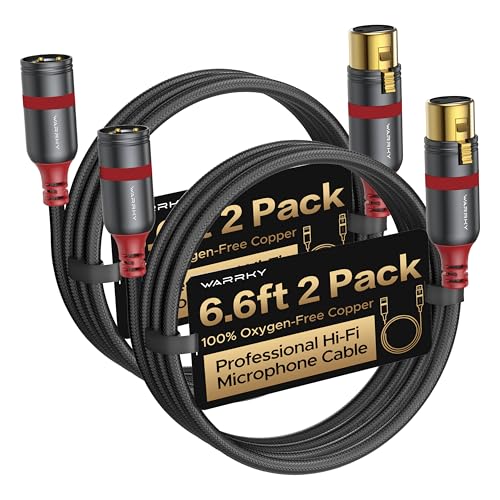
Best for: professional studios and live performances needing durable builds and minimal signal loss. Warrky cables feature a 22 AWG OFC core, six-layer precision design, and a robust aluminum shell with secure locking clips. A notable advantage is reduced signal loss and strong EMI/RFI shielding. The data mentions extensive shielding and low THD, which helps preserve subtle details. A caveat is the premium design might come at a higher price point compared to entry-level cables.
VANDESAIL XLR Cables 3ft 2 Pack

Best for: compact stage setups and quick changes on the go. VANDESAIL emphasizes double shielding to prevent interference and a flexible nylon braided jacket. The 3-foot length is ideal for tightly spaced rigs or vocal booths. A limitation is the lack of explicit conductor gauge in the listing, which can affect ongoing durability assessments for very heavy use in touring environments.
AuxLink XLR Cable 6ft 2 Pack

Best for: stage rigs and environments where stable connections matter. AuxLink uses 24 AWG OFC conductors with a double shielding design (foil plus copper spiral) to reduce hum and hiss. Self-locking female connectors, zinc alloy housing, and silver-plated XLR pins support a stable connection. A potential limitation is that the listing does not detail THD or frequency response, which means users should consider recording needs before deployment in high-fidelity sessions.
Buying Guide: Key Considerations For XLR Cables
- Conductor material: OFC conductors minimize resistance and preserve signal integrity.
- Shielding: Double shielding (foil plus braided) reduces EMI/RFI and hum in noisy venues.
- Connector quality: Nickel or silver-plated pins resist corrosion and ensure reliable contacts.
- Length: Choose the shortest cable that fits the setup to reduce capacitance and potential signal loss.
- Durability features: Flexible jackets, strain relief, and metal housings help withstand frequent plugging and unplugging.
- Pairing needs: If multiple mics or devices are used, consider a value pack for backups.
FAQ
- What is the main difference between XLR to XLR cables?—They are designed to connect balanced audio equipment with 3-pin XLR connectors, preserving signal integrity and reducing noise across long runs.
- Are more expensive XLR cables always better?—Not necessarily. Look for good shielding, conductor quality, and connector durability that match your use case.
- Should I buy a multi-pack?—Yes, if you have several mics or devices; it reduces downtime when a cable fails or is in use elsewhere.
- What length is ideal for a studio?—Typically 3 to 6 feet for fixed setups; longer runs can introduce capacitance and potential high-frequency roll-off.
- Can I use XLR cables for stage lighting?—XLR connectors can be used for certain DMX lighting cables, but verify the specific driver and standard used by the equipment.
- How do I avoid hum and noise?—Choose cables with double shielding, high-quality connectors, and ensure proper grounding of audio interfaces and mixers.