Best Home Audio Powered Subwoofer for Rich, Studio-Grade Bass
Looking for a powered subwoofer to boost home theater or music systems? This guide highlights five top options that deliver strong, clean bass without distortion. Each pick is aimed at different buyers—from compact rooms to home studios—so you can choose based on space, power needs, and integration ease. The top picks below include a quick summary table to compare core specs and intended uses at a glance.
| Product | Best For | Key Benefit |
|---|---|---|
| Rockville Rock Shaker 10 | Small to medium rooms, budget-minded buyers | 600W peak, adjustable crossover |
| Klipsch R-100SW | Home theaters seeking deep all-digital power | Front-firing 10″ woofer, digital amp |
| Klipsch R-8SW | Compact space, ambient listening | 8″ woofer, rich bass in small desk setups |
| Yamaha NS-SW100 | Clean, tight bass in versatile rooms | 10″ cone woofer, YST II control |
| Polk PSW10 | Budget-friendly home theater systems | Power Port technology, 100W |
Rockville Rock Shaker 10 Powered Subwoofer

The Rock Shaker 10 offers a 10″ woofer with a 600W peak and 300W RMS output. It uses a class-D amplifier tuned to the enclosure for clean, distortion-free bass. Volume, crossover frequency, and phase controls let you tailor the sound for movies, music, or gaming. Best for: rooms needing strong, controllable bass without a large footprint. Limitation: controls may require precise tweaking to blend with smaller satellite speakers.
Klipsch R-100SW 10″ Subwoofer

The Klipsch R-100SW features a 10″ front-firing spun-copper IMG woofer and an all-digital 300W peak amplifier. It provides a simple, low-pass crossover and phase control for easy integration with a home theater system. Best for: users who want robust, punchy bass with straightforward setup. Caution: the compact cabinet may limit very deep bass in larger rooms unless paired with bigger front speakers.
Klipsch Reference R-8SW Surround Subwoofer

The R-8SW is a compact 8-inch subwoofer offering rich, immersive bass with a spun copper IMG woofer. Its smaller footprint makes it well-suited for desks or media consoles. Best for: users who want Klipsch’s signature clarity in a compact package. Limitation: smaller driver may not deliver the deepest bass in large rooms.
Klipsch R-120SW Subwoofer

The R-120SW uses a 12″ high-excursion spun-copper IMG woofer and a 400W peak amplifier with a broad 29 Hz–120 Hz response range. It excels in delivering deep, dynamic bass for larger rooms and bigger speakers. Best for: home theaters needing substantial low-end impact. Caution: larger cabinet size may require more space beneath or beside furniture.
Yamaha NS-SW100 10″ Powered Subwoofer

The NS-SW100 integrates a 10″ cone woofer with a new twisted flare port and Yamaha’s YST II technology for tight, accurate bass. The built-in amplifier provides clean, balanced low-end performance. Best for: listeners who want a compact, reliable sub that blends well with various speakers. Limitation: may not deliver the same thunderous bass as larger subs in very large rooms.
Polk Audio PSW10 10″ Powered Subwoofer
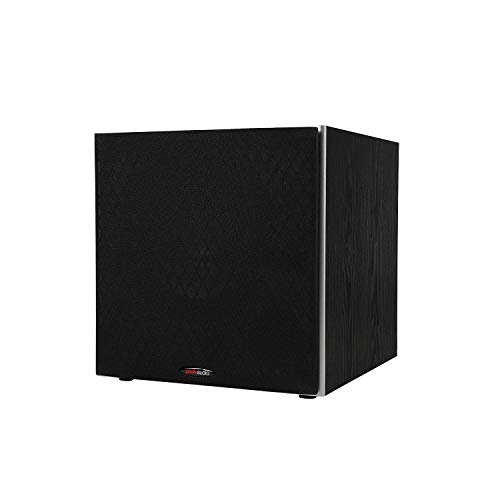
The Polk PSW10 uses a 10″ Dynamic Balance woofer and a tuned port to deliver deeper bass with higher efficiency. It provides up to 100W of built-in power and is designed to pair with Polk’s Monitor and T-Series speakers. Best for: budget-conscious setups seeking solid, room-filling bass. Limitation: may have less headroom in very loud scenes compared to higher-w wattage models.
Buying Guide: Key Considerations for Choosing a Powered Subwoofer
- Room size and placement: Bigger rooms benefit from larger woofer sizes and higher wattage; consider how much space you have and where the sub will sit.
- Power and headroom: Peak and RMS ratings indicate how loudly the sub can play without distortion. Match to your main speakers and listening level.
- Cabinet design and porting: Front- versus down-firing, sealed versus ported. Ported designs usually deliver more thump at room-filling volumes, but can introduce port noise if mis-tuned.
- Frequency range and crossover: A lower crossover point helps blend bass with your main speakers. Adjustable crossovers provide flexibility across different setups.
- Connectivity: Ensure compatibility with your receiver or amplifier. Look for line-level inputs and phase controls to fine-tune integration.
- Audio goals: If you want cinematic impact, prioritize higher wattage and tighter control. For music-focused listening, aim for clean, accurate bass with minimal coloration.
- Build and durability: MDF enclosures are common; check cabinet bracing and build quality for long-term use in living spaces or studios.
Frequently Asked Questions
- What is a powered subwoofer?
Answer: A subwoofer with an integrated amplifier, designed to reproduce low-frequency sounds without needing a separate external amp. - How do I choose the right woofer size?
Answer: Larger woofers (10″–12″) typically deliver deeper bass for larger rooms, while 8″ subs fit compact spaces. - Is a subwoofer necessary for a home theater?
Answer: It enhances low-end impact, making explosions, effects, and music more immersive, especially in larger rooms. - Should I place the sub near a wall or corner?
Answer: Placing near walls or corners can increase bass output, but may cause boominess; experiment with placement and phase settings. - What’s the difference between front- and ported design?
Answer: Front-ported subs are easier to place in tight spaces; ported designs generally deliver more bass extension but can have more boundary coupling effects. - Can I use a powered sub with any speaker system?
Answer: Yes, but ensure proper crossover and phase alignment with your main speakers for seamless bass integration.