Best Speakers for Stereo System: Clear, Balanced Sound for Any Space
The top picks below deliver clear imaging, reliable bass, and versatile connectivity for a stereo setup. Best for compact living rooms, home offices, or desktop rigs, these selections span passive and active designs to fit various amplification options. Each entry notes who it’s best for and where it shines, plus practical limitations to consider before buying. The quick-reference table after this paragraph helps compare core specs at a glance.
| Product | Type | Best For | |
|---|---|---|---|
| Sony CS Speakers SS-CS5M2 | Passive bookshelf | Small spaces, budget-friendly stereo | Requires amplifier/receiver |
| MEVOSTO 36W RMS Active | Active bookshelf | Desk or PC setups, easy connect | BT 5.4 for wireless pairing |
| Saiyin Passive Bookshelf | Passive bookshelf | Home theater or desktop with amp | No Bluetooth |
| RIOWOIS Passive Bookshelf (4Ω) | Passive bookshelf | Compact living rooms, near-wall placement | Requires amplifier |
| Edifier R1280T | Active/bookshelf | Entry-level desktop/studio monitor | Two AUX inputs |
Sony CS Speakers SS-CS5M2 3-Way Pair

The Sony SS-CS5M2 is a 3-way, 3-driver bookshelf system designed for compact spaces. With a 5.12-inch woofer, it emphasizes solid low-end for a budget-friendly pair that plugs into an amplifier or receiver. Best for smaller living rooms or dorm setups where space is at a premium. Limitations include the need for external amplification and potential lower overall efficiency compared with higher-end models.
Elimavi Passive Bookshelf Speakers

Elimavi passive speakers use a 4-inch woofer and 1-inch silk horn tweeter for a two-way design with bass down to 60 Hz. They require an external amplifier or receiver to operate. Best for listeners who want a warm, studio-like sound in a living room or home theater setup and who already own amplification gear. Caution: no built-in amplification and no Bluetooth connectivity.
MEVOSTO Active Bookshelf Speakers

MEVOSTO brings 36W RMS of active, dual 1-inch silk dome tweeters plus a 5-inch woofer in a compact bookshelf form. The system includes Bluetooth 5.4 for quick wireless pairing and USB audio for low-latency PC use. It suits desktop PCs, dorm rooms, or small studios where a simple, all-in-one speaker solution is preferred. Limitation: Bluetooth performance may vary with distance and interference; wired USB offers the best fidelity.
Saiyin Passive Bookshelf Speakers

Saiyin offers a 4Ω, 3.5-inch woofer with a crisp tweeter in a compact, wall-mountable form. These passive speakers are best paired with a suitable amplifier or AV receiver to deliver balanced sound for stereo or home theater. Best for budget-conscious buyers who already own amplification gear; drawback is absence of Bluetooth and built-in amplification.
RIOWOIS Passive Bookshelf Speakers (Wood Grain)

RIOWOIS presents compact passive speakers with a wood-grain enclosure, 6-ohm impedance, and a 4-inch woofer paired with a 2-inch tweeter. They’re suitable for smaller rooms and near-wall placement when used with a compatible amplifier. Best for adding a simple stereo pair to a modest-size living area; limitation is the need for external power.
Edifier R1280T Powered Bookshelf Speakers
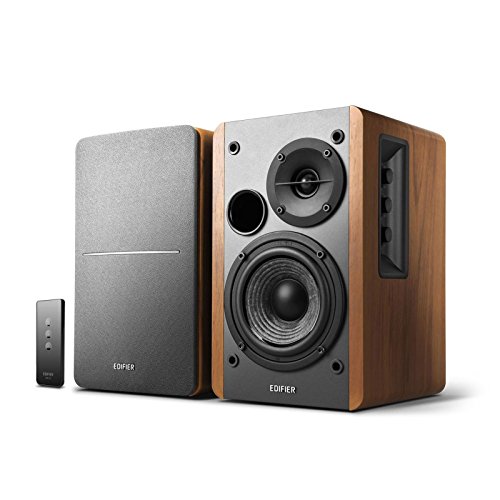
Edifier R1280T offers 42 watts RMS through two aux inputs and a 13mm silk dome tweeter with a 4-inch driver. This is a plug-and-play option for desktop or small living spaces, with simple bass and treble controls. Choose Edifier for a straightforward, budget-friendly active solution that doesn’t require a separate amplifier. Caution: limited to consumer-grade inputs and modest power compared with larger studio monitors.
Buying Guide: Key Purchase Considerations
Do you need active or passive speakers?
Active speakers have built-in amplification, making setup easier and requiring fewer components. Passive speakers require an external amplifier or receiver but can offer more flexibility if you already own gear. Choose active if you want a simple, all-in-one solution; opt for passive if you want to match drivers with a specific amp or upgrade in stages.
What room size and placement matter?
Compact 4–5 inch bookshelf speakers work well in small rooms or on desks. If you have a larger living room, you may want a speaker with bigger woofers or higher sensitivity to deliver more room-filling bass and volume. Also consider wall-mount or stand placement for optimal imaging.
Connectivity and future upgrades
Bluetooth or USB connectivity is convenient for casual listening or computer use. If you plan a traditional stereo, ensure compatibility with your amplifier, receiver, and source devices. Some models offer multiple inputs to simplify switching between devices.
Build quality and acoustics
Look for solid enclosures and controlled cabinet resonance. Silk dome tweeters and properly chosen woofer sizes contribute to smoother highs and stable bass. The finish and enclosure material can affect both aesthetics and vibration control in busy living spaces.
Budget and upgrade paths
Entry-level options provide good value for smaller rooms, while higher-priced models offer greater headroom, dynamic range, and finer detail. If future upgrades are likely, choose a system that scales with an external amplifier or a higher-widelity active model.
FAQ
- Do I need a separate amplifier for passive speakers? Yes. Passive speakers require an external amplifier or receiver to power them.
- Are active speakers easier to set up than passive? Generally yes, because they include built-in amplification and simpler wiring.
- Can bookshelf speakers fill a large room? Some can, especially if paired with a capable amplifier and positioned for optimal bass response; larger drivers typically perform better in bigger spaces.
- Is Bluetooth enough for high-fidelity stereo? Bluetooth offers convenience but may introduce compression; wired connections usually preserve more detail.
- What should I consider about placement? Avoid near-wall cancellation, allow space for the woofer to breathe, and align tweeters with your listening position for accurate imaging.