Best Guitar Amp Voltage Regulator Solutions for Stable Tone and Safe Power
Answering the need for clean, stable power in guitar amplifiers, these voltage regulator options help protect tubes, ensure consistent signal behavior, and reduce hum or instability. Best for tube amp owners, builders, or technicians seeking reliable regulation for high-voltage stages and pedal power alike.
Overview table: top picks for guitar amp voltage regulation
| Product | Brand | Best For | Key Benefit |
|---|---|---|---|
| AmpRx Brownie – AC Voltage Controller for Tube Amplifiers | AmpRX | Tubed amps needing real-time monitoring | Real-time voltage and amperage readout with up/down adjustment |
| 8KLANMMQ Rectifier Filter Power Supply Board | 8KLANMMQ | Custom tube filament/regulator projects | Adjustable voltage with guidance for AC output and solid build |
| LD1117S33TR 5 Pcs Linear Regulator | Generic | Low-voltage regulation for auxiliary circuits | Multiple units for DIY projects |
| AMS1117-1.5 10 Pcs Linear Regulator | Generic | Low-voltage regulation for signal paths or pedals | Broad availability and value packs |
| EKYLIN Car Voltage Stabilizer 12V | EKYLIN | Vehicle or rugged applications around 12V | Outdoor-ready, surge protection, robust casing |
AmpRx Brownie – AC Voltage Controller for Tube Amplifiers

The AmpRx Brownie provides an adjustable AC voltage attenuator suitable for tube amplifiers. Best for players or technicians who want to regulate the filament and plate voltages to optimize tone and tube life. It reads 120 Volt AC at 60 Hz and can handle 2A–4A, delivering up to 240–480 Watts. The built-in back-lit LCD display enables real-time voltage and amperage monitoring, making it practical for diagnostics and fine-tuning. Choose this when you need an accessible, adjustable regulator integrated with clear readouts for tube gear.
- Best for: tube-amp owners who value live voltage monitoring.
- Caution: ensure compatibility with your amp’s power stage and connector layout.
8KLANMMQ Rectifier Filter Power Supply Board
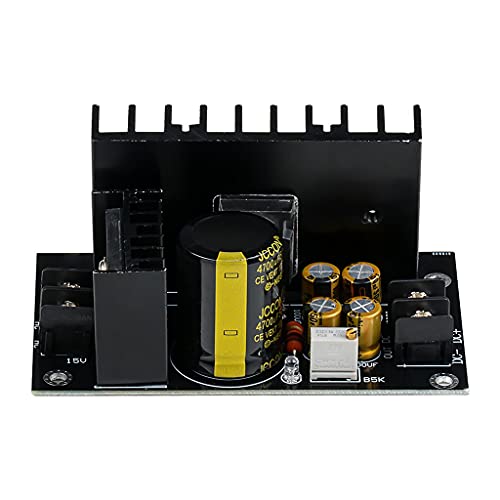
This board is a linear step-down module with adjustable output. The stated range is 2.5V to 37V, with a recommendation to keep working pressure differences within about 10V due to proportional power consumption. If a 24V output is desired, the suggested approach uses a pre-stabilization around 26V and then conversion to AC. It’s best for DIY amp projects requiring a stable adjustable regulator for tube filaments. It’s robust for experimental builds but requires careful design to avoid over-stressing tubes.
- Best for: DIY amp builders needing a controllable regulator stage.
- Caution: follow voltage difference guidance to prevent excess power dissipation.
5 Pcs Linear Regulator (LDO) 3.3V 800mA

These LD1117S33TR regulators deliver 3.3V at up to 800mA per unit in a SOT-223 package. They’re suited for low-voltage auxiliary circuits within guitar amps or pedalboards, such as microcontrollers, preamp circuits, or LED indicators. Best for small, economical builds where several regulators are needed. A potential limitation is that each regulator must stay within its thermal and input voltage limits to maintain stability.
- Best for: DIY amp accessories and pedalboard electronics needing 3.3V regulation.
- Caution: ensure input voltage does not exceed regulator limits to avoid thermal issues.
10 Pcs AMS1117-1.5 LDO Regulator Pack

This pack includes 10 units of the AMS1117-1.5V regulator, each delivering 1.5V at up to 1A with a wide input range. It’s appropriate for tight spaces where stable low-voltage rails support signal processing, LED backlights, or control logic within a guitar amp or compact pedalboard. Best for multi-device projects where density and cost efficiency matter. Limitation: these regulators require proper heat management when sourcing higher currents or running near limits.
- Best for: multi-device regulatory needs in compact amp builds.
- Caution: manage heat when drawing near 1A per regulator.
EKYLIN Car Voltage Stabilizer 12V (12V Output)
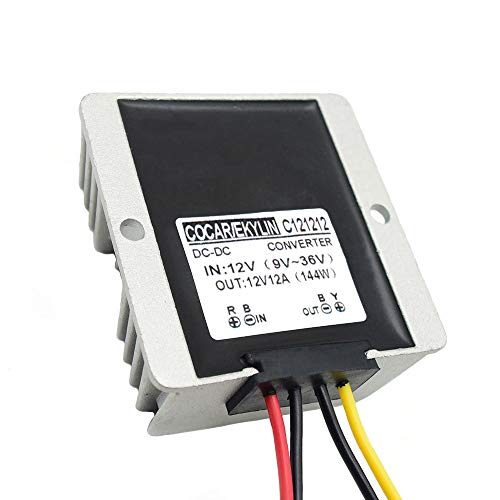
This 12V DC stabilizer accepts input from 10–36V and provides a steady 12V output at up to 12A, with IP67-rated waterproof protection. It is a rugged option for environments where a guitar amp or related gear might be used outdoors or in mobile setups. It’s best for guitar rigs that travel or are mounted in studios with variable power. Limitations include its 12V scope, which may not suit high-voltage tube applications without additional conversion stages.
- Best for: rugged, outdoor or mobile amp setups requiring durable DC regulation.
- Caution: not a high-voltage tube regulator; use with appropriate stage design.
Buying Guide: How to Choose The Right Guitar Amp Voltage Regulator
- What voltage and current do you need? Match the regulator’s input/output range to your amp’s supply and tube filament requirements or pedalboard rails.
- Regulation type matters. For high-voltage tube stages, opt for dedicated AC regulators or linear/ Schottky-based DC regulators with appropriate heat management.
- Thermal handling. Tube gear can dissipate significant heat; pick regulators with adequate heat sinking or that operate within safe junction temperatures.
- Monitoring and diagnostics. Units with real-time displays help diagnose voltage sag, hum, or regulator drift during gig or studio sessions.
- Form factor and integration. For DIY builds, consider compact footprints and the ease of wiring into existing amp chassis or pedalboards.
- Durability and environment. Outdoor or vehicle-based rigs benefit from rugged enclosures and weather resistance.
- Safety and compliance. Ensure insulation, fusing, and grounding meet local electrical standards to protect both gear and players.
FAQ
- What is a guitar amp voltage regulator used for?
It stabilizes voltages in tube stages, filaments, and auxiliary circuits to improve tone consistency and component life.
- Can I use a standard DC regulator for a tube amplifier?
Yes, for low-voltage auxiliary circuits, but high-voltage tube stages require appropriate AC or high-voltage regulation and proper heat management.
- Do regulators affect tone?
Regulation can influence response and noise levels; well-chosen regulators help minimize hum and voltage drift that affect dynamics.
- Are multiple regulators necessary for a guitar rig?
Not always, but for complex builds with multiple rails (tubes, preamp logic, LED indicators) several regulators can simplify design and improve stability.
- What should I check before purchasing a regulator for my amp?
Check voltage range, current capacity, input/output compatibility, thermal limits, and whether the unit provides monitoring or diagnostics features.
- Is safety important when adding voltage regulation?
Yes. Ensure proper insulation, fusing, grounding, and compliance with electrical standards to protect players and gear.