Best 80/20 Guitar Strings for Bright Tone and Longevity
If you’re seeking bright, projecting acoustic tone, 80/20 bronze strings are often the go-to choice. This guide highlights five popular 80/20 sets from trusted brands, explains who they’re best for, and explains why you might choose one over another. Ideal buyers include players prioritizing brightness, crisp attack, and strong projection for stage or studio use. The top selections below cover light to medium gauges and coated options for longer life, helping you find the right balance of tone, feel, and longevity.
Summary of chosen products
| Product | Gauge Range | Coating | |
|---|---|---|---|
| D’Addario EJ11-3D (Light 12-53) | Light | Uncoated | Bright tone, easy playability for beginners and layering in studio |
| Elixir 80/20 Bronze NANOWEB (Light 12-53) | Light | Coated NANOWEB | Long-lasting bright tone with smooth feel for frequent players |
| Ernie Ball Earthwood 80/20 (Medium Light 12-54) | Medium Light | Uncoated | Balanced projection and clarity, versatile for fingerpicking |
| D’Addario EJ12 (Medium 13-56) | Medium | Uncoated | Bright, punchy attack with stronger tension for rhythm and lead |
| Martin Authentic 80/20 Bronze (Medium 13-56) | Medium | Uncoated | Professional tone with sturdy build for performance and studio |
The following sections cover why each pick matters, who it’s best for, and any notable considerations to help you compare at a glance.
D’Addario EJ11-3D Light 12-53 6-String Set

Reference features indicate precision wound over a hexagonal high carbon steel core, delivering a bold, bright acoustic sound with crisp projection. This set is the original 80/20 bronze formula, created in the 1930s and widely used for classic bright tone. Best for players seeking traditional brightness and a lighter touch, such as beginners and players focusing on rhythm or fingerpicking with a need for easier fretting. Caution: lighter gauges can break more easily under aggressive bending or heavy picking.
D’Addario EJ11 Bronze Light 12-53
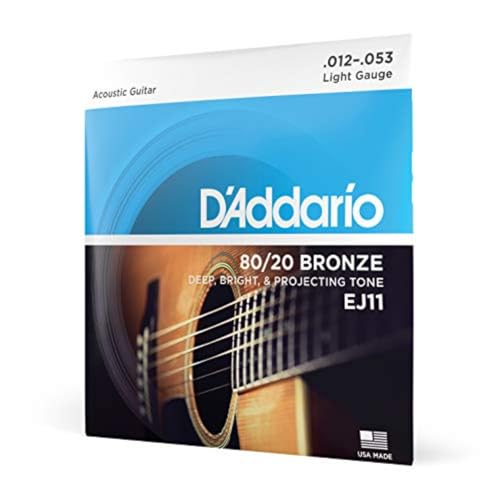
These strings are identical in core construction and branding to the EJ11-3D, offering precision wound construction and a bright, room-filling tone. Best for players who want reliable, traditional tone in a single-pack option. The 12-53 gauge is friendly for learners and casual players. Caution: uncoated strings may require more frequent maintenance in humid environments to prevent corrosion.
Ernie Ball Earthwood 80/20 Bronze Medium Light 12-54

These strings combine bright tone with clear projection and a medium-light gauge that suits players who require a balance of ease and volume. The wound strings use 80% copper, 20% zinc wrapped around a high-carbon steel core. Best for versatile performers who mix strumming with fingerpicking. Limitation: uncoated format may wear faster with acidic sweat or heavy playing in humid climates.
D’Addario EJ12 Medium 13-56 6-String Set

These strings provide a brighter, punchier attack due to the 80/20 bronze composition with a medium gauge. Best for players who need stronger projection for live performance or flat-picking tasks. Consideration: medium gauges require a bit more finger strength and can be stiffer for beginners.
Martin Authentic Acoustic Strings 80/20 Bronze Medium 13-56

Martin’s 80/20 bronze set emphasizes high tensile strength and tin-plated core wire for a bright, balanced tone with quick response and tuning stability. Best for professional players and serious hobbyists who perform or record frequently. Limitation: slightly stiffer feel compared to lighter gauges, which may affect beginners or players with anxiety about string tension.
Buying Guide: 80/20 Guitars A Practical How-To
What should I look for in 80/20 strings?
Key factors include gauge (light vs. medium), coating (uncoated vs. coated), and tonal brightness. Lighter gauges are easier to press but produce less volume; medium gauges offer more volume and tension. Coated options last longer but can alter feel and brightness slightly.
Which gauge is best for my playing style?
Light gauges (around 12-53) are easier for beginners and players focusing on fingerpicking. Medium gauges (13-56) suit players who strum aggressively or play rhythm and lead, offering more volume and stability. For stage use or long practice sessions, consider a coated option like Elixir for longevity.
Coated vs. uncoated: is it worth it?
Coated strings last longer and resist corrosion, preserving tone longer. They can feel slightly slick and may mute brightness a touch compared to uncoated sets. If you play daily and want fewer string changes, coated 80/20s are a good pick.
What about tone and longevity?
80/20 bronze strings are known for bright, crisp attack with strong projection. Longevity depends on coating and playing conditions. Brands offering NANOWEB coating claim longer life while maintaining brightness and feel.
Who should choose 80/20 bronze?
Players chasing bright, punchy tone for bluegrass, flat-picking, or live performances typically choose 80/20 bronze. They pair well with brighter spruce tops and medium-to-bright microphones or picking dynamics.
Maintenance tips
- Wipe strings after playing to remove oils and sweat.
- Store in a cool, dry place to extend life, especially uncoated sets.
- Change strings regularly based on playing style and climate to maintain tone.
Frequently asked questions
- Are 80/20 strings brighter than phosphor bronze? Yes; 80/20 strings typically produce a brighter, crisper tone with more brightness in the upper mids.
- Do coated 80/20 strings sound as bright as uncoated ones? Coated sets can start slightly duller, but premium coatings like NANOWEB aim to preserve brightness while extending life.
- Which brand offers the longest-lasting 80/20 strings? Coated options generally last longer; brands vary, with Elixir’s NANOWEB being a common choice for longevity.
- Is 13-56 heavier than 12-53? Yes; 13-56 is a heavier gauge, producing more tension, volume, and sustain but requiring more finger strength.
- Can I use 80/20 strings on any acoustic guitar? Most standard steel-string acoustics are compatible, but check nut width and tuner spacing if you have a vintage or specialized guitar.
- Should beginners use light gauges? Light gauges are easier to press and play but may wear out faster under aggressive picking; they suit students and casual players best.