
How to Improve Car Audio Before Replacing the Speakers
Give your existing system a clear baseline, compare a reliable source, and identify the problem from your usual seat. That makes any later upgrade much easier to choose.
In this guide
- Start with a parked car and a clear description
- Compare the source before buying another speaker
- Save the current controls, then establish a baseline
- Use balance and fader to investigate a missing area
- Adjust one tonal complaint at a time
- Recognize that the factory route may already shape the signal
- Compare from the seat and cabin you actually use
- Turn the remaining problem into a useful upgrade brief
Start with a parked car and a clear description
Park safely before adjusting audio settings or comparing sources, and use the vehicle's ordinary accessory procedure. The goal is a short listening check with your attention on the controls, not a tuning exercise while driving or an extended drain on the battery.
Choose one familiar song and write down what bothers you: a missing channel, heavy bass, harshness, or voices that are hard to follow. A defined symptom helps you make a useful change without assuming every limitation requires replacing the door speakers.
Keep the volume modest during the initial check and remove unrelated rattling objects from the cabin where practical. A bottle or loose item that vibrates during one passage can confuse the comparison, so give yourself a repeatable starting point.
Compare the source before buying another speaker
Try a reliable local recording or another supported source using the same song when possible. This helps you distinguish a problem with one stream, connection, or recording from a problem that follows every source through the car's audio system.
Check the phone's selected volume and audio processing alongside the car's controls, following the devices' instructions. A low source level or an unexpected app setting can change the result, so don't treat the vehicle's volume number as the only control involved.
If one connection repeatedly interrupts playback, investigate that route separately from the tone you hear during steady music. A cable, wireless pairing, or application problem isn't necessarily evidence that the speaker drivers need replacement.
Keep a note of which source and connection you used for each comparison. That lets you return to the working route later and gives support a specific starting point if the same fault appears on only one input.
Save the current controls, then establish a baseline
Photograph the current sound settings and save a custom preset if the vehicle offers one. Then use the manual to choose a known baseline for the controls you intend to evaluate, rather than resetting unrelated vehicle settings or losing a configuration somebody else prefers.
Depending on the system, those controls may include tone, EQ, balance, fader, or a listening-position mode. Identify which are actually available in your vehicle and what the manual says they do before applying a generic screenshot from another dashboard.
For the first comparison, avoid stacking several dramatic presets and boosts at the same time. A simpler baseline makes it easier to hear the effect of one adjustment and to restore the original setup if the change doesn't help.
If the car has a speed-related volume or another automatic feature, note its documented behavior as part of the routine. A parked comparison and your normal trip can have different conditions, so keep that limitation clear when interpreting what you hear.
Use balance and fader to investigate a missing area
If your system offers balance and fader, make a modest, documented adjustment to identify which speaker area is contributing. Return the controls to the baseline afterward, because an investigative setting isn't necessarily the arrangement you want for normal listening.
Listen for a clear absence or unusually different result, using more than one recording. A mix with little information in one channel can be a poor test of whether a speaker is present, so avoid drawing a conclusion from a single unusual passage.
If a speaker area remains silent, contact support or an appropriate installer with the vehicle, audio package, source, and affected location. The cause could involve the driver, connection, amplifier, or configuration, and buying a new pair without a diagnosis may miss it.
Don't remove trim or probe electrical wiring simply to continue a listening check. A targeted report from the available controls can be useful preparation for service without turning this basic assessment into a vehicle-specific installation procedure.
Adjust one tonal complaint at a time
If bass overwhelms voices, compare a small reduction using the control your system provides. Replay the same passage at a similar comfortable level and judge whether the voice becomes easier to follow without making the rest of the music less enjoyable.
If a bright passage becomes tiring, try a modest relevant adjustment and then another recording. Avoid forcing a preset to solve a problem that appears in only one track, since the recording itself may explain some of the difference.
For systems with several EQ bands, use the manual's labels and keep a record of the changes. You don't need to move every band, and the shape of the graph isn't the goal if the actual balance was already comfortable elsewhere.
Give a useful setting a normal listening session with breaks before deciding it is your final choice. A short parked comparison can reveal an improvement, but ordinary road noise and the passengers' listening positions remain part of the routine you want to serve.
Recognize that the factory route may already shape the signal 1
A factory system can include equalization, separate frequency-limited channels, or digitally controlled amplification. Crutchfield's integration guide describes these different arrangements, which is why a speaker purchase shouldn't begin with an assumption that every factory output is identical.
Replacing a speaker doesn't automatically remove processing that happens earlier in the route. The signal supplied to the new driver still matters, so define the vehicle's actual audio system before treating a different speaker cone as a complete solution.
Keep calls, navigation prompts, and warning sounds in the integration plan too. A modification that changes the music route can affect other functions, and retaining them may require vehicle-specific equipment or a different approach from a simple analog setup.
If processing or integration is the unresolved problem, ask an installer to explain the proposed route and retained functions. A DSP or interface can have a useful job in some systems, but its presence in other people's builds isn't a reason to add one without a defined need.
Compare from the seat and cabin you actually use
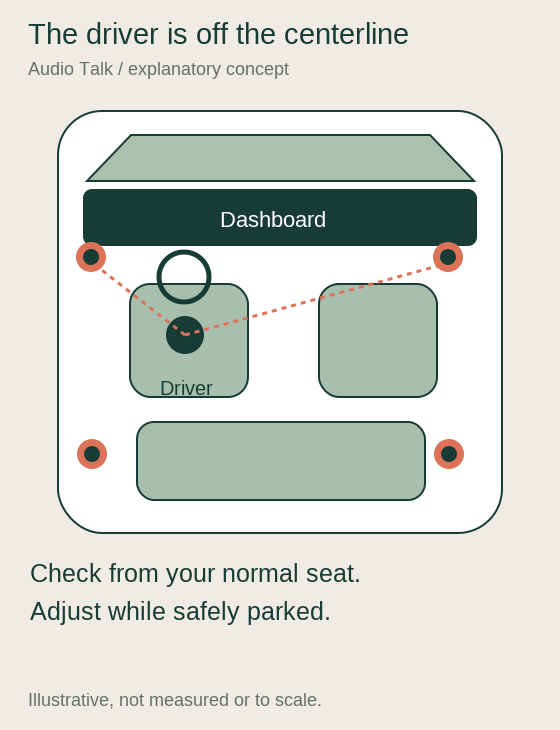
Judge the system from your normal listening position rather than leaning over each door speaker. The driver's position is rarely centered between the front speakers, so what you hear at the seat is a more relevant practical result than a close-up impression.
If the system offers a documented driver or all-seat mode, compare it for the routine you want to support. A setting that emphasizes the driver's seat may be a sensible personal choice while a shared trip calls for a different compromise.
Check whether stored items or aftermarket accessories obstruct a speaker grille, then follow the vehicle's instructions when moving them. Keep the normal cabin use in mind rather than choosing a listening arrangement that interferes with controls or passenger space.
Record what changes between the parked check and a normal trip without adjusting controls while driving. You can revisit the observation after parking and decide whether the issue concerns road noise, the source, or a setting that deserves another controlled comparison.
Turn the remaining problem into a useful upgrade brief
After the checks, write one sentence about what still needs improvement and which existing functions you want to retain. That can be a confirmed faulty speaker, a missing low-frequency capability, or an integration issue that the current controls can't address.
Ask for a quote that includes the exact vehicle and audio package, proposed parts, installation work, and any required adapters or interfaces. Comparing that complete plan is more useful than comparing speaker prices while leaving fitment and factory processing unresolved.
If the existing system now works comfortably, save the useful settings and stop there. A better source choice or a small tonal adjustment can be a satisfactory result without turning an initial annoyance into a larger project.
When an upgrade does have a defined job, you can evaluate it against that job afterward. Starting with the system you already have gives you a clear baseline, practical questions, and a much better way to recognize whether the completed change actually helped.
Sources & how this guide was prepared
Audio Talk Editorial checked these primary sources on October 14, 2026. This is a research-based guide with original practical examples; it does not report our own equipment tests.
Manufacturer instructions for your exact model take priority. Read our editorial method · Photo and illustration credits