Best 10 Inch Powered Subwoofers for Home Theater and Music
Answering your search for a 10 inch powered subwoofer, these picks deliver compact size with deep, controlled bass ideal for small-to-mid rooms or compact home theaters. Each model is selected for clear bass extension, ease of setup, and timbre compatibility with common speaker setups. This guide highlights who benefits most from each sub and why it stands out, plus practical buying considerations to help you choose.
| Product | Best For | Why It Stands Out |
|---|---|---|
| Polk Audio PSW10 | A compact, music-leaning home theater | High value with 100W amp and ported design for tight, extended bass in small-to-mid rooms |
| Klipsch R-100SW | Home theater with strong, clear bass | All-digital 300W peak amp and front-firing 10″ driver for deep, accurate bass with flexible placement |
| Klipsch Reference R-101SW | Premium space-saving setup | New spun-copper woofer and efficient all-digital amp for powerful, clean output |
| Yamaha NS-SW100 | Balanced, tight bass for music and movies | YST II servo technology and a 10″ cone for precise low end |
| Dayton Audio CS1000 | Closed-book aesthetics with robust home theater bass | 180W Class-D amp with a simple, space-conscious design |
Polk Audio PSW10 10″ Powered Subwoofer
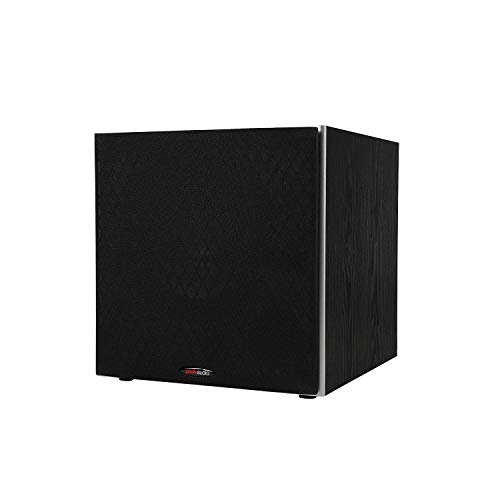
The Polk PSW10 uses a 10-inch Dynamic Balance woofer with a built-in 50-watt RMS amp (100 watts peak) and a tuned port for deeper bass without bloating sound. It blends easily with most 2.0 or 5.1 systems and is best for small-to-mid sized rooms where you want a visible bass uplift without overwhelming the mids. A key benefit is its compact footprint paired with a ported design that emphasizes deep, punchy lows for both music and movies. Caution: in very large rooms or in setups needing ultra-deep bass, you may perceive slightly less low-end extension than larger subs.
Rockville Rock Shaker 10″ Subwoofer

The Rockville Rock Shaker 10 delivers a 600W peak / 300W RMS with a 10″ woofer and Class-D amplifier, offering a high-output option for movie lovers and gamers. It features adjustable volume, crossover frequency, and phase controls to tailor the bass to your room and listening preference. This model is best for users who want strong bass presence and flexible tuning in dedicated home theater setups. Caution: high output may require careful placement to avoid bass notas bleeding into adjacent rooms.
Klipsch R-100SW 10″ Subwoofer

The Klipsch R-100SW uses a 10″ front-firing woofer with a digital amplifier delivering up to 300 watts peak. Its front package design and tight bass response suit smaller-to-medium rooms where a compact footprint matters. Best for buyers who want strong cinema bass with minimal room impact and straightforward setup. Caution: placement can influence tonal balance—avoid placing too close to walls if you’re chasing ultra-tight bass alignment.
Klipsch Reference R-101SW 10” Subwoofer

The R-101SW features a new 10” spun-copper woofer and a highly efficient all-digital amplifier for robust, clean output. Positioned as a premium option, this sub is ideal for rooms where space is tight but bass authority remains essential. It’s best for buyers who value efficiency and precision, with a front-firing driver that makes placement flexible. Caution: premium price relative to entry-level 10″ subs may be a consideration for tight budgets.
Yamaha NS-SW100 10″ Powered Subwoofer

Yamaha’s NS-SW100 uses a 10″ cone woofer and Advanced YST II servo technology to deliver a tight, controlled bass with minimal distortion. The twisted flare port helps clarity, making this model well-suited for balanced home theater systems and critical listening. Best for buyers seeking predictably clean bass alignment with conventional speaker setups. Caution: may require proper equalization in rooms with unusual acoustics for best results.
Dayton Audio CS1000 – 10″ 180W Powered Subwoofer

The Dayton CS1000 provides a compact 180W Class-D amplifier paired with a 10″ woofer for clean, deep bass in home theater and music systems. Its design is simple, making it a practical choice for users who want straightforward, reliable bass without extra frills. Best for buyers prioritizing a budget-friendly yet capable 10″ sub. Caution: output is strong but not as feature-rich as some premium models, so consider your tuning needs.
Buying Guide
What should you consider when choosing a 10 inch powered subwoofer?
- Room size and listening preferences: For small rooms, a 100–300W amplifier with a 10″ driver often suffices. For larger spaces or those seeking cinema-grade bass, look for higher wattage and a well-tuned enclosure.
- Enclosure and bass type: Ported designs generally deliver deeper bass with more impact, while sealed enclosures offer tighter, more accurate bass with easier placement.
- Placement flexibility: Front-firing vs down-firing and room boundaries affect perceived bass. Front-firing models offer easier placement near walls.
- Connection options: Ensure compatibility with your speaker system (line-level RCA, LFE, speaker-level inputs). Calibratability (phase, crossover) helps integrate with existing speakers.
- Sound signature: If you prefer music with quick, tight bass, favor models with accurate low-end response and low distortion. For home theater, prioritize output and extension for explosions and movie scores.
How to pair a 10″ subwoofer with existing speakers
- Set the sub’s crossover to blend with your main speakers’ bass range, avoiding overlap that muddies mids.
- Adjust phase to align with your main speakers for coherent bass across the listening spectrum.
- Place the sub away from the listening seat and experiment with distance from walls to minimize boominess.
Placement tips for better bass
- Try corner placement for maximum reinforcement, then back off if bass becomes too boomy.
- Use a calibration mic if your receiver supports room correction to optimize integration.
Comparison snapshot
- Best value: Polk PSW10 offers solid bass at a modest price with easy setup.
- Best for cinema: Klipsch R-100SW or R-101SW provide high-power, precise bass with modern amplification.
- Best for balanced sound: Yamaha NS-SW100 emphasizes tight, clean bass suitable for music and film.
- Best budget premium alternative: Dayton CS1000 provides simple, dependable performance.
FAQ
- What should I look for in a 10″ powered subwoofer?
Key factors are amplifier wattage, enclosure type (ported vs sealed), driver quality, and how well the sub integrates with your existing speakers.
- Can a 10″ subwoofer replace a larger one?
It can for smaller rooms or when space is limited, but very large rooms or deep, room-dominant bass may benefit from a larger driver.
- Is it okay to place a subwoofer near a wall?
Yes, but placement affects response. Start near a wall, then move away to reduce boomy or uneven bass.
- Should I choose a front-firing or down-firing sub?
Front-firing subs are easier to place near walls and furniture; down-firing models can be adaptable but may require more careful placement.
- Do I need a sub with room correction?
Room correction helps achieve smoother bass in varied rooms, but manual tuning with crossovers and phase control can also yield good results.
- Are 10″ subs loud enough for movies?
Yes, in most typical living spaces, a quality 10″ sub can deliver impactful movie bass without excessive space requirements.