Best Line in Audio Interfaces for Clear Guitar, Vocals, and Podcasts
The best line-in audio interfaces deliver clean 24-bit sound, low latency, and flexible input options for guitars, mics, and instruments. This guide focuses on models well-suited for singers, podcasters, and home studios seeking reliable line-in performance. Top picks target different needs: compact solo interfaces, versatile multi-input devices, and budget-friendly options. The buyer’s goal is to balance sound quality, ease of use, and future-proofing for recording, streaming, or podcasting. The table below highlights five strong choices and who they’re best for.
Summary table of selected products
- Best overall for solo artists: Focusrite Scarlett Solo 3rd Gen
- Best budget multi-input: M-AUDIO M-Track Duo
- Best compact 2-in interface: Cubilux CB5
- Best USB-C and easy setup: Synido USB C Interface
- Best traditional Focusrite option: Focusrite Scarlett Solo 4th Gen
Focused Studio Quality: Focusrite Scarlett Solo 3rd Gen

The Focusrite Scarlett Solo 3rd Gen emphasizes pro mic pre-amps and Air mode for brighter, clearer recordings. It has two high-headroom instrument inputs and Gain Halos to prevent clipping. This model targets solo artists, podcasters, and vocalists who need studio-quality sound in a compact package. The main benefit is clean, open-sounding recordings with straightforward control and reliable converters up to 24-bit/192kHz. A potential limitation is that it offers limited inputs for higher-channel projects.
Best for: Solo singers, guitarists, podcasters who want one mic and one instrument input with high fidelity.
Why selected: It combines Focusrite’s proven preamps with Air mode for presence without harshness.
Caution: Not ideal for multi-mic or multi-instrument setups.
Versatile Recording and Streaming: M-AUDIO M-Track Duo
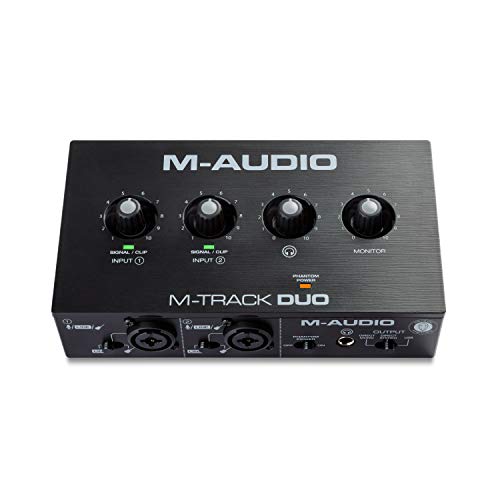
The M-Track Duo offers dual inputs and a comprehensive software suite. It records at 48kHz with easy USB connectivity to Mac or PC and supports guitar, vocals, or line inputs with phantom power. This interface is best for creators who need a two-channel setup with flexible monitoring and a simple workflow for podcasts or music sketched out during live streams.
Best for: Small home studios and streamers needing dual-input flexibility.
Why selected: It covers guitar and mic needs with straightforward monitoring options.
Caution: Lacks newer USB-C compatibility in this specific package, and some users may want more advanced preamps for critical vocal work.
Compact Hub for Multi-Input Needs: Cubilux CB5

The Cubilux CB5 functions as a 5-in-1 USB audio hub with multiple input types, including mic and line-in, plus a dedicated headphone output. It supports multi-track recording by assigning independent device names and records up to 96 kHz/24-bit. Best for home studios needing multiple input options in a single compact unit, or learners testing different signal sources.
Best for: Beginners and hobbyists who want a budget-friendly all-in-one hub.
Why selected: Flexible input configuration and easy multi-track workflow.
Caution: Line-out and headphone-out cannot be used simultaneously, which can affect certain monitoring setups.
USB-C Convenience with Clear Output: Synido USB C Interface

The Synido 2×2 USB-C interface emphasizes low latency and a 24-bit/48kHz workflow. It includes XLR/Line inputs, 48V phantom power for condensers, and a straightforward design with clear monitoring controls. This device is well suited for creators using USB-C laptops or desktops who want predictable performance with minimal setup.
Best for: USB-C users who want reliable, straightforward recording and streaming.
Why selected: Modern USB-C connectivity and real-time monitoring support efficient workflows.
Caution: Fewer advanced features than some larger multi-channel interfaces; not ideal for high-channel, studio-grade productions.
Classic Focusrite Quality with Modern Gen: Focusrite Scarlett Solo 4th Gen

The Scarlett Solo 4th Gen builds on the 3rd Gen with improved Air mode and high-fidelity converters, delivering studio-grade recordings for both guitar and vocal takes. It targets singers, musicians, and producers who want a robust single-channel interface with enhanced vocal presence and an expanded dynamic range.
Best for: Musicians seeking a reliable upgrade path with improved vocal presence.
Why selected: Better Air mode and dynamic range yield richer, more present recordings.
Caution: Still a single-channel focus; not the best choice for those needing many simultaneous inputs.
Buying Guide: How to Choose Your Line-In Audio Interface
- Input needs: Determine how many inputs you require. If you only need one mic and one instrument, Solo models are sufficient. For two-mics or more, consider 2-in or 4-in interfaces.
- Connectivity: Prefer USB-C for modern laptops and future-proofing. USB-A is common but may require adapters on newer machines.
- Preamps and gain: Look for high-headroom preamps and Gain Halos to prevent clipping. Air mode can add presence to vocals and acoustic guitars.
- Monitoring: Zero-latency monitoring and dedicated headphone outputs reduce workflow friction during recording and streaming.
- Bit depth and sample rate: 24-bit/192kHz is standard for studio work; 24-bit/96kHz is common in budget devices. Higher is better for nuance but requires appropriate software.
- Software bundle: Some interfaces include a software suite for recording, effects, and plugins. This can influence the overall value even if the hardware is similar.
- Size and portability: Compact units are easier to transport but may limit the number of inputs. Choose based on your workspace and travel needs.
Frequently Asked Questions
- Do I need an audio interface for podcasting? Yes. An interface provides better mic preamps and lower latency than built-in computer sound cards, improving voice clarity.
- What is “Air” mode? Air mode enhances high-frequency content to sound more open and present, especially on vocals and acoustic guitar.
- Is USB-C necessary? USB-C offers wider compatibility with modern devices and often lower latency; USB-A can work well but may require adapters.
- Should I get a 2-in or 4-in model? If you plan to record two mics or two instruments at once, a 2-in model is often enough. For multi-person podcasts or larger setups, a 4-in model is better.
- Will software affect the sound? The interface’s converters and preamps dictate the core sound; bundled software can aid workflow but does not replace hardware quality.
- What about latency? Look for interfaces with direct monitoring or low-latency monitoring to minimize delay during recording and monitoring.