
Best 100-Watt Bookshelf Speakers for Home Theater and Music
Answering your search for 100-watt bookshelf speakers, this guide highlights five solid options and explains who they’re best for. These compact models deliver strong volume, clear highs, and solid bass, making them suitable for small to medium rooms, home theaters, and desktop setups. Best for newcomers building a starter system, or anyone expanding toward a fuller 5.1 setup over time.
| Product | Why It Stands Out | Best For |
|---|---|---|
| Polk Audio T15 | Balanced dynamics; wall-mount capable; good for surround setups | Entry-level home theater |
| LONPOO 100W HiFi Active | Active 100W with DSP; Bluetooth and multi-connectivity | Wireless living room or gaming space |
| Audio Express Koe’ B102 | Equalized accuracy with SPL/FR chart; wall-mountable | Audiophile-minded on a budget |
| IBALL·BOX H3 | 5″ woofer, 2″ tweeter; built-in DSP tuning | Desktop and small rooms demanding clarity |
| Edifier P12 | Passive design for amplifier flexibility; built-in wall-mount | Custom amp setups and home theaters |
Polk Audio T15 100 Watt Bookcase Speakers

The Polk T15 pair uses a 0.75-inch tweeter and a 5.25-inch Dynamic Balance driver to deliver clear vocals and immersive sound. These passive bookshelf speakers are versatile as front, left-right, or rear channels in a surround setup and are positioned as an accessible entry point for building a home theater system. Best for buyers starting a sound journey who plan to expand later with Polk’s T-series towers and center-channel and subwoofer options. A key limitation is that they rely on an external amplifier, which means you’ll need a compatible receiver or amp to power them.
LONPOO 100W HiFi Active Bookshelf Speakers

This active system delivers 100W RMS with a 150W peak, featuring a 1-inch silk-dome tweeter and a 4-inch aluminum woofer. Built-in DSP optimizes treble and bass, offering a balanced listening experience with reduced distortion. Bluetooth 5.3 and multiple inputs (RCA/Optical/Coaxial/AUX/USB) enable easy connection to TVs, turntables, gaming consoles, and mobile devices. Best for: a wireless-friendly living room or gaming space. Consideration: some users may prefer more compact bass without room tuning, depending on placement.
Audio Express Koe’ B102 100 Watt Bookshelf Speakers

These passive speakers come with individually tested SPL and frequency response charts, ensuring matched performance across the pair. They’re designed for maximum flexibility, with power supplied by a compatible amplifier. The soundstage aims for clarity with crisp highs and warm mids, making them suitable for music, movies, and gaming. Best for buyers who want precise, audiophile-friendly performance with the option to mount on a wall. Caution: being passive, they require an external amp and correct impedance matching.
LONPOO 100W HiFi Active Bookshelf Speakers with Bluetooth

This model combines 100W RMS output with a 4-inch aluminum woofer and a 1-inch silk dome tweeter. Built-in Class D amplification and DSP tuning deliver punchy bass and clear vocals. It supports Bluetooth 5.3 and a broad set of inputs (USB, Optical, RCA, AUX), plus a wall-friendly cabinet. Best for: users who want a compact, all-in-one powered speaker with easy connectivity. Limitation: room placement can affect bass weight, so position away from corners when possible.
IBALL·BOX H3 Powered Bluetooth Bookshelf Speakers

The H3 delivers 100W output with built-in DSP tuning to deliver cleaner vocals and stronger overall impact. It features a 5-inch woofer and a 2-inch tweeter, producing a fuller stereo image ideal for living rooms and desktop setups. Bluetooth 5.3 plus 24-bit USB-C, Optical, Coaxial, and AUX expands connection options. Best for: listeners who want a stronger bass response without external subwoofers, and who appreciate DSP customization. Caution: passive versus powered modes require correct power routing through the built-in electronics to avoid clipping.
Edifier P12 Passive Bookshelf Speaker
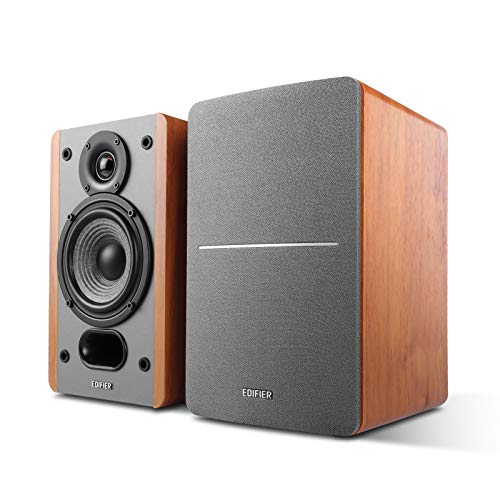
Edifier P12 offers a two-way passive design that requires an amplifier or receiver. It includes silk-dome tweeters and 4-inch bass drivers, delivering natural mids with balanced highs. Impedance is 6 ohms, and the kit emphasizes compatibility with a separate amp for personalized tone control. Best for: DIY enthusiasts who want to pair with a specific amplifier or receiver for a tailored sound. Limitation: not a powered speaker; requires additional equipment to operate.
LONPOO 100W Near-Field Studio Monitor

This model emphasizes near-field studio monitoring with a fully digital Class D amplifier delivering 50W per channel. It includes built-in DSP with an active crossover to optimize woofer and tweeter output, delivering punchy bass and clear detail for desktop or small rooms. Best for: near-field listening, studio work, or precise sound reproduction. Caution: 50W per channel means you may need to keep volume moderated in larger rooms to avoid overloading the space.
Buying Guide: Key Purchase Considerations
What matters most when choosing 100-watt bookshelf speakers?
- Power and amp needs: Active (powered) speakers include their own amp, while passive models require a separate receiver or amp. Decide based on your setup and space.
- Speaker type and size: A 4–5 inch woofer with a 1–2 inch tweeter suits small-to-medium rooms. Larger woofers add bass weight but need more space.
- Connectivity: Bluetooth and multiple inputs add flexibility for TVs, computers, turntables, and mobile devices.
- Build and enclosure: MDF cabinets reduce resonance; wall-mount capability helps with placement and space efficiency.
- Sound goals: Decide if you want bright treble, warm mids, or a neutral tone. DSP tuning can help tailor response.
How to place bookshelf speakers for best results?
- Triangulate with the listening position for a centered soundstage.
- Avoid corners for bass-heavy models to prevent excess boominess.
- Use isolation pads or stands to minimize cabinet vibration.
What limitations should buyers expect?
- Passive speakers require an amplifier; built-in amps simplify setup but limit placement options.
- DSP tuning helps but may color the sound; adjust with room acoustics in mind.
- Some models rely on Bluetooth or wireless connections; ensure source compatibility and latency considerations.
FAQ
- What is a good wattage for small rooms?
Approximately 50–100W per channel for clear levels without distortion in typical living rooms. - Are powered speakers better for desktops?
Yes, they simplify wiring and often provide compact, integrated options. - Do I need a subwoofer with bookshelf speakers?
Not always. Smaller models can deliver adequate bass, but a subwoofer enhances low-end depth for movies and bass-heavy music. - Can bookshelf speakers be used for home theater?
Yes, especially as front, surround, or center-channel components in a 5.1 setup. - How important is speaker placement?
Very important—correct distance from walls and the listening position significantly affects imaging and bass response. - What should I consider when buying for a mixed-use space?
Balance between detailed highs, natural mids, and room acoustics; consider DSP-enabled models for flexibility.