
Best 3.5 Mm Audio Plug Replacements and Cables for DIY Audio
When choosing a 3.5 mm audio plug, consider compatibility, durability, and ease of installation. This guide focuses on five top options that suit different DIY repair needs—from quick plug replacements to full cable assemblies. Ideal buyers include hobbyists repairing headphones, hobby electronics tinkerers, and anyone upgrading or extending audio cables. The table below highlights the best fits for common scenarios.
| Product | Best For | Why It Stands Out |
|---|---|---|
| FdcLixuvol 10Pcs 3.5mm Replacement Plugs | Repair tasks and multiple devices | Bulk set, straightforward solder installation, solid metal contacts |
| Ezymivs 10Pcs 3.5mm Replacement Plugs | Durable DIY repairs | All-metal, labeled terminals, good for beginners |
| Fancasee 4 Pack 3.5mm Replacement Plugs | Multi-project repairs | Gold/silver plating options, clear soldering diagram |
| Antrader 6pcs 3.5mm to AV Terminal | Wiring to terminal blocks | 3-screw terminal compatibility for quick connections |
| AILTECK 3.5mm Plug to Bare Wire | End-to-end cable repair | 24 AWG, straightforward bare-wire soldering |
FdcLixuvol 3.5mm Replacement Plugs (10 Pack)

These 3.5mm stereo/mono replacement plugs are designed for DIY cable repairs. The kit includes ten plugs with a simple installation process: strip the wire, solder, twist, and lock into place. The metal construction and precision contacts offer reliable conductivity for long-term use. Best for repairing worn headphone jacks or customizing cables. Caution: ensure correct terminal wiring (L/R/Ground) during soldering to avoid phase or channel issues.
SYNCWIRE 3.5mm Nylon Braided Aux Cable

This auxiliary cable features universal compatibility with any 3.5mm port. Gold-plated connectors minimize signal loss, and the connector design aims for reliable sound. The nylon-braided exterior reduces tangling and improves durability. Best for users seeking a ready-to-use cable with high compatibility across devices. Limitation: some rugged cases may obstruct the jack, so ensure adequate clearance around connectors.
Ezymivs 3.5mm Replacement Plugs (10 Pack)
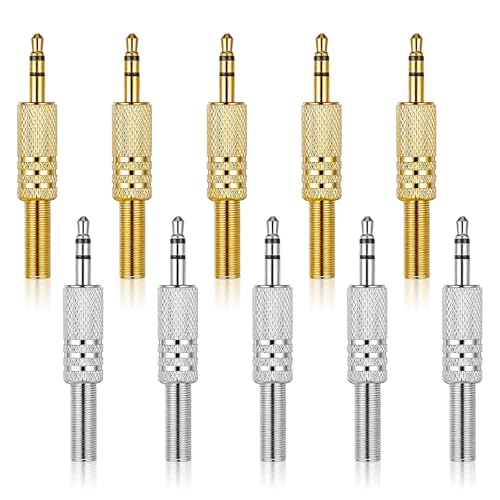
All-metal replacement plugs with a durable design and clearly labeled terminals for easy wiring (Left, Right, Ground). The kit supports multiple repairs and experimentation across devices. Best for beginners and hobbyists seeking reliable, professional-grade repairs. Caution: verify plating consistency to prevent oxidation over time.
Fancasee 4 Pack 3.5mm Replacement Plugs

4-pack of solder-type 3.5mm stereo plugs with a clear wiring diagram. Supports left, right, and ground connections and is suitable for cables up to 5mm in diameter. Best for compact, multi-project repairs and education on proper wiring. Caution: check compatibility with your cable diameter before installation.
AILTECK 3.5mm Male Plug To Bare Wire

3.5mm TRS mono/male plug designed to connect to bare wires with a 24 AWG conductor. Length is 12 inches, suitable for longer DIY runs. Best for in-house repair projects where you want direct wire-to-plug installation. Limitation: longer lengths may require careful strain relief to prevent wire fatigue.
Buying Guide
What type of 3.5mm plug do I need?
Choose based on device compatibility (stereo vs mono), required durability, and whether you need a plug for repair or for assembly into a cable. Replacement plugs are ideal for worn jacks, while plug-to-bare-wire options fit custom cable builds.
What about metal vs plated connectors?
All-metal plugs (like the Ezymivs and FdcLixuvol options) offer solid conductivity and longevity. Gold-plated connections (as seen in SYNCWIRE and some premium options) minimize impedance and corrosion, which can improve signal quality in higher-end builds.
Is it easy to solder these plugs at home?
Most kits designed for DIY repairs provide clearly labeled terminals and solder-friendly pads. Beginners should follow wiring diagrams carefully and use proper heat protection to avoid damaging insulation or connectors.
Which accessory features matter most?
- Terminal labeling: Reduces wiring mistakes.
- Durable shell: Improves longevity under repeated plugging/unplugging.
- Cable compatibility: Ensure the plug fits your cable diameter and stranded/conductor type.
- Strain relief: Helps prevent wire breakage at the connection point.
What about compatibility with cases and devices?
Some cables can be incompatible with rugged cases or certain protective shells. Check device and case compatibility, especially with LifeProof or OtterBox cases, to avoid fit issues.
How should I compare options?
Compare by: number of pieces per kit, plating quality, ease of installation, and whether the kit includes a clear wiring diagram. For beginners, kits with labeled terminals and diagrams offer the most straightforward path to a successful repair.
What is the best choice for a beginner?
A beginner-friendly kit with labeled terminals and a straightforward soldering process provides the quickest path to successful repairs. The Ezymivs and FdcLixuvol options are strong starting points because of clear instructions and metal construction.
Quick FAQ
- What is a TRS plug? – A three-conductor plug for stereo audio with left, right, and ground connections.
- Can I reuse existing wire insulation? – Yes, if you can safely strip and re-solder without damaging the conductor.
- Are these plugs compatible with all 3.5mm cables? – Most are compatible with standard 3.5mm cables, but verify the cable diameter and polarity.
- Do these kits include tools? – Some listings include only the plugs; others provide terminals and diagrams.
- Is soldering required? – Many kits expect soldering for a secure connection; some offer press-fit or spring-loaded options.
- Can I fix a plug without professional equipment? – Yes, DIY kits are designed for non-professional users with basic soldering skills.