
A 12-track digital recorder is a practical choice for capturing band rehearsals, live performances, and multi-source sessions. Among these options, the Zoom LiveTrak L-12 is best suited to musicians who need multiple monitor mixes, while the Zoom LiveTrak L12next adds high-gain preamps and 32-bit-float mixing. The Zoom R20 is a better fit for computer-free editing and projects with more tracks. Compare recording capacity, inputs, monitoring, and portability before choosing.
| Recorder | Best for | Recording capacity listed |
|---|---|---|
| Zoom LiveTrak L-12 | Band recording and monitor mixes | 14 tracks simultaneously |
| Zoom LiveTrak L12next | Higher-gain inputs and flexible mixing | 14 tracks at 24-bit/96kHz |
| Zoom R20 | Touchscreen editing without a computer | 16 tracks, 8 simultaneously |
| Zoom LiveTrak L6max bundle | Portable recording setup | Track count not specified |
| Zoom R12 | Compact songwriting and recording | 8 tracks |
Zoom LiveTrak L-12 Mixer/Recorder

The Zoom LiveTrak L-12 combines a digital mixer and SD-card multitrack recorder. It records up to 14 tracks simultaneously at 24-bit/96kHz, making it a strong option for buyers searching for a 12-track-class recorder with capacity for a larger session.
Best for: Bands, rehearsal rooms, and podcasters that need several separate headphone mixes. Five monitor mixes and dedicated headphone outputs let performers hear personalized mixes. The listed features also include 16 onboard effects and preamps rated at -128 dBu EIN with up to +60 dB of gain.
Why it stands out: The combination of simultaneous multitrack recording and five monitor mixes makes it more oriented toward group recording than a compact songwriting recorder.
Limitation: Buyers who need a touchscreen-based, computer-free editing workflow may prefer a recorder designed around direct touchscreen editing. The listed features do not specify that type of interface.
Zoom LiveTrak L12next Mixer/Recorder

The Zoom LiveTrak L12next is a digital mixer and multitrack recorder with 12 channels. It records up to 14 tracks at 24-bit/96kHz and mixes in 32-bit float, according to the supplied product details.
Best for: Musicians and production teams who want a mixer-recorder with substantial input gain and detailed control over recording sources. Its preamps are listed at up to +70 dB gain and -128 dBu EIN, with Hi-Z, PAD, and +48V phantom power.
Why it stands out: The L12next is a relevant choice when the buyer wants more than a basic 12-track label suggests: its stated simultaneous recording capacity is 14 tracks, and its 32-bit-float mixdown is a specific workflow feature.
Limitation: The listed details do not specify monitor-mix count, editing controls, or power options. Confirm those requirements against the product listing before choosing it for a particular stage or mobile setup.
Zoom R20 Tabletop Recorder
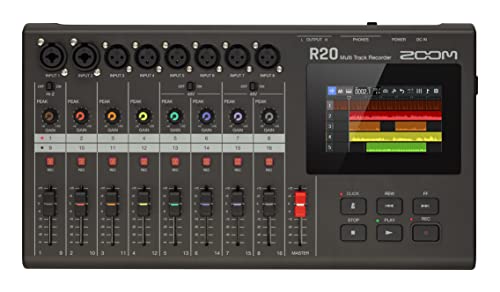
The Zoom R20 is a tabletop recorder that can record up to 16 tracks, with up to eight tracks captured simultaneously. It has six XLR inputs in its product name and a DAW-style touchscreen for recording, editing, and mixing without a computer.
Best for: Home musicians and demo makers who want to arrange and edit audio directly on the recorder. Touch controls support dragging, dropping, swiping, and pinching to work with tracks.
Why it stands out: It offers more total tracks than a 12-track recorder, while providing a stated simultaneous recording limit that helps buyers assess how many sources they can capture at once. It is a better fit than a mixer-focused model when on-device editing is the priority.
Limitation: The listed simultaneous recording capacity is eight tracks, not 16. Choose another option if the session requires more than eight sources to be recorded at the same time.
Zoom LiveTrak L6max Portable Bundle

This LiveTrak L6max listing bundles the portable 12-channel digital mixer and recorder with TAPH100 headphones and a 25-foot XLR cable. It supports recording at 32-bit float or 24-bit, at 48 kHz, and the listed weight is 1.48 pounds.
Best for: Mobile producers who value a compact setup and want headphones and an XLR cable included in the bundle. AA battery power is listed as a supported option, which may suit recording away from a fixed studio power setup.
Why it stands out: Its lightweight design and battery-power support are useful distinctions for portable work. It is a mixer-recorder option rather than a large tabletop system.
Limitation: The supplied features do not state the number of tracks recorded simultaneously or the total track capacity. Buyers who need a confirmed 12-track recording specification should verify that detail before purchase.
Zoom R12 Portable Recorder

The Zoom R12 records up to eight tracks, so it is not a 12-track recorder. It is included as a compact alternative for buyers whose actual needs center on songwriting, portable recording, or editing rather than capturing 12 tracks.
Best for: Songwriters who want built-in rhythm tools and editing without a computer. The R12 includes two XLR/TRS inputs, a color touchscreen, DAW-style editing tools, 150 drum loops, and 18 FM synth instruments.
Why it stands out: USB-C audio-interface functionality and DAW control features give it an additional role in a computer-based recording setup. Its built-in loops and synth sounds can support arranging and developing song ideas.
Limitation: Its eight-track capacity is below the requested 12-track range. Avoid it if the project requires 12 tracks or more.
Buying Guide: How To Choose A 12-Track Digital Recorder
“12-track recorder” can refer to the number of available tracks, the number of tracks captured at once, or a product’s channel count. These are not always the same specification. Check both total track capacity and simultaneous recording capacity before deciding whether a model can handle a full band, live set, or layered studio session.
How many tracks do you need to record at the same time?
Count the separate audio sources in the largest session you expect to record simultaneously. A band might need individual tracks for microphones and instruments, while a solo songwriter may record one or two sources at a time and build a larger project through overdubbing. The R20, for example, lists up to 16 total tracks but up to eight simultaneous tracks.
The LiveTrak L-12 and L12next list simultaneous recording of up to 14 tracks. That capacity can provide more room for a group session than a recorder limited to fewer simultaneous inputs. Check the product’s input configuration as well as its track count; a high track total alone does not tell you how many separate sources can be plugged in and recorded at once.
Do you need a mixer, a recorder, or both?
A mixer-recorder can combine live input control and multitrack recording in one device. This arrangement is useful for rehearsal spaces, stage setups, and sessions where performers need a live mix while separate tracks are captured. The LiveTrak models are presented as digital mixer-recorders, with the L-12 specifically listing five separate monitor mixes.
A tabletop recorder with touchscreen editing may be a better match if you mainly want to record, arrange, and mix without a computer. The R20’s listed touch controls support editing on the device. If a computer is central to your workflow, consider whether USB audio-interface or DAW-control functions are important; the R12 lists both, though its eight-track limit makes it a lower-capacity alternative.
How important are monitor mixes?
For a band recording together, performers may need different headphone balances. A recorder with separate monitor mixes can help each person hear a suitable blend without changing what is being recorded. The LiveTrak L-12 lists five monitor mixes with dedicated headphone outputs, making it a clear option for buyers who prioritize separate performer monitoring.
Do not assume that every mixer-recorder offers the same monitoring arrangement. Check the number of mixes, headphone outputs, and whether mix settings can be saved if those features matter to your workflow. The supplied L12next and L6max details do not specify monitor-mix counts.
Which recording format and audio features matter?
Compare the stated bit depth and sample rate, especially if you need a particular project format. The L-12 and L12next list recording up to 24-bit/96kHz. The L6max bundle lists 32-bit-float or 24-bit recording at 48 kHz. These specifications describe different recording options; choose based on your production needs rather than assuming that a higher number alone guarantees a better result.
Input preamp specifications can also help you compare devices when recording microphones. The L-12 lists -128 dBu EIN and up to +60 dB gain, while the L12next lists -128 dBu EIN and up to +70 dB gain. The L12next also lists Hi-Z, PAD, and +48V phantom power. Verify that the inputs and features suit the microphones and instruments you plan to connect.
Should you choose portable or tabletop equipment?
Portability matters for field recording, mobile production, and rehearsals in different locations. The L6max bundle lists a weight of 1.48 pounds and AA battery power support. A tabletop model such as the R20 may be more suitable when you want a larger hands-on touchscreen workflow, while the LiveTrak L-12 is oriented toward mixing and monitoring as well as recording.
Also consider what comes in the particular listing. The L6max option here includes headphones and an XLR cable, while other listed products do not specify those accessories. Do not assume that a bundled accessory is included with a separate version of the same device.
Frequently Asked Questions
What is the difference between track count and simultaneous recording?
Track count is the number of tracks available in a project; simultaneous recording is how many tracks the device can capture at the same time. A recorder may support a large project but have a lower limit on concurrent inputs. Check both figures when recording multiple performers together.
Which listed recorder records the most tracks simultaneously?
The Zoom LiveTrak L-12 and Zoom LiveTrak L12next list recording up to 14 tracks simultaneously. The Zoom R20 lists up to eight simultaneous tracks, even though it supports up to 16 total tracks.
Is the Zoom R20 a 12-track recorder?
The R20 is listed as a 16-track recorder that can record up to eight tracks at once. It exceeds 12 tracks in total capacity, but it is not listed as recording 12 tracks simultaneously.
Which option is best for band headphone monitoring?
The Zoom LiveTrak L-12 is the clearest match among these products because its listed features include five separate monitor mixes and dedicated headphone outputs.
Can I record without a computer?
The Zoom R20 explicitly lists recording, editing, and mixing directly on the device without a computer. The LiveTrak L-12 and L12next are described as SD-card mixer-recorders, while the R12 lists on-device editing and USB-C interface functions.
Is an eight-track recorder enough for a 12-track project?
It depends on how many sources must be recorded simultaneously. An eight-track recorder may work for a project built in stages through overdubbing, but it will not capture 12 separate sources at once. For that requirement, compare products that list at least 12 simultaneous tracks.