
Best 15-Watt Audio Amplifier: Top 5 Picks for DIY Audio
Looking for a compact 15W stereo amplifier to power small speakers or a DIY sound system? This guide evaluates five 15W-class amplifiers, focusing on suitability for home, classroom, workshop, or portable setups. Each option is assessed for best user fit, ease of use, and practical limitations. The top picks cover Class D efficiency, Bluetooth convenience, and wired versatility to help you choose the right model for your needs.
| Product | Brand | Input/Power | Best For |
|---|---|---|---|
| DROK 12V Amplifier Board (15W+15W) | DROK | DC 8-26V | DIY projects, compact sound systems |
| Fosi Audio BT20A Bluetooth Stereo Amplifier | Fosi Audio | Bluetooth, 100W x 2 max | Wireless streaming, small rooms |
| EC Buying ZK-152H Stereo Mini Bluetooth Amplifier | EC Buying | Bluetooth 5.0 / AUX | Wireless and wired versatility |
| DROK 15W+15W 2.0 Amplifier Board | DROK | DC 8-26V | Dual-channel DIY amps |
| 3Pcs PAM8610 Digital Amplifier Board | GODIYMODULES | DC 7-15V | Compact multi-pack projects |
DROK 12V Amplifier Board 15W+15W Dual Channel

The DROK 12V Amplifier Board provides 15W per channel at 24V (8 ohms) and 10W per channel at 12V. It automatically limits power when using 4-ohm or 2-ohm speakers. This Class D module delivers high efficiency (over 90%), with low distortion (less than 0.2%) and low quiescent current. It is best for DIY projects and small sound setups where a compact, efficient amp is needed. Suitable for hobbyists building sound systems, wall-mounted installations, or portable speaker kits. A potential limitation is the lack of integrated wireless features; you’ll need external inputs or a preamp for Bluetooth or AUX if required.
Best for: DIY enthusiasts who want a compact, efficient dual-channel amp with straightforward power handling for 8-ohm speakers.
Fosi Audio BT20A Bluetooth Stereo Amplifier
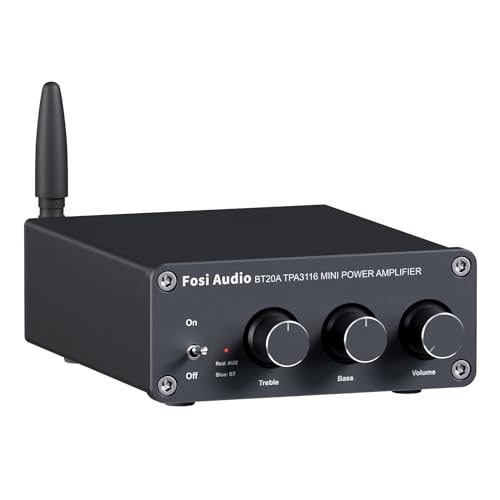
The BT20A delivers up to 100W per channel in its Bluetooth-enabled design, making it a strong choice for small to medium spaces. It features a simple setup and a one-touch power switch, with tone controls for bass and treble to tailor sound. This model is better for users who want wireless streaming from Bluetooth sources and a compact form factor for desks, bedrooms, or small living rooms. A potential caveat is that advertised power is a maximum with 100W x 2; real-world performance will depend on speaker impedance and source quality.
Best for: Users seeking a ready-to-play Bluetooth amp with straightforward controls for passive speakers in compact spaces.
EC Buying ZK-152H Bluetooth Mini Amplifier

The ZK-152H Stereo Mini Bluetooth-Compatible Digital Amplifier Board offers Bluetooth 5.0 with a wireless range of over 15 meters, plus AUX input. It delivers 15W per channel into 4-16 ohms and supports 5-30W speakers. This makes it versatile for wireless and wired use in compact speaker systems, studios, or small classrooms. A limitation is that performance heavily depends on Bluetooth source quality and interference in busy environments.
Best for: Small wireless setups needing a dual-input option for Bluetooth and AUX without bulky gear.
DROK 15W+15W 2.0 Amplifier Board (Two-Pack)
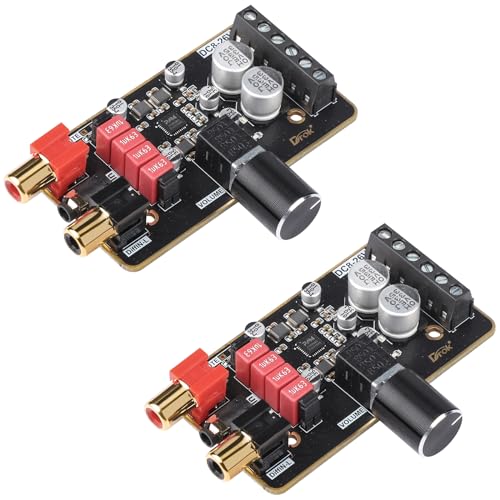
This two-pack DROK amplifier board set uses the PAM8620 chip with high efficiency and low distortion. It’s a practical option for building multiple small speakers or expanding a modular system. Best for users who want to scale a DIY project or distribute power to several compact speaker pairs. A caution: ensure proper heat dissipation in enclosed enclosures and confirm your supply voltage matches the 8-26V range to avoid performance issues.
Best for: Builders creating multi-speaker configurations or testing multiple DIY amps in parallel.
3Pcs PAM8610 Digital Audio Amplifier Board Module

This batch features three PAM8610 boards, delivering 2x15W per board with DC 7-15V input. They’re suited for compact projects where multiple identical amps are required, such as a fleet of small speakers or a modular audio rack. Best for hobbyists who want repeatable performance across several channels. Limitation: each board is relatively basic and requires careful wiring and heat management in dense installations.
Best for: Projects needing several identical 15W channels with a compact footprint.
SANMIC 15W Voice Amplifier with Wireless Lapel Microphone

The SANMIC voice amplifier provides a 15W speaker and includes a wireless lapel microphone for hands-free operation. It targets presenters, teachers, and tour guides who need portable amplification for up to about 50 people. Battery life ranges from 12 to 15 hours for playback and over 15 hours for the mic, depending on usage. A limitation is that its primary focus is portable speech amplification rather than high-fidelity music playback.
Best for: Portable speaking engagements, classrooms, or tours requiring a built-in microphone and long battery life.
Dayton Audio DA30 Mini Amplifier

The Dayton Audio DA30 provides 2 x 15W into 4 ohms or a bridged 1 x 30W into 8 ohms. It’s designed for professional-duty performance with cool-running Class D circuitry. Best for small venues or commercial setups where reliable, high-quality hi-fi sound is required in a compact package. A potential limitation is the need for a suitable enclosure and proper ventilation to maintain performance during longer sessions.
Best for: Small commercial installations or serious home setups needing a robust, bridgeable amplifier.
Serounder Audio Power Amplifier 2x15W + 20W

This 2x15W + 20W device uses an aluminium alloy shell to reduce EMI and supports 2.1 channel output, including a 20W subwoofer channel. It includes a 3.5mm AUX input and is suited for home audio systems, cars, or boats where a compact, metal-encased amplifier is preferred. A caveat is that the 20W subchannel may require compatible subwoofers to realize the full 2.1 channel effect.
Best for: 2.1-channel systems needing a compact, rugged amplifier with basic input options.
Buying Guide: Key Considerations for 15W Amplifiers
- Power and impedance: Match the amplifier’s stated output with your speaker impedance (8–16 ohms typical). Some boards auto-limit at lower impedances to protect themselves.
- Input options: Bluetooth, AUX, and line-level inputs determine how you connect sources. Wireless models simplify setup but may introduce latency.
- Class D efficiency: Higher efficiency reduces heat output and power draw, ideal for compact enclosures and battery-powered use.
- Enclosure and cooling: Aluminum or metal housings aid EMI shielding and heat dissipation, especially for continuous use.
- Installation goals: For DIY projects, choose boards with straightforward wiring and clear terminal blocks. For multi-room or multi-speaker setups, consider modular or multi-channel boards.
- Portability vs. fidelity: If music fidelity matters, prefer models with clean 0.2% THD figures and stable supply voltage; for voice or announcements, a simple, robust amp may suffice.
FAQ
- What is a 15W amplifier best used for? — Small to medium speakers, DIY speaker projects, classrooms, or compact home audio systems.
- Does Bluetooth matter for a 15W amp? — Bluetooth adds convenience for wireless sources but can affect signal purity; choose if you need wireless streaming.
- Can a 15W amp drive 4-ohm speakers? — Some boards automatically limit power when using 4-ohm or 2-ohm loads; check the spec to avoid overloading.
- Is Class D better than Class A/B for these amps? — Class D offers higher efficiency and cooler operation, suitable for compact enclosures and higher clocking demands.
- Do I need external power supplies? — Many boards require dedicated DC input within 8–26V; ensure your power supply matches the board’s requirements.
- Are multi-pack boards useful? — Yes, for distributing identical channels across multiple speaker zones or testing several configurations.