
Best 150 Watt Stereo Amplifier for Home Audio Enthusiasts
The best 150 watt stereo amplifiers deliver ample power for small to mid-sized rooms while remaining versatile for various audio setups. This guide highlights five solid options and explains who each is best for, with practical reasons to choose or avoid them. Ideal buyers include home theater users, bedroom setups, small studios, and outdoor or garage spaces needing reliable, clean amplification. Below is a quick reference table of the selected models and their strongest use cases.
| Product | ||
|---|---|---|
| Fosi TB10D | Versatile home audio plus bass-shaker setups | 600W total, tone controls, compact |
| Pyle PDA29BU.5 | All-in-one home party or computer audio | 200W peak / 100W RMS, multiple inputs |
| Fosi BT20A | Indoor/outdoor small spaces | 100W x 2, Bluetooth ready, simple controls |
| AIYIMA D03 | 2.1 setups with subwoofer | 150W + 150W, multiple inputs, USB/optical/coaxial |
| Dayton Audio APA150 | Low-distortion, quiet near-field use | Class AB, high current, reliable |
Fosi TB10D 2 Channel Stereo Amplifier

Features: 600W total from a TPA3255 chip, support for 2-8 ohm bookshelf speakers, bass and treble controls, and a convenient power switch. The TB10D is designed to blend with existing audio ecosystems, whether adding warmth to a vinyl setup or supplying bass-driven vibes from a bass shaker.
Best for: Small-to-medium rooms needing dynamic, clean sound with flexible input options. Choose this if you want a compact, versatile amp that can integrate with turntables, gaming subs, and passive speakers.
Limitation: Power is delivered as two channels total; ensure your speakers can handle 8 ohms or lower for best performance. Consider pairing with well-matched speakers to avoid strain.
Pyle PDA29BU.5 200W Stereo Amplifier

Features: 200W peak, 100W RMS, 5 inputs including RCA, USB, SD, mic, Bluetooth, and FM radio. This model supports Bluetooth streaming and multiple sources, making it suitable for karaoke or home theater sound systems.
Best for: Users who want an all-in-one amplifier with built-in media features and multiple input options, ideal for multi-source living rooms or small home studios.
Limitation: As a multi-input device with many features, setup may be more involved; ensure compatibility with your preferred devices and room acoustics.
Fosi BT20A Bluetooth Stereo Amplifier
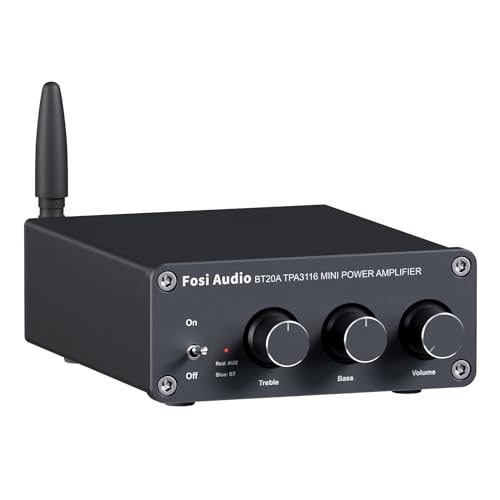
Features: 100Wx2 maximum, Bluetooth-enabled, compact and easy to install, with bass and treble controls for tone shaping. Suitable for small rooms, offices, or garages where simple wireless streaming is desired.
Best for: Buyers prioritizing wireless connectivity and a small footprint. Choose this if you want straightforward setup without sacrificing sound quality in compact spaces.
Limitation: 100W per channel may limit headroom for demanding speaker setups; avoid very large rooms or high-sensitivity floorstanding speakers if you expect loud levels.
AIYIMA D03 Bluetooth 5.0 DAC Amplifier

Features: 150W x 2, TAS5548 + TAS5624 chips, 24Bit/192kHz DAC, Bluetooth 5.0 with aptX support, multiple inputs (Bluetooth, USB, optical, coaxial, RCA), and subwoofer output capability for 2.1 setups.
Best for: Enthusiasts building a 2.1 stereo system with a dedicated subwoofer and diverse digital inputs. This is a strong pick for hi-fi setups needing flexible digital connectivity.
Limitation: Some users may require manual tuning to optimize the DSP behavior; ensure your subwoofer pairing matches the amp’s impedance and power.
Dayton Audio APA150 150-Watts Power Amplifier
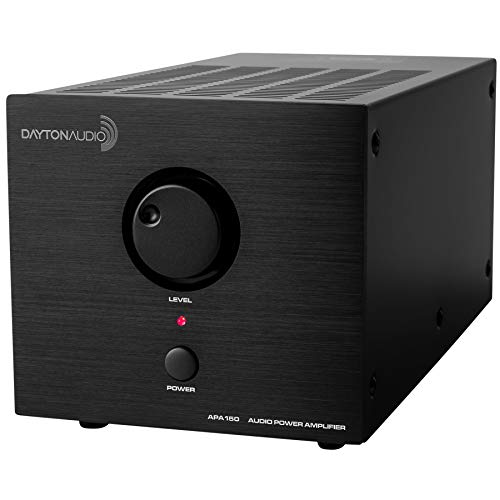
Features: Class A/B topology for low distortion, nearly silent fan operation for near-field use, high current discrete output transistors that stay cool.
Best for: Users seeking reliable, low-noise amplification with strong fidelity in near-field listening or compact home theaters. Its design emphasizes clean sound and stability.
Limitation: Day-to-day power delivery is ample, but larger rooms or demanding passive speaker pairs may benefit from higher-powered alternatives; match to speaker sensitivity to avoid underutilization.
Buying Guide
What should you consider when choosing a 150W stereo amplifier?
Speaker compatibility: Ensure the amp’s output impedance and power ratings match your speaker load (ohms and wattage). Low-impedance speakers demand careful headroom.
Input options: If you want Bluetooth, USB, optical, or phono capabilities, pick an amp with those inputs or plan for a good source integration.
Sound tuning: Look for obvious tone controls (bass/treble) or built-in DSP to tailor responses in rooms with uneven acoustics.
Size and placement: Consider the space where you’ll place the amplifier. Smaller models fit desks, shelves, or closets; larger amps may require dedicated shelving.
Usage scenario: For karaoke or multi-source party setups, models with multiple inputs and a mic input can simplify operation. For hi-fi listening, prioritize linearity and low distortion.
Comparison at a glance
- Best all-around: Fosi TB10D — robust power and flexible integration.
- Best for multi-source living rooms: Pyle PDA29BU.5 — many inputs plus Bluetooth.
- Best for wireless-focused spaces: Fosi BT20A — compact and Bluetooth ready.
- Best for 2.1 setups: AIYIMA D03 — strong DAC with subwoofer support.
- Best for near-field listening: Dayton APA150 — clean, reliable Class AB with low noise.
FAQ
- What is the meaning of 150W per channel versus total power?
- Do I need a subwoofer with these amplifiers?
- Can I use these amplifiers with turntables?
- Is Bluetooth on every model reliable for hi-fi listening?
- What speakers should I pair with a 150W amp?
Most models list total peak or per-channel power. Check the product sheet to confirm the continuous RMS rating per channel for realistic performance expectations.
Not always. If you are building a 2.1 system or want stronger bass, a subwoofer with an LFE or high-level input can complement 150W two-channel amplifiers.
Yes, several models offer phono-compatible options or can pair with a separate phono preamp. Ensure the input stage supports your source or add an adapter.
Bluetooth provides convenient wireless streaming, but for best fidelity, wired connections (optical, RCA, USB) are typically superior.
Match speaker impedance (4–8 ohms) and ensure sensitivity aligns with your room size and listening level expectations to prevent under- or over-driving the system.