
Best 16 Ohm 10 Inch Bass Speaker Options for Open-Back Cabinets and Midbass Roles
If you’re shopping for a 16 ohm 10-inch bass speaker, you want models that balance power, sensitivity, and reliability for bass guitar, PA, or pro audio use. This guide highlights five solid 10″ options and explains who each is best for, plus practical trade-offs. The buyers here include professional musicians seeking high headroom, recording setups needing tight bass response, and stage rigs prioritizing efficiency. The table below compares key specs to help you decide at a glance.
| Product | Impedance | Typical Use | Why It Stands Out |
|---|---|---|---|
| Eminence BETA10B | 16 Ω | Bass guitar and midbass duties | High power handling with a balanced midrange |
| Seismic Audio Quake 10 | 16 Ω | PA/DJ and stage monitors | Good sensitivity for compact setups |
| Eminence Basslite SC10 | 16 Ω | Sealed bass cabinets | Neodymium magnet for light weight and good efficiency |
| Eminence Delta-10B | 16 Ω | Pro audio and bass guitar | Versatile woofer with broad low end |
| Celestion Ten 30 | 16 Ω | Guitar amps and practice amps | Classic tone with warm lows and clear highs |
Eminence BETA10B 16-Ohm 10-Inch Woofer

The BETA10B is a 16-ohm pro audio woofer designed for bass guitar and midbass use. It lists a program power of 500 W and a rated power around 250 W, with a resonant frequency near 51.6 Hz and a usable range up to 3.5 kHz. Best for players who need strong midbass definition in vented or sealed enclosures and want solid efficiency (about 94 dB). This model is particularly suitable for players seeking a robust, responsive driver in compact rigs.
Who it’s best for: bassists and midbass applications where clarity in the 50 Hz–3.5 kHz range matters. Choose this if you want strong low-end extension with reliable excursion. Caution: the data shows moderate Xmax and Q factors; ensure your enclosure is tuned to avoid mechanical overload.
Seismic Audio Quake 10″ 16 Ohm Woofer

The Seismic Audio Quake 10 is a 10″ woofer rated for 125 W RMS and 250 W peak, with a frequency response listed broadly from 65 Hz upward. Its 16-ohm impedance makes it compatible with many guitar and PA cabinets. Best for: budget-friendly stage monitors and compact PA boxes needing reliable, straightforward bass reproduction. Limitation: lower upper-frequency extension compared with some premium designs.
Eminence American Standard Delta-10B 10″ Speaker

The Delta-10B is a versatile 10″ pro audio speaker rated for 16 ohms and well-suited for bass guitar and general loudspeaker use. It’s positioned as a workable woofer or midrange in vented monitors and multi-way enclosures, offering solid low-end response suitable for live sound and studio work. Best for: users who need a flexible driver for multiple enclosure types. Limitation: not every listing confirms exact wattage; verify enclosure compatibility for maximum headroom.
Celestion Ten 30 10″ Guitar Speaker 16 Ohm
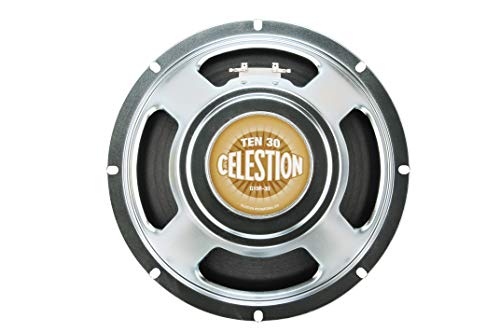
The Ten 30 is a classic 10″ Celestion guitar speaker with 16 ohms impedance. It’s noted for warm lows, a vocal midrange, and articulate top end, making it a strong upgrade for compact recording and practice amps. Best for: players seeking a vintage-tinged, balanced tone in small combos. Limitation: not optimized for ultra-high efficiency or extended low-end in large enclosures.
Timpano TPT-MD10 10 Inch Midbass Speaker

The Timpano TPT-MD10 covers a wide 75–6,500 Hz range and uses a ferrite motor for higher power handling. It’s rated for up to 800 W, with a sensitivity around 97 dB. Best for: midbass duties in pro audio setups where a wide frequency range and strong output are valuable. Limitation: data emphasizes high-frequency coverage that may require suitable crossover design in multi-way cabinets.
Buying Guide
What to consider when choosing a 16-ohm 10″ bass speaker:
- Power handling: Match the speaker’s RMS and peak ratings to your amplifier or system’s output to avoid clipping or thermal damage.
- Impedance and cabinet compatibility: 16 ohms is common for multi-driver systems and some guitar amps; ensure your amp and cabinet network suit the impedance.
- Frequency response: For bass guitar or midbass duties, prioritize a driver with strong low end (below 100 Hz) and suitable upper range for midrange clarity.
- Magnet and voice coil: Neodymium magnets keep weight down for portable rigs; larger voice coils can handle more power but add mass.
- Enclosure type: Sealed boxes yield tighter bass; vented designs provide deeper extension but require tuning for box volume and port dimensions.
- Tone goals: Vintage warmth vs. modern tightness—pick a model aligned with the desired tonal character.
- Physical fit: Check mounting depth, basket diameter, and mounting hole pattern to ensure compatibility with your enclosure.
Practical selection tips
- Best for compact bass rigs with solid headroom: Eminence BETA10B and Delta-10B.
- Best for budget stage monitors: Seismic Audio Quake 10.
- Best for sealed bass cabinets: Eminence Basslite SC10.
- Best for classic guitar amp voicing with robust lows: Celestion Ten 30.
FAQ
- Q: Is 16 ohms better than 8 ohms for a 10″ bass speaker? A: Impedance affects amp compatibility and the number of drivers you can use; 16 ohms can be advantageous for parallel club setups and certain PA configurations.
- Q: Can these speakers handle bass guitar duty? A: Several listed models are designed for bass guitar and midbass use, but always check power handling and enclosure compatibility for your rig.
- Q: Do I need a vented enclosure for these drivers? A: Some drivers perform well in vented enclosures, while others are optimized for sealed boxes. Match enclosure type to the chosen driver’s design.
- Q: What should I consider about sensitivity ratings? A: Higher sensitivity helps sound reach the audience with less power, but actual performance depends on enclosure and system design.
- Q: Are 10″ speakers suitable for stage monitors? A: Yes, especially models with higher sensitivity and suitable efficiency in a compact enclosure.
- Q: How important is Xmax for bass punch? A: Xmax limits cone excursion; higher Xmax generally means more clean bass at higher drive levels, but depends on enclosure tuning.