
Best 2 Channel Mic Mixer Options for Small Venues, Podcasts and Home Studios
When choosing a 2-channel mic mixer, look for compact size, reliable mic inputs, and useful features like phantom power or USB interfaces. This guide highlights five solid, widely compatible models and who they’re best for. It’s ideal for podcasters, live performers, home studios, or small venues needing simple, dependable sound control.
Summary of selected products:
| Product | Best For | Key Feature |
|---|---|---|
| Astatic M2 2-Channel Mixer with USB Interface (CAD Audio) | Podcasters and small venues | USB interface with +48V phantom power |
| Kaschun 4-Channel DJ Audio Mixer | Mobile setups and live streams | USB audio interface, Bluetooth, +48V phantom power |
| YGiTK 2 Channel Stereo Mixer | Guitarists and stage gear | Dual input formats; independent channel control |
| Btuty 2 Channel Karaoke Audio Mixer | Karaoke and duets | Dual mics, built-in echo and RCA I/O |
| Rockville RockMix 2BT 2-Channel USB Interface | Podcasters and streamers | USB interface, Bluetooth, low-noise preamps |
Astatic M2 2-Channel Mixer With USB Interface

The Astatic M2 offers compact two-channel mic mixing with USB output and phantom power, ideal for small venues, live performances, and home studios. It supports 2 XLR combo inputs for mic or instrument signals and connects to a computer for quick recording or podcasting at 16-bit/48kHz. Best for solo hosts, small podcast teams, or streaming setups where a straightforward, plug-and-play mixer is needed. A potential limitation is the two-channel limit if you expand to multi-mic sessions.
Who it’s best for and why it was selected
- Best for solo podcasters and small live events needing reliable USB routing.
- Compact footprint fits on desks or small tables without sacrificing essential mic inputs.
Kaschun 4-Channel DJ Audio Mixer

The Kaschun mixer expands to four channels with USB audio interface capability, XLR and 6.35mm connections, and a stable +48V phantom power supply. It’s well-suited for mobile podcasts, livestreams, and on-the-go music production. It also features Bluetooth streaming for background music from mobile devices. Note: Bluetooth input is supported, not output, so plan your routing accordingly. Best for mobile setups needing versatile input options and wireless audio sources.
Who it’s best for and why
- Better for on-location events or mobile recording where multiple sources are common.
2 Channel Stereo Mixer By YGiTK

This compact 2-channel mixer supports both 6.35mm and 3.5mm inputs, making it easy to combine guitars, keyboards, phones, and mic signals. It provides independent channel volume control and offers stereo/mono switching, which helps tailor outputs for speakers or headphones. It’s best for small venues or practice spaces where users need quick, flexible input connections without extra adapters. A limitation could be its minimal control surface compared with larger mixers.
Who it’s best for and why
- Ideal for guitarists or DJ setups needing flexible input options and simple monitoring.
Btuty 2 Channel Karaoke Audio Mixer
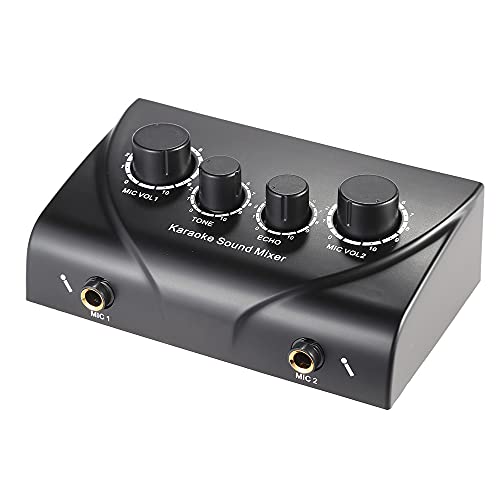
The Btuty mixer focuses on karaoke and duets with dual mic inputs and independent volume controls. Built-in echo and tone controls shape vocal sound for singing and announcements. RCA input/output ports enable connection to speakers or amplifiers. This model is best for home karaoke setups or small events where two people will perform simultaneously. A potential limitation is the absence of USB audio for direct PC recording.
Rockville RockMix 2BT 2-Channel USB Interface

The Rockville RockMix 2BT combines USB interface capability with Bluetooth for wireless streaming and remote audio integration. It includes low-noise mic preamps with +48V phantom power, suitable for podcasting, streaming, and music production. It features 2-band EQ and pan controls on each channel, plus independent main and headphone monitoring controls. Best for podcasters and streamers who need seamless computer routing and wireless background music. A caution is that Bluetooth streaming may introduce slight latency depending on the setup.
TKLBLS 4 Channel Podcast Audio Mixer

The TKLBLS 4-channel mixer offers 4 inputs with 3-band EQ, plus a 48V phantom power option to support condenser mics. Features like a PAD and an 80Hz high-pass filter help reduce distortion and low-frequency rumble. It’s suitable for home studios or small broadcast setups that require clean gain, precise EQ, and safe handling of louder sources. Best chosen for detailed vocal work and nuanced live recording. A caveat is that it may be more purpose-built for podcasting and studio use than stage performances.
Yamaha MG06 6-Input Compact Stereo Mixer

The Yamaha MG06 provides six channels in a compact form without USB, featuring class A preamps, 3-band EQ, and high-pass filters for clean noise suppression. It’s well-suited for small studios or stage setups where simple, reliable analog mixing is preferred. Best for users who prioritize robust preamps and a familiar, durable brand. A limitation is the lack of a USB audio interface for direct computer recording.
Boeska 4 Channel DJ Audio Mixer
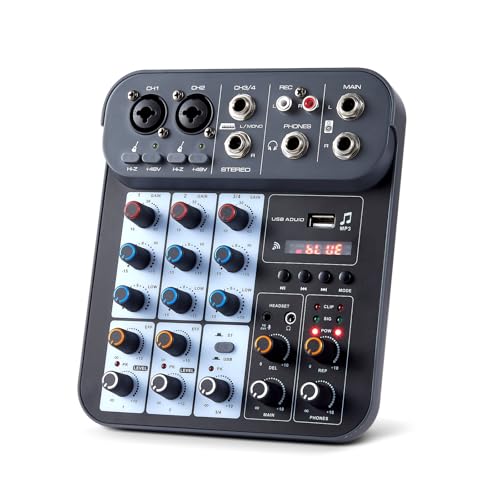
The Boeska 4-channel mixer offers two mic inputs, REC and TAPE input, and a DSP effects processor. It includes 48V phantom power for condenser mics and features gain control, EQ, and delay options for shaping sound. It’s a practical choice for DJs or streaming setups that need in-device effects and robust input options. A caution is to verify phantom power safety when connecting certain dynamic mics.
Buying Guide: How to Choose the Right 2-Channel Mic Mixer
- Purpose and environment: For podcasting or streaming, prioritize USB interfaces and low-latency routing. For live music, look for better mic preamps and EQ controls.
- Inputs and compatibility: Ensure there are enough XLR or 1/4″ inputs for your mics, instruments, and playback devices. Consider 3.5mm or Bluetooth if you need mobile connectivity.
- Power and phantom power: Condenser mics require 48V phantom power. Decide if you need phantom power and whether you want a separate switch for safety.
- Sound shaping: Check EQ bands, gain control, and any built-in effects. More flexible EQ helps tailor to voice and content style.
- Connectivity: USB interfaces enable direct PC recording; Bluetooth offers wireless music streaming but may add latency. Plan your routing to avoid conflicts.
- Portability and build: For on-the-go use, prioritize compact size, light weight, and sturdy construction.
Frequently Asked Questions
- Do I need phantom power for my mics?
Condenser mics typically require 48V phantom power. Dynamic mics do not.
- Is USB audio important for a 2-channel mixer?
USB audio is essential if you want direct recording to a computer or streaming without extra interfaces.
- Can I use Bluetooth with a mixer for podcasting?
Yes, Bluetooth can bring in background music or remote calls, but it may introduce latency. Use wired mics for best lip-sync accuracy.
- What should I consider when choosing between USB and analog models?
USB models simplify recording and streaming; analog models often provide thicker live mixes and tactile control.
- What is the advantage of multi-input configurations?
More inputs allow simultaneous mics, instruments, and playback sources, reducing the need to switch gear mid-session.
- Are cheaper mixers suitable for professional use?
Many budget models cover basic needs well; for high-stakes performances, consider higher-grade preamps and build quality.