
Best 24-Channel FireWire Audio Interfaces for Home Studios and Pro Setups
If you need a capable 24-channel capable interface that uses FireWire for stable, low-latency performance, this guide highlights five strong options and one USB-C alternative for modern setups. This selection targets buyers building multi-mic, multi-instrument rigs, or small- to mid-size studios that require flexible routing, onboard DSP, and robust monitoring. Each pick is evaluated for who benefits most, plus practical trade-offs to help you choose.
Overview of top picks:
- MOTU 828mk3 Hybrid Firewire Audio Interface — best for those needing extensive I/O with onboard DSP.
- RME Fireface 802 — best for precise, professional-grade monitoring and DSP-driven mixing.
- Presonus StudioLive 16.0.2 — best for integrated live-to-studio workflows with powerful routing.
- M-Audio FireWire 410 — best budget FireWire option with straightforward routing for smaller sessions.
- PIYONE Audio Interface (2×2) — best for compact setups needing USB-C simplicity and reliable 24/192 quality.
| Product | Key Strength | Best For |
|---|---|---|
| MOTU 828mk3 Hybrid | 28 inputs/30 outputs, onboard DSP | Complex multi-mic sessions, hybrid FireWire/USB |
| RME Fireface 802 | Excellent conversion, DSP mixing | Critical listening, broadcast-ready setups |
| Presonus StudioLive 16.0.2 | 8 mono, 4 stereo, built-in mixer | Live-to-studio workflow |
| M-Audio FireWire 410 | Two headphone outs, flexible routing | Budget multi-channel work |
| PIYONE 2×2 Interface | USB-C, 24-bit/192kHz | Compact, modern USB-C rigs |
MOTU 828mk3 Hybrid Firewire Audio Interface

The MOTU 828mk3 Hybrid provides 28 inputs and 30 outputs, with on-board DSP-based effects and flexible routing. It supports FireWire for legacy setups while offering flexible I/O and independent monitor control. This makes it a solid choice for studios requiring extensive channel options and reliable performance in mixed environments. Choose this if you need ample simultaneous tracks and professional on-device processing.
Best for: studios that need many inputs with independent path routing and built-in effects. Caution: Advanced setup may require careful driver and software configuration to maximize DSP features.
Fireface 802 USB/Firewire Audio Interface
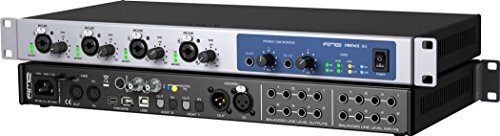
The Fireface 802 combines USB/FireWire connectivity with 12 x 12 analog I/O and DSP-driven onboard mixing. Its high-quality AD/DA conversion and stable driver architecture make it a premier choice for professional studios needing precise monitoring, low latency, and robust routing. Best for: critical listening environments and users who value pristine conversion and flexible internal routing. Limitation: FireWire support varies by host OS and may require legacy interfaces or adapters in newer systems.
Presonus StudioLive 16.0.2

This 16-channel mixer offers 8 mono and 4 stereo inputs with 60 mm faders, auxiliary busses, and multiple internal effects. It includes a 31-band graphic EQ on the main bus and semi-parametric EQ on channels. Best for: small to mid-sized live-to-studio rigs needing integrated mixing and simple interface with professional routing. Caution: It emphasizes live mixing features that may be more than needed for pure desktop recording.
M-Audio FireWire 410

The M-Audio FireWire 410 provides 4-in/10-out FireWire with on-board ASIO compatibility, a straightforward control panel, and total routing flexibility for mid-sized projects. Best for: budget-conscious studios needing reliable multi-channel routing and external effects monitoring. Limitation: It does not feature the higher channel counts of the other models listed here, so it’s better for smaller setups.
PIYONE Audio Interface, 2×2

The PIYONE 2×2 USB-C interface supports high-fidelity 24-bit/192kHz recording with a single USB-C connection. It features XLR/TRS combo inputs and a monitor loopback function, with an illuminated control design. Best for: compact, modern studios that prefer USB-C power and plug-and-play operation. Caution: It is a 2-channel interface, so not suitable for multi-mic, multi-drum setups that demand 24 channels simultaneously.
Buying Guide
What to consider when choosing a 24-channel FireWire-capable or FireWire-adapted interface:
- Channel count and I/O configuration: Ensure the unit provides enough inputs and outputs for your setup, including monitor paths and cueing.
- Connectivity: FireWire remains available on some professional-grade interfaces, but assess compatibility with your computer. Hybrid units or USB-C options may offer future-proofing.
- DSP and onboard effects: If you need low-latency monitoring and mixing without a computer, onboard DSP can be valuable.
- Monitoring and cueing: Look for independent control of main out, headphone, and monitor paths to support complex sessions.
- Driver stability and software compatibility: Choose brands with a track record of stable drivers and well-supported control panels.
- Build and form factor: For desktop studios, a compact unit may suffice; for room-scale setups, larger interfaces may be preferable.
FAQ
- Q: Do I need FireWire to use these interfaces today? A: Not necessarily. Some models support USB or FireWire hybrids; choose based on your computer’s available interfaces.
- Q: Which interface is best for multi-mic recording? A: MOTU 828mk3 Hybrid and RME Fireface 802 offer broad I/O and robust monitoring options for multi-mic applications.
- Q: Can I use these with a Mac and Windows system? A: Most listed devices are class-compliant or provide drivers for both platforms; verify OS compatibility before purchase.
- Q: Is onboard DSP essential for home studios? A: It can reduce latency during monitoring and enable realtime effects, which is helpful for performers.
- Q: What is the main trade-off when choosing a budget FireWire interface? A: Lower I/O counts and fewer onboard features, but often sufficient for smaller projects or starter studios.
- Q: Should I prioritize I/O count over latency? A: For large projects, prioritize I/O count; for performance-heavy sessions, prioritize latency and driver stability.