
Best Spring Reverb Tanks for Guitar Amps: Top Replacements
When choosing a spring reverb tank, aim for reliability, compatibility, and the right decay profile for your sound. This guide highlights five solid options ideal for guitar amps and home studio setups. The selections cover a range of spring configurations and decay times to fit blues, rock, and clean tones. Best for players who want straightforward swaps without extensive wiring changes, or technicians replacing worn tanks in classic amps.
Summary table of selected products:
| Product | Brand | Type / Decay | Best For |
|---|---|---|---|
| MOD 8EB2C1B Reverb Tank | MOD Reverb Tanks | Short (3 Spring) | Players seeking a compact, quick-decay tank for tight reverb tails |
| Reverb Tank – Mod 9EB3C1B | MOD Reverb Tanks | Long (3 Spring) | Long, lush trails for classic surf/rock reverb |
| MOD 9EB2C1B Reverb Tank | MOD Reverb Tanks | Long (3 Spring) | Warm, extended decay with robust construction |
| Fender 3-Spring 800 Ohm | Fender | Long (3 Spring), 8 Ohm | Vintage-voiced reverb for Fender amps and similar circuits |
| Accutronics 9AB2C1B Reverb Tank | Accutronics | Long (3 Spring) | Solid, dependable long-reverb option for various amps |
Mr.Power Spring Reverb Tank 2EB2C1B for Replacement

Reference features: 600 Ohm input impedance with 125MH inductance and 75 Ohms DC resistance for signal processing; 2250 Ohm output impedance, 330.0 MH inductance, and 220 Ohms DC resistance for sound output; insulated input and grounded output connectors for electrical isolation. Best for older amps requiring a compact 2EB2C1B form factor and straightforward swap. Choose this if you need an economical, readily replaceable tank with stable performance in mid-wattage combos. Caution: verify your amp’s impedance compatibility before replacing to avoid mismatched loading.
MOD 8EB2C1B Reverb Tank

This is a short, three-spring MOD tank. It is solid and sturdy, designed to replace 8EB2C1B units. Best for players who want a compact, reliable reverb module with a quick decay suitable for punchy, springy ambience in small to mid-sized amps. Better for amps needing a tighter, less ambient tail. Limitation: shorter decay may be less suited for surf-style trails; ensure your tonal goal aligns with a shorter tank.
Reverb Tank – Mod 9EB3C1B, Long Decay
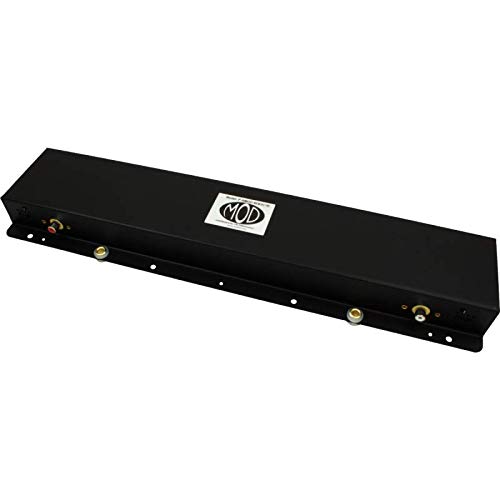
9EB3C1B offers a long decay with three springs, providing lush, expansive reverberation. Best for players seeking a classic, spacious hall-like vibe or long tails for solo sections. Choose this if you want more air around the signal and you can accommodate a longer decay. Caution: ensure your amp’s transformer and preamp stages can handle the extended tail without muddying the mix.
MOD 9EB2C1B Reverb Tank

MOD 9EB2C1B is a long three-spring tank with sturdy construction and a reliable, room-filling reverb profile. Best for players who want a warm, sustained tail across the mix while maintaining performance in compact or mid-sized amps. Choose this when you desire a balanced, classic reverb character with strong lead-in and tail. Limitation: may require careful level matching to avoid overpowering the dry signal in tight mixes.
Fender 3-Spring 800 Ohm Replacement Reverb Unit

This 3-spring, 800-ohm unit is a classic Fender replacement used across numerous amps since 1989. Best for players seeking an authentic Fender-like reverb texture with a long decay. Best for Fender-equipped rigs or those after a vintage-voiced spring. Limitations: designed for specific Fender models; verify compatibility with your amplifier’s impedance and chassis layout to avoid fitment issues.
Reverb Tank – Mod, MN-8EB2C1B

MN-8EB2C1B is a medium-decay, three-spring, compact replacement from AmplifiedParts. Best for players who want a balanced, moderate tail with solid construction for a wide range of amps. It is a short form factor option when space is a constraint. Caution: ensure the tank’s impedance matches your amp’s design to avoid tonal imbalance.
Fender 4-Spring 8-Ohm 4AB3C1B Replacement

This is an 8-ohm, four-spring reverb unit with a long decay design (2.75-4.0 sec.). Best for players seeking a classic, deeper reverb commonly found in Fender’s higher-end amps. Choose this if you want a lush ambient tail that supports sustained chord patterns. Limitation: higher impedance and more springs can complicate installation in tight amp cavities; verify space and connector compatibility.
Accutronics 9AB2C1B Reverb Tank

9AB2C1B is a long three-spring tank from Accutronics. Best for players who want a reliable, extended reverb with a traditional studio-friendly tone. This option is well-suited for a wide range of amplifiers and can provide a musical, spacious tail. Caution: ensure your amp’s circuit and chassis support the specific long-tank form factor to avoid clearance issues.
Buying Guide
Key considerations when selecting a spring reverb tank:
- Decay time: Short vs long tails affect how the reverb sits in the mix. Short tanks work well for tight, punchy riffs; long tanks suit ambient, spacious playing.
- Impedance compatibility: Match input and output impedances to your amp to prevent tonal loss or volume shifts.
- Spring count and physical form: Three-spring tanks offer classic spring reverb; four-spring variants yield denser tails. Check mounting space and connector layout in your amp.
- Tone character: Some tanks deliver brighter top-end and others a warmer, darker trail. Consider the sonic signature you want in your rig.
- Reliability and construction: Look for sturdy housings and solid solder joints. Replacement part availability can reduce downtime.
FAQ
What is a spring reverb tank?
A spring reverb tank is a standalone electromagnetic device that creates reverb by moving a signal through a set of springs inside a metal can, producing natural, metallic tails.
How do I know which impedance to choose?
Check your amplifier’s documented input and output impedance requirements. Using a tank with mismatched impedance can affect level matching and tonal response.
Can I mix tanks in one amp?
It’s generally best to replace like-for-like units for predictable behavior. Mixing different decay profiles can yield inconsistent results.
Will a longer decay tank cause muddiness?
Only if the mix is already crowded. In clean or lightly driven tones, long-decay tanks are more noticeable; in high-gain settings, they can blur the signal without proper level control.
Are these replacement tanks compatible with all amplifiers?
Replacement tanks are designed for common chassis footprints, but compatibility depends on impedance, physical fit, and connector types. Always verify model-number compatibility before purchasing.