
Best Fender Amp-in-a-Box Pedals for Real Tube-Like Overdrive
Answering the question: these compact pedals simulate or push a guitar amp’s front end to achieve authentic tube-like overdrive, compression, and tonal shaping. They’re ideal for players who want amp-like response without cranking a full stack. The top picks below are best for different needs: studio players seeking consistency, venue players needing volume control and dynamic feel, and tone hunters chasing classic British or American amp flavors. A quick buyer’s table follows to compare core traits at a glance.
| Product | Best For | Why It Stands Out |
|---|---|---|
| JHS Little Black Amp Box Signal Converter | Direct amp front-end healing and tone shaping | Controls signal sent to power section for authentic amp feel at lower levels |
| Fender ABY Pedal Footswitch | A/B rig switching | Flexible routing to preserve tone when splitting or selecting amps |
| Marshall JCM800 Overdrive Distortion | Classic rock grit | Grit control and sensitivity tuned to emulate famous JCM800 drive |
| GOKKO GK-36 PLEXIBOX | British amp voicing and all-analog warmth | Six-knob tone shaping plus all-analog circuitry for authentic response |
| Donner Amp Attenuator Pedal (EMO AMP Box) | Low-volume performance | Backed by true bypass and dynamics-preserving attenuation |
JHS Little Black Amp Box Signal Converter
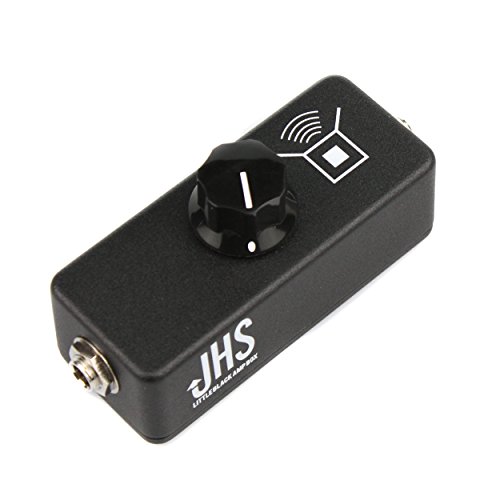
The Little Black Amp Box is designed to tame a loud tube amp by running through the effects loop and controlling how much signal reaches the power section. This lets you push the amp’s front end for the natural feel and tone you can’t easily capture at lower volumes. It preserves the amp’s sweet spot response even when the overall level is reduced. Best for players who want to dial in that pushy, responsive tone without cranking the amp.
Who it’s best for: players who crave front-end drive and sweet-spot behavior at practical rehearsal or small-stage levels. Why selected: it directly manipulates the signal into the power stage for “fire up the front end” tone. Caution: exact tonal results depend on your amp’s loop layout and gain structure.
Fender ABY Pedal Footswitch, Red

The Fender ABY pedal provides routing versatility with A to B or A and B switching options. It’s best for players who need to switch between two amps or signal paths without tone loss. The LED indication helps you confirm active routes, and true hardwire bypass in the off position preserves your tone when not engaged. This is a practical choice for players who frequently compare two amps or use parallel effects chains.
Best use case: switching between amps or channels on stage or in studio when consistent tone is essential. Limitation: it doesn’t itself boost or attenuate drive; it mainly manages signal routing, so pairing with an amp-in-a-box pedal may yield the most helpful results.
Marshall JCM800 Overdrive Distortion Pedal

Inspired by the iconic JCM800 amp, this pedal focuses on delivering a classic rock grit with a dedicated gain control to shape the drive and a sensitivity control to refine dynamics. It’s a straightforward choice for players seeking a screaming midrange push and edge that mirrors the amp’s original drive behavior. Best for classic rock tones and players who want audible front-end saturation without relying on power-amp saturation.
Who it’s for: players chasing a Marshall-amp-like crunch without a full stack. Why selected: it emphasizes the core JCM800 character with clear gain and dynamics control. Caution: high-gain settings can compress tone and reduce dynamic response if your guitar or amp doesn’t complement that level of drive.
GOKKO GK-36 PLEXIBOX British Amp Simulator Overdrive
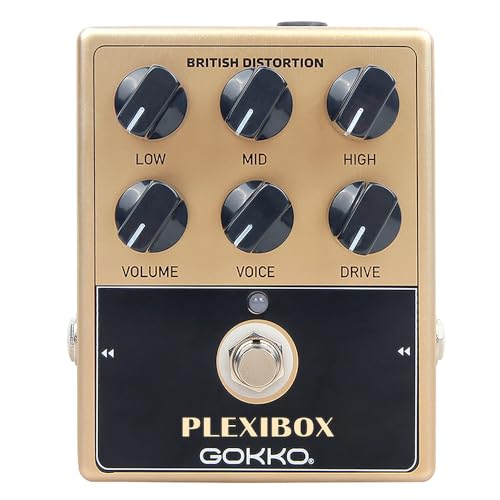
The GK-36 PLEXIBOX is designed to capture authentic British amp tones, especially the Marshall midrange personality, across a spectrum from warm, vintage breakup to high-gain distortion. It runs with all-analog circuitry and features six knobs for flexible shaping: Low, Mid, High EQ, Volume, Drive, and Voice. Best for players who want a versatile, analog response that reacts to picking dynamics and offers multiple voicing options.
Who should buy: players after a broad UK-leaning drive with authentic responsiveness. Selection rationale: all-analog design preserves natural dynamics. Limitation: the six-knob setup requires thoughtful dialing to avoid overlapping EQ regions for your guitar.
Donner Amp Attenuator Pedal, EMO AMP Box

The Donner EMO AMP Box acts as a pedal-based attenuator and signal converter, maintaining the tone of your amp’s sweet spot at lower levels. It emphasizes true bypass behavior; its FX-loop routing lets you push the amp’s front end while keeping overall volume controllable. Best for players who want to explore dynamics at home or in practice rooms without loud volume. Caution: device-to-amp compatibility and impedance matching can affect perceived tone.
Who it’s for: players who need clear tone downscaling while preserving dynamics. Why chosen: it keeps front-end feel while offering practical output control. Limitation: performance depends on your amp and pedal settings; some users may need additional EQ or gain adjustments for the target tone.
Buying Guide
What should you consider when choosing an amp-in-a-box solution?
- Desired tone: Are you after the British-amp character, American amp crunch, or a neutral drive that reacts to your touch?
- Front-end drive vs. power-stage control: Do you want to push the front end (more feel) or manage the overall level while keeping tone intact?
- Analog vs. digital: All-analog models typically respond more naturally to picking dynamics; digital options may offer more exact emulations.
- Routing options: Do you need A/B or A/B/Y switching to compare amps, or a simple one-path drive?
- Volume management: Attenuation pedals help practice quietly; ensure the device preserves dynamic range when lowering loudness.
- Impedance and loop compatibility: Ensure your guitar, pedal, and amp input/output impedance align to avoid tone loss.
FAQ
What is an amp-in-a-box pedal best used for?
To emulate or enhance an amp front-end response, providing tube-like drive and dynamics in a compact format.
Can I use these pedals with any guitar and amp?
Most will work broadly, but impedance matching and loop configurations can affect tone. Check compatibility with your amp’s loop and input/output specs.
Are analog pedals better for dynamic playing?
Typically, yes. Analog designs tend to respond more naturally to picking dynamics and guitar volume changes.
Should I buy multiple pedals or a single versatile one?
Depends on your needs. A single versatile pedal can cover most bases, but dedicated options offer distinct voicings you might require for specific songs or styles.
Do these pedals require power?
Yes. Most pedals need a standard 9V supply or battery; check each product’s power requirements before setup.