
The best 4-channel portable recorder depends on what you need to record: the Zoom PodTrak P4 is best for multi-person podcasts, the TASCAM DR-70D suits video production, and the Zoom H4 Essential and R4 offer portable options for music and field work. The Comu Action Pro is included for comparison, but it is an AI voice recorder rather than a conventional multitrack production recorder. Compare input types, recording workflow, and intended use before choosing.
| Recorder | Best For | Key Distinction |
|---|---|---|
| Zoom PodTrak P4 | Podcasts and remote interviews | Four mic inputs and four headphone outputs |
| Zoom H4 Essential | Music, interviews, and field recording | Built-in stereo mics and two XLR/TRS inputs |
| Zoom R4 | Layered music recording | Four-track workflow with bouncing |
| TASCAM DR-70D | Video and production sound | Four XLR inputs and camera-mountable design |
| Comu Action Pro | Meeting notes and transcription | AI-generated documents and summaries |
Zoom PodTrak P4 Podcast Recorder

The Zoom PodTrak P4 is best for podcast hosts who need to record several microphone users and monitor audio through separate headphones. It has four microphone inputs with phantom power and four headphone outputs, each with individual volume control. Those features make it a direct fit for roundtable discussions or interviews with multiple local participants.
The recorder also includes four programmable sound pads and supports multitrack recording of its inputs and sound pads. Its listed features include phone and USB input, a 2-in/2-out USB audio interface, and battery-powered operation. Choose this model if podcast-specific controls and multiple headphone connections matter more than a compact handheld microphone setup.
- Best for: Multi-person podcasts and interview recording.
- Why it stands out: Four mic inputs and individually controlled headphone outputs support a shared recording setup.
- Consider: Its feature set is focused on podcasting, so buyers seeking a music-first recorder may prefer a different workflow.
Zoom H4 Essential Handheld Recorder
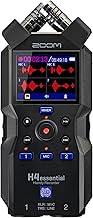
The Zoom H4 Essential is best for creators who want a portable recorder for music, interviews, podcasts, video audio, and live performances. It is described as a four-track recorder and combines built-in stereo microphones with two XLR/TRS inputs. That mix provides a way to record with the internal mics or connect external microphones, instruments, a mixer, or a soundboard.
The product information highlights 32-bit float recording as a way to help capture louder and quieter material without worrying about distorted takes. It is a flexible choice for users who need both a handheld recorder and external input options. Choose it if you want an all-purpose unit for varied recording situations rather than a recorder designed specifically around four podcast microphones.
- Best for: Musicians, podcasters, filmmakers, and field recordists needing a portable, multi-purpose device.
- Why it stands out: Built-in stereo microphones complement two external XLR/TRS inputs.
- Consider: It has two XLR/TRS inputs, not four; confirm that this input count suits your setup.
Zoom R4 Multi-Track Recorder
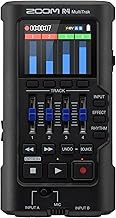
The Zoom R4 is best for musicians who want to build arrangements by recording and layering parts. It captures up to four tracks and includes a dedicated bounce track. Bouncing can free up tracks for additional layers, while the listed undo function gives users a way to return to an earlier step in that process.
The R4 has two XLR/TS combo inputs with Zoom preamps for microphones, instruments, keyboards, and other listed sources. Its features also include 32-bit float recording, a built-in microphone, effects, rhythms, battery power, and USB audio interface functionality. It is a portable music-production option, but its four-track capacity should not be confused with four physical XLR inputs.
- Best for: Songwriters and musicians recording layered ideas and arrangements.
- Why it stands out: The bounce-track workflow is designed to make room for additional recording layers.
- Consider: It has two combo inputs, so it is not the right fit if four simultaneous external mic connections are essential.
TASCAM DR-70D Portable Audio Recorder

The TASCAM DR-70D is best for videographers and production teams that need multiple microphone connections in a compact recorder. It provides four combo XLR/TRS inputs with phantom power, making it the clearest fit in this selection for a buyer who specifically needs four external mic inputs for production sound.
The recorder is designed for filmmakers, television producers, advertisers, and documentarians. Its compact format can be mounted above or below a camera, and it includes two internal microphones for capturing sound on set. Listed features also include a limiter and high-pass filter. Choose this model if camera-oriented placement and production audio are priorities.
- Best for: Video production, documentary work, and on-set audio recording.
- Why it stands out: Four combo inputs, phantom power, internal mics, and a camera-mountable format serve production workflows.
- Consider: Its listed design is focused on video production; podcast hosts may find the PodTrak P4’s headphone and sound-pad features more relevant.
Comu Action Pro AI Voice Recorder

The Comu Action Pro is best for professionals who want recorded conversations converted into searchable transcripts, summaries, and follow-up materials. Its listed six-microphone setup includes four omnidirectional microphones, one directional microphone, and one bone-conduction microphone. The product description says a built-in motion sensor works with the microphones to capture sound in meetings, interviews, calls, and other settings.
Its software features are the main distinction: the device can produce editable presentation slides, email drafts, reminders, to-do lists, and action items. It also supports transcription and summaries in 113 languages, along with translation of conversations and recordings. The listed battery life is 70 hours or more.
- Best for: Meeting documentation, transcription, and AI-assisted follow-up tasks.
- Why it stands out: Its emphasis is on searchable transcripts and generated documents, rather than traditional multitrack production.
- Consider: It is not presented as a conventional four-channel multitrack recorder; choose another product here for separate production tracks or four XLR inputs.
Buying Guide: How To Choose A 4-Channel Portable Recorder
Do you need four tracks or four microphone inputs?
“Four-channel recorder” can refer to different capabilities. A recorder may capture four tracks through a mix of built-in microphones and external inputs, or it may provide four physical microphone connections. Those are not interchangeable. The TASCAM DR-70D lists four combo XLR/TRS inputs, while the Zoom H4 Essential and Zoom R4 each list two external XLR/TRS or combo inputs. The PodTrak P4 lists four microphone inputs.
Before buying, count how many separate sources you must record at the same time. If four people need individual microphones, prioritize a model with four microphone inputs. If you are layering instruments or capturing a scene with built-in microphones, a four-track recorder with fewer external inputs may be sufficient.
Which recorder fits podcasting?
For a podcast with several in-person speakers, compare the number of mic inputs and headphone outputs. The PodTrak P4 has four mic inputs and four headphone outputs with individual volume control. It also has programmable sound pads and multitrack recording for inputs and sound pads, making its feature set specifically relevant to podcast production.
For a solo host or mobile interview where built-in stereo microphones are useful, the H4 Essential is another option. Its two external inputs mean it may not meet the needs of a four-microphone panel without another suitable setup.
Which recorder works best for video production?
Video teams should consider how the recorder connects to microphones and where it can be placed during a shoot. The TASCAM DR-70D is described as a compact recorder that can mount above or below a camera. It has four combo inputs with phantom power and two internal microphones, plus a limiter and high-pass filter.
For location recording, also consider whether the recorder’s input count matches the planned microphones and whether built-in microphones are useful as part of the recording setup. The listed product features can help narrow options, but they do not establish compatibility with every camera or microphone configuration.
Do you want to record music by layering tracks?
Musicians should distinguish between simultaneous inputs and track-building tools. The Zoom R4 is designed to record up to four tracks and bounce material to a dedicated track so users can free space for additional layers. It also lists effects, rhythms, a built-in microphone, and battery-powered operation.
The H4 Essential is a broader option for music and other creative work, with stereo microphones and two XLR/TRS inputs. Choose based on whether your priority is a track-layering workflow or capturing varied sources with a handheld recorder.
What should you check before ordering?
- Input count: Confirm how many external microphones or instruments you need to connect at once.
- Input type: Check whether the recorder has XLR, TRS, or combo connections that match your planned sources.
- Phantom power: If your microphone setup requires it, verify that the chosen recorder lists phantom power on the relevant inputs.
- Monitoring: For group recording, check the number of headphone outputs and whether users can adjust their own volume.
- Workflow: Choose between podcast controls, camera-oriented placement, handheld field recording, or track layering.
- Portability: Consider whether battery-powered operation or a compact form factor is important for recording away from a desk.
Frequently Asked Questions
What is the difference between four tracks and four inputs?
Four tracks describe the number of audio tracks a recorder can capture or manage; four inputs describe physical connections for external sources. A recorder can offer four tracks without having four external microphone inputs. Check both specifications against your recording plan.
Which recorder in this list has four microphone inputs?
The Zoom PodTrak P4 lists four microphone inputs, and the TASCAM DR-70D lists four balanced XLR mic inputs within its four combo XLR/TRS connections. Their other features suit different uses: podcasting for the P4 and video production for the DR-70D.
Which option is designed for multiple podcast guests?
The Zoom PodTrak P4 is designed for podcast workflows and lists four microphone inputs plus four headphone outputs with individual volume control. It also includes programmable sound pads and multitrack recording.
Is the Zoom R4 suitable for recording four microphones at once?
The Zoom R4 lists two XLR/TS combo inputs, not four. It supports up to four tracks and a bounce-track workflow, so it is more relevant to musicians building layered recordings than to users who need four simultaneous external microphone connections.
Is the Comu Action Pro a four-channel production recorder?
The Comu Action Pro is described as an AI voice recorder with six microphones, transcription, summaries, and AI-generated documents. Its listed features do not describe it as a conventional four-channel multitrack production recorder, so it is better suited to meeting notes and conversation documentation.