
The best 4-ohm full range speaker depends on its size, power handling, and intended use. The Pioneer TS-F1035R is best for compact car-speaker replacement, while the Gikfun pair suits low-power DIY projects. The GRS 3FR-4 is a small driver for custom enclosures, and the Lanzar is better for larger midbass applications. BOSS Audio Systems offers a four-speaker car-audio set, but the supplied product details do not confirm its impedance, so verify that specification before buying for a 4-ohm system.
| Product | Best suited for | Key detail |
|---|---|---|
| Pioneer TS-F1035R | Compact car audio | 4-inch, 4-ohm, two-way coaxial |
| Gikfun EK1725 | Low-power DIY audio | Pair of 2-inch, 4-ohm, 3-watt drivers |
| GRS 3FR-4 | Small custom speaker builds | 3-inch, 4-ohm driver |
| Lanzar OPTI6MI | Midbass-focused car audio | 6.5-inch, 4-ohm speaker |
| BOSS Audio Systems 6.5-inch | Multi-speaker car upgrades | Two pairs; impedance needs confirmation |
Pioneer TS-F1035R 4-Inch Coaxial Speakers

Best for: Drivers seeking a compact 4-ohm car speaker with a woofer and tweeter integrated into one coaxial unit. This is the most straightforward choice here for a small car-speaker replacement when the vehicle can accommodate a 4-inch speaker.
The TS-F1035R has a two-way coaxial design intended to reproduce a range of frequencies through its woofer and tweeter. Its listed impedance is 4 ohms, and its stated power handling is 150 watts maximum and 20 watts nominal. The 86 dB sensitivity rating is another useful comparison point when considering how much output a system may produce from a given input.
Why it was selected: It combines an explicit 4-ohm rating, car-audio format, and a full-range coaxial layout. Limitation: The 4-inch size may not fit every factory speaker opening, and the listed nominal power is much lower than the maximum figure. Check dimensions and use the nominal rating when assessing power needs.
Gikfun EK1725 2-Inch Speaker Pair

Best for: DIY builders who need two small, low-power speakers for an electronics project, radio replacement, or compact audio enclosure. Each speaker is listed as 2 inches, 4 ohms, and 3 watts, making this pair a better fit for modest output requirements than high-power car audio.
The product listing describes these as full range speakers and identifies them as suitable for home audio-visual equipment, radio replacement, and hobby soldering. The stated resonance frequency is 190 Hz ±20%, and the output sound pressure level is 77 dB ±3 dB. These figures help distinguish the drivers from larger, more powerful options in this list.
Why it was selected: It explicitly provides a pair of 4-ohm full-range drivers with a stated power rating. Limitation: The 3-watt rating and 77 dB sound-pressure level make these less suitable when the priority is loud playback or strong bass. Allow for their small size when planning enclosure and application.
GRS 3FR-4 3-Inch Full Range Driver
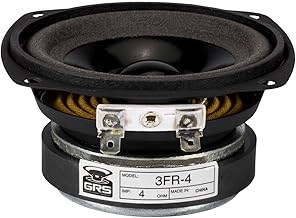
Best for: Builders creating a small custom speaker or replacing a driver in a compatible enclosure. The GRS 3FR-4 is a 3-inch, 4-ohm full-range driver, so it occupies a middle ground between the tiny Gikfun units and larger car-audio speakers.
Listed construction features include a coated paper cone, foam surround, pincushion-shaped frame with a front gasket, and ferrite magnet assembly. These details are useful when checking whether the driver’s frame and mounting arrangement suit a project. The product information emphasizes an economical driver design rather than a specified power-handling figure.
Why it was selected: It has an explicit 4-ohm rating and a full-range driver format suited to custom builds. Limitation: The supplied feature details do not state power handling, sensitivity, or frequency response. Confirm those requirements from the current product information before pairing it with an amplifier or designing an enclosure.
Lanzar OPTI6MI 6.5-Inch Midbass Speaker
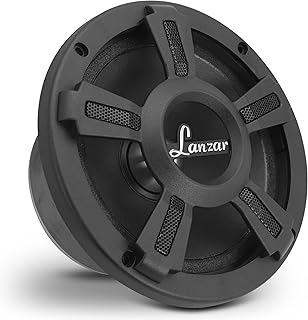
Best for: Car-audio users seeking a larger 4-ohm speaker with a midbass emphasis. The listing identifies a 6.5-inch driver with a 105 Hz–12 kHz frequency response, 30-ounce magnet structure, paper cone, and foam surround.
The listed peak power figure is 500 watts. Peak power is not the same as continuous or nominal power handling, and the provided information does not give a nominal rating. The stated frequency range also indicates that this speaker is positioned around midbass and midrange rather than as a complete substitute for a system’s dedicated low-bass subwoofer.
Why it was selected: It has a stated 4-ohm impedance and a larger format for buyers prioritizing midbass output. Limitation: The supplied data does not confirm installation dimensions beyond the 6.5-inch size or provide continuous power handling. Check fit and amplifier requirements before purchase.
BOSS Audio Systems 6.5-Inch Speaker Set

Best for: Buyers comparing a multi-speaker car-audio package. The product name identifies 6.5-inch full-range coaxial speakers and lists two pairs, which may suit a system requiring four speakers if the vehicle and installation plan support that size.
Why it was selected: It is a relevant full-range car-speaker option with a quantity and speaker size clearly stated. However, the provided product details do not specify impedance, power handling, sensitivity, or frequency response. It cannot be confirmed as a 4-ohm match from the information available here.
Limitation: Do not assume that these speakers are 4 ohms based only on their inclusion in a search for 4-ohm products. Check the current listing or product documentation for impedance before connecting them to an amplifier or replacing existing speakers.
Buying Guide: How to Choose 4-Ohm Full Range Speakers
What does 4-ohm impedance mean for a speaker?
Impedance describes the electrical load a speaker presents to an amplifier. A 4-ohm speaker should be used only with an amplifier or receiver that supports the connected speaker configuration. Check the amplifier’s minimum supported impedance, especially when connecting multiple speakers to one channel. The speaker’s impedance alone does not determine loudness or sound quality.
Should you choose a coaxial speaker or a driver?
A coaxial speaker combines multiple frequency-producing elements in one assembly. The Pioneer TS-F1035R is a two-way coaxial model, making it a practical car-audio option when a compact replacement is needed. A standalone driver, such as the GRS 3FR-4, is more suited to a custom enclosure or a project where the builder controls the rest of the speaker system.
“Full range” does not guarantee that every speaker reproduces the entire audible frequency spectrum equally. Size, design, frequency response, and system setup matter. The Lanzar listing gives a range of 105 Hz–12 kHz, while the supplied details for the GRS driver do not state a response range.
How should speaker size affect your choice?
Match the speaker diameter to the mounting opening or enclosure, but do not rely on diameter alone. Mounting depth, frame shape, terminals, and clearance can also affect fit. The products here range from 2 inches for compact DIY projects to 6.5 inches for car-audio applications. Verify the product’s dimensions against the available space before ordering.
How do you compare speaker power ratings?
Compare nominal or continuous power handling with the amplifier’s output when that information is available. A maximum or peak rating is not interchangeable with a continuous rating. The Pioneer listing gives both 150 watts maximum and 20 watts nominal, while the Lanzar listing provides a 500-watt peak figure without a nominal figure in the supplied details. Avoid selecting a speaker based on peak wattage alone.
What else matters besides impedance?
- Sensitivity: A stated sensitivity figure can help compare how efficiently speakers convert input into sound, though comparison is most useful when measurement methods match.
- Frequency response: This indicates the range the speaker is specified to reproduce. It can help identify whether a driver emphasizes midbass or covers a broader range.
- Quantity: Confirm whether the package contains one driver, a pair, or multiple pairs. The Gikfun listing specifies two speakers, and the BOSS product name specifies two pairs.
- Application: A 3-watt miniature driver is intended for different needs than a larger car speaker. Select for the actual project, not impedance alone.
- Installation: Confirm size, mounting arrangement, wiring, and amplifier compatibility using the current product information.
Which option is best for a small DIY project?
The Gikfun EK1725 is the clearest fit for a low-power project requiring two small 4-ohm speakers because its listing specifies the pair, size, impedance, and 3-watt rating. The GRS 3FR-4 is another small-driver option, but its supplied information does not state power handling or frequency response.
Which option is better for car audio?
The Pioneer is a compact 4-inch, 4-ohm coaxial car speaker with a listed nominal power rating. The Lanzar is a larger 6.5-inch 4-ohm midbass speaker with a stated frequency range. Choose between them based on the available opening and desired role in the audio system, then check amplifier and installation requirements.
Frequently Asked Questions
Are all full range speakers 4 ohms?
No. “Full range” describes a speaker’s intended frequency coverage, while impedance is a separate electrical specification. Confirm the impedance listed for the exact speaker model before connecting it.
Can I connect a 4-ohm speaker to any amplifier?
No. Check the amplifier’s documentation for its supported speaker impedance and wiring limits. A mismatch or unsuitable multi-speaker wiring arrangement can put excessive demand on an amplifier.
Does a higher wattage number mean a louder speaker?
Not necessarily. Power ratings describe handling limits, while loudness also depends on sensitivity, amplifier output, enclosure, and listening distance. Distinguish peak power from nominal or continuous ratings.
Is the BOSS Audio Systems speaker confirmed to be 4 ohms?
Not from the product details supplied for this comparison. The listing identifies 6.5-inch full-range coaxial speakers and two pairs, but impedance is not stated here. Verify the current product specification before buying for a 4-ohm system.
Do 2-inch full range speakers produce deep bass?
Small drivers generally have physical limits, and the Gikfun listing states a resonance frequency of 190 Hz ±20%. Choose a speaker based on its published response and intended use rather than assuming that “full range” means strong deep bass.