
The best 4K A/V receiver depends on your speakers, video sources, and need for modern gaming or immersive audio. The Denon AVR-S570BT is a strong fit for a 5.2-channel system with 8K HDMI and gaming features, while the Yamaha RX300A adds Dolby Atmos and high-refresh video support. For a larger setup, consider the 7.2-channel Denon AVR-X1700H. The options below compare their listed video, audio, connectivity, and speaker-layout features.
| Receiver | Best for | Key listed feature |
|---|---|---|
| Sony STR-DH590 | Basic 4K home theater | 4K HDR pass-through and virtual surround |
| Yamaha RX300A | Atmos and newer gaming displays | 4K/120 and 8K/60 HDMI |
| Yamaha RX-V4A | Wireless music streaming | Wi-Fi, AirPlay 2, and MusicCast |
| Denon AVR-S570BT | 5.2-channel gaming and movies | Four 8K HDMI inputs |
| Denon AVR-X1700H | Seven-channel surround sound | Dolby Atmos and DTS:X support |
Sony STR-DH590 5.2-Channel Receiver

The Sony STR-DH590 is best for buyers building a straightforward 5.2-channel home theater around 4K HDR sources. Its listed features include 4K HDR pass-through and HDCP 2.2 support, which help it pass compatible video from a connected source to a display. It also includes Bluetooth for wireless audio playback.
Choose this model if a simple speaker arrangement matters more than advanced immersive formats. Sony’s S-Force PRO virtual surround is designed to create a surround effect with a two-speaker setup, which may suit a room where installing multiple speakers is impractical. The receiver is also described as supporting cinematic sound for movies and television.
- Best for: Basic 4K HDR systems and listeners who want a virtual-surround option.
- Why it stands out: It combines 5.2-channel processing, Bluetooth, and HDCP 2.2-supported 4K HDR pass-through.
- Limitation: The listed features do not specify newer 4K/120 or 8K HDMI support, so it is not the strongest match for those video requirements.
Yamaha RX300A With Dolby Atmos

The Yamaha RX300A is best for buyers seeking a compact 5.2-channel receiver with listed support for Dolby Atmos and high-refresh video. Its features include 4K/120 and 8K/60 HDMI, Dolby Vision, HDR10+, HDMI eARC/ARC, and gaming functions such as ALLM and VRR. These make it a better fit than a basic 4K receiver when the connected display and sources use newer video features.
Yamaha lists 70 watts of power and flexible speaker layouts, including a 3.1.2-channel arrangement with up-firing or in-ceiling height speakers. Dolby Atmos and DTS Virtual:X are also included, along with Bluetooth Multipoint. Select it if you want a route to height effects without choosing a receiver with more than five amplified channels.
- Best for: Buyers who want Atmos, Bluetooth Multipoint, and high-refresh 4K video support.
- Why it stands out: Its listed HDMI and gaming features suit compatible newer TVs and consoles.
- Limitation: Its 5.2-channel designation means it is not the same choice as a seven-channel receiver for larger speaker layouts.
Yamaha RX-V4A With MusicCast
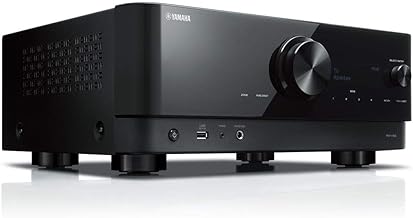
The Yamaha RX-V4A is best for a 5.2-channel system where wireless music services and network connectivity are important. Its listed features include dual-band Wi-Fi, AirPlay 2, MusicCast, and Spotify Connect. These give buyers several ways to stream music, including from compatible iOS or Android devices and supported services.
For video, the feature list specifies four HDMI inputs and one output, with HDCP 2.3 and eARC. It lists 4K60, 4K120AB, and 8K60B HDMI capabilities. Check that the receiver’s specific HDMI support matches the formats required by your sources and television, especially if you are selecting it for a particular high-refresh video mode.
- Best for: Buyers who value built-in Wi-Fi streaming and Yamaha’s MusicCast ecosystem.
- Why it stands out: It pairs network music features with eARC and a range of listed HDMI video modes.
- Limitation: The supplied features do not describe Dolby Atmos or DTS:X support, so compare audio-format needs before choosing it for an immersive setup.
Denon AVR-S570BT For 8K HDMI

The Denon AVR-S570BT is best for buyers who want a 5.2-channel receiver with multiple 8K HDMI inputs and gaming-related video features. Denon lists four HDMI 2.1 8K inputs, one HDMI output, and eARC up to 40 Gbps. Supported formats and features include Dolby Vision, HDR10+, HLG, VRR, and QFT.
For audio, the listed specifications include 70 watts per channel, 5.1 surround sound, Dolby TrueHD, and DTS-HD Master Audio. Built-in Bluetooth supports wireless music streaming, and Denon lists services including Spotify, TIDAL, and Pandora. The HD setup assistant is another useful feature for buyers who want guided setup information.
- Best for: A 5.2-channel movie and gaming system with several HDMI-connected sources.
- Why it stands out: Four 8K HDMI inputs and listed VRR and QFT support make it a feature-rich option for compatible equipment.
- Limitation: It is a 5.2-channel model, so buyers planning a seven-channel speaker system should compare the AVR-X1700H instead.
Denon AVR-X1700H 7.2-Channel Receiver

The Denon AVR-X1700H is best for buyers who want a seven-channel receiver for a more flexible surround system. Its listed output is 80 watts per channel, and it supports Dolby Atmos and DTS:X, as well as DTS Virtual:X and Dolby Atmos Height Virtualization. The latter is described as creating virtual height effects without dedicated height channels.
Its HDMI section includes three dedicated 8K inputs and one output. Listed video features include 8K/60Hz and 4K/120Hz pass-through, 8K upscaling on all six inputs, HDCP 2.3, and support for HDR10, HDR10+, Dolby Vision, and HLG. These details make it the more suitable option here for buyers who prioritize additional channels and immersive audio alongside 4K video.
- Best for: Buyers planning a seven-channel setup with object-based surround formats.
- Why it stands out: It combines Dolby Atmos and DTS:X support with 4K/120Hz and 8K video features.
- Limitation: It may be more receiver than a basic 5.1 or 5.2 system needs; match channel count to the intended speaker layout.
Buying Guide: How To Choose A 4K A/V Receiver
How many channels does your speaker system need?
Start by counting the speakers in the system you plan to use. A 5.2-channel receiver is intended for a five-channel speaker layout plus up to two subwoofer outputs, while a 7.2-channel model provides more flexibility for a larger surround arrangement. The Denon AVR-X1700H is the seven-channel choice in this comparison. The other listed options are 5.2-channel receivers.
Channel count and audio-format support are related but not identical. A receiver may list Dolby Atmos or virtual height effects, but the actual speaker layout determines how those effects are delivered. If you intend to install height speakers, check the receiver’s supported layouts and the speaker connections in its manual before buying.
Do you need 4K/120, 8K, or just 4K pass-through?
Choose HDMI features based on the devices you will connect. A buyer with a standard 4K television and 4K sources may only need compatible 4K pass-through, such as the Sony’s listed 4K HDR and HDCP 2.2 support. For newer gaming equipment or displays, compare the receiver’s stated 4K/120, VRR, ALLM, or QFT support with the requirements of those devices.
“8K” in a feature list does not automatically mean every input supports every 8K format. Compare the number of compatible inputs and the specific stated refresh rates. The Denon AVR-S570BT lists four 8K HDMI inputs, while the AVR-X1700H lists three dedicated 8K inputs. Confirm the exact feature combination needed for your setup.
Which audio formats and listening features matter?
For height-based surround sound, compare support for Dolby Atmos and DTS:X and determine whether you will use dedicated height speakers. The Yamaha RX300A and Denon AVR-X1700H list Dolby Atmos support; the Denon also lists DTS:X. Virtual surround features can be relevant when a room cannot accommodate a full speaker layout, but they are not the same as installing separate surround or height speakers.
If your priority is dialogue and general movie playback, consider the complete speaker plan rather than relying on a format name alone. Also check the supported audio formats for the devices and media you use. The AVR-S570BT lists Dolby TrueHD and DTS-HD Master Audio, while the Sony emphasizes S-Force PRO virtual surround in its supplied features.
Do you want Wi-Fi streaming or Bluetooth?
Bluetooth is useful for sending audio from a compatible nearby device, and it is listed on the Sony, Yamaha RX300A, and Denon AVR-S570BT. The Yamaha RX-V4A adds Wi-Fi, AirPlay 2, MusicCast, and Spotify Connect. Choose based on where your music comes from and whether you want network-based streaming or a multi-room ecosystem.
Streaming features and service availability can change, and not every service works the same way in every region. Check the current receiver documentation and the service’s requirements if a particular app is essential. A receiver with Bluetooth may be sufficient for occasional playback, while network features can be more useful for regular home listening.
What should you check before installation?
- Count your planned speakers and subwoofers, then match them to the receiver’s channel configuration.
- Check the number of HDMI inputs against your TV box, game console, disc player, and other sources.
- Confirm that your TV and sources support the HDMI formats you want, including eARC, 4K/120, or VRR.
- Review the receiver’s setup instructions and speaker-placement guidance before connecting equipment.
- Consider where the receiver will sit and whether you need Wi-Fi, Bluetooth, or a particular streaming feature.
Frequently Asked Questions
What does 4K pass-through mean on an A/V receiver?
4K pass-through means the receiver can route compatible 4K video from a connected source to a television or projector. The exact supported resolution, refresh rate, HDR format, and HDMI features vary by model, so check the receiver’s listed specifications.
Is an 8K receiver necessary for a 4K television?
No. A receiver with compatible 4K pass-through can suit a 4K system. An 8K model may be useful if you want its additional HDMI features or plan to connect compatible 8K equipment, but it is not required solely because the TV is 4K.
Should I choose a 5.2-channel or 7.2-channel receiver?
Choose a 5.2-channel receiver for a planned five-channel surround layout with subwoofer outputs. Choose a 7.2-channel model if you want the additional channel flexibility for a larger speaker arrangement. Confirm the supported layouts for the specific receiver.
Can a receiver create surround sound with two speakers?
Some receivers offer virtual surround processing intended to simulate aspects of surround sound with fewer speakers. The Sony STR-DH590 lists S-Force PRO virtual surround for a two-speaker setup. Virtual processing does not replace a physical multi-speaker system.
What is eARC used for?
eARC is an HDMI feature that sends audio from a compatible television back to a receiver over an HDMI connection. Both the TV and receiver must support the relevant feature, and the connected equipment and settings affect what audio formats can be passed.