
A true fourth-order bandpass enclosure for two 10-inch subwoofers is not clearly identified among the products provided. The Pyramid dual-bandpass system is the closest match because it is a bandpass-style product with two 10-inch subwoofers, but its listing does not confirm that it is a fourth-order box or a bare enclosure for your own drivers. The other products are a single-woofer enclosure or sound-system accessories. Use the comparison below to identify what each item can—and cannot—do.
| Product | Best suited for | Important limitation |
|---|---|---|
| Pyramid BNPS102 Dual Bandpass System | Shoppers considering a complete dual-10 bandpass-style system | Fourth-order alignment and enclosure dimensions are not specified |
| Ordnance B-17 Single 12-Inch Box | Buyers looking for a single-12 bandpass product | Not a two-10 enclosure |
| Taramps PRO 2.4S DSP | Adjusting signal processing in a car audio system | Does not provide a bandpass box |
| Two-Unit Adjustable Crossover | Buyers needing an external two-way crossover | Does not establish a subwoofer enclosure alignment |
| RonDexy Bass Blockers | Filtering low frequencies from compatible speakers | Not an enclosure or a substitute for proper subwoofer tuning |
Pyramid BNPS102 Dual Bandpass System

Best for: Buyers considering a ready-made system built around two 10-inch subwoofers and a bandpass-style enclosure. The listed features include two 10-inch, 4-ohm subwoofers, polypropylene cones, neon accent lighting, a plexiglass front window, and four tuned ports.
This is the closest product in the supplied list to the search for a bandpass setup with two 10s. However, the listing does not specify a fourth-order design, chamber volumes, tuning frequencies, or whether the system is intended to accept separate subwoofers. Those details matter when matching a box to particular drivers.
Choose this if you want to investigate a complete dual-subwoofer product and can confirm its design and wiring details with the seller. Avoid this if you need a verified fourth-order enclosure for two subwoofers you already own. The listed 1-ohm impedance should also be checked against the system’s actual wiring and the amplifier’s supported load before purchase.
Ordnance B-17 Single 12-Inch Bandpass Box

Best for: Buyers comparing bandpass products who are open to a single 12-inch woofer rather than two 10-inch drivers. The listed enclosure includes one 12-inch polypropylene woofer, supports up to 250 watts RMS, and has a 4-ohm impedance.
The B-17 provides a useful point of comparison for shoppers researching bandpass-style car audio, but the supplied information does not identify it as a fourth-order design. More importantly, it is a one-woofer, 12-inch product, not an enclosure for two 10-inch subwoofers. Its stated power and impedance also describe this listed product and should not be assumed to suit other drivers.
Choose this if a complete single-12 setup fits your needs and you want the listed 250-watt RMS and 4-ohm specifications. Avoid this if your requirement is specifically a dual-10 box or a custom enclosure matched to two existing subwoofers.
Taramps PRO 2.4S Car Audio DSP

Best for: Buyers who need signal control for a car audio system, rather than a subwoofer enclosure. Listed functions include a 15-band graphic equalizer, parametric EQ, active crossover, delay alignment, and limiter. RCA and high-level inputs are specified, along with high-pass and low-pass filters, crossover slopes, and routing options.
A DSP can help configure how audio signals are distributed and adjusted in a system. It does not create a fourth-order bandpass alignment, change an enclosure’s internal volume, or confirm that a box matches a pair of subwoofers. Enclosure design and electronic signal processing are separate parts of a car audio build.
Choose this if you need the listed input and tuning features to manage your system’s signal. Avoid this if you are shopping for a physical dual-10 enclosure. Check that the processor’s connections and system layout fit your planned installation; the supplied details do not establish compatibility with every vehicle or component.
Adjustable Two-Way Speaker Crossover Pair

Best for: Buyers looking for two external two-way audio frequency divider units. The product information describes the pair as adjustable, rated at 400 watts, and made with inductors using copper winding and copper wire.
This item is a crossover accessory, not a bandpass enclosure. A crossover divides or filters an audio signal; it cannot turn a box into a fourth-order design or make an enclosure suitable for two 10-inch drivers. The 400-watt description is listed for the crossover product, but the supplied details do not explain the conditions behind that rating or provide a frequency adjustment range.
Choose this if an external two-way crossover is what your audio system requires and you can verify the needed frequency and power handling. Avoid this if your main need is a box for two subwoofers. Confirm the crossover’s specifications against the components and installation plan before connecting it.
RonDexy RDBB-150 Bass Blockers
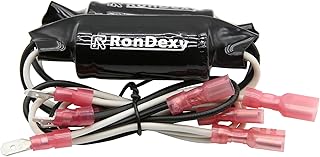
Best for: Buyers who need to block low frequencies from speakers and have checked that the stated impedance and power handling suit their setup. The listing specifies a pair, a capacity of up to 50 watts, and a stated blocked range of 0–150 Hz at 4 ohms or 0–75 Hz at 8 ohms. It also identifies white positive and black negative leads and heat-shrink tubing.
Bass blockers are speaker filters, not subwoofer boxes. They do not provide a dual-10 enclosure, set its chamber volumes, or verify a fourth-order response. The listed power limit is an important constraint: this product should not be treated as a high-power subwoofer component based on the information supplied.
Choose this if you need the specified low-frequency filtering for an appropriate speaker circuit. Avoid this if you want to build or buy a bandpass box for two 10-inch subwoofers.
Buying Guide: How to Choose a Fourth-Order Bandpass Box
What does “fourth-order bandpass” mean?
A fourth-order bandpass enclosure uses two chambers around a subwoofer: one sealed chamber and one ported chamber. The driver sits between them, and sound is delivered through the ported side. “Fourth-order” describes the enclosure alignment, not simply the number of ports, the number of woofers, or a product’s use of the word “bandpass.” A listing that only says “bandpass” does not establish the alignment.
That distinction is important for this product list. The Pyramid unit is described as a dual bandpass speaker system with four tuned ports, but the provided details do not identify its order or chamber specifications. The Ordnance product is a single-12 bandpass box. Neither description verifies a fourth-order enclosure designed for two 10-inch drivers.
How can you tell whether a box fits two 10-inch subwoofers?
Look for an explicit statement that the enclosure is designed for two 10-inch drivers, then compare its specifications with the manufacturer’s recommendations for your exact subwoofers. A suitable fit involves more than mounting-hole diameter. Driver displacement, chamber air space, port dimensions, and the drivers’ recommended enclosure type can all affect whether the box is appropriate.
Ask for the internal volume of each chamber and the port dimensions or tuning information. If the listing does not provide those details, do not assume that the box will perform as a fourth-order design. A preloaded system may also be intended to work with its included drivers rather than with replacement subwoofers.
Which electrical specifications should you verify?
Check each subwoofer’s impedance, voice-coil configuration, and power handling, then determine the final impedance presented to the amplifier based on the intended wiring. The amplifier must be able to operate at that load. The Pyramid listing includes two 4-ohm subwoofers and separately states a 1-ohm impedance; because the relationship between those figures is not explained in the supplied features, verify the wiring and system impedance before purchase.
Do not use an enclosure’s or accessory’s power figure as a substitute for checking the subwoofer and amplifier specifications. For example, the Ordnance box lists up to 250 watts RMS, while the RonDexy filters list a maximum handling capacity of 50 watts. Those are product-specific details, not universal recommendations for a dual-10 setup.
Should you buy a loaded system or an empty enclosure?
A loaded system includes subwoofers, while an empty enclosure is meant to house drivers purchased separately. The supplied Pyramid product is described as including two 10-inch subwoofers. The supplied Ordnance product includes one 12-inch woofer. None of the provided product details identifies an empty fourth-order enclosure for two 10s.
If you already own subwoofers, confirm whether a product is an empty box and whether its chamber design matches those drivers. If you want a complete system, compare the included drivers, wiring information, enclosure dimensions, and amplifier requirements. Do not assume an included product can be modified for different drivers without checking first.
Do a DSP or crossover replace the enclosure?
No. The Taramps DSP and the two-way crossover are signal-processing accessories. They may be relevant to system setup, but they do not supply the physical chambers and ports needed for a bandpass box. Bass blockers filter low frequencies from speakers; they do not function as subwoofer enclosures. Choose enclosure hardware and signal-processing components for their separate purposes.
What should you measure before buying?
Measure the available installation space, including width, height, depth, and any clearance needed for the enclosure’s ports and wiring. Compare the product’s external dimensions with the vehicle’s usable space, and check whether the port opening can remain unobstructed. The provided product features do not list dimensions for the two bandpass products, so request or locate complete measurements before planning an installation.
Frequently Asked Questions
Is the Pyramid BNPS102 confirmed as a fourth-order bandpass box?
No. The provided information calls it a dual bandpass system and lists four tuned ports, but it does not specify a fourth-order alignment, chamber volumes, or tuning frequency.
Is there a verified empty enclosure for two 10-inch subwoofers in this list?
No. The Pyramid product is described as a system with two included 10-inch subwoofers. The Ordnance product is a single-12 system. The remaining products are audio accessories.
Can I use the Ordnance B-17 for two 10-inch drivers?
The supplied details describe it as a box with one 12-inch woofer. They do not establish that it can house two 10-inch drivers, so do not assume it is suitable for that purpose.
Does a DSP make a box fourth-order?
No. A DSP adjusts the audio signal. The fourth-order designation refers to the enclosure’s physical chamber and ported design.
What details should I confirm before buying a bandpass enclosure?
Confirm the enclosure order, the number and size of supported drivers, chamber volumes, port dimensions or tuning, external dimensions, and compatibility with the subwoofer manufacturer’s enclosure recommendations. Also verify the final speaker impedance against the amplifier’s supported load.