
The best 500-watt speaker amp depends on whether you need a car amplifier for multiple speakers, a dedicated subwoofer amp, or a compact home stereo amp. The Pioneer GM-A3702 is best for a two-channel car setup; the Skar Audio RP-75.4AB is better for four full-range car channels; and the LEIGESAUDIO monoblock is designed for subwoofers. The marine Skar model is an option for boat audio, while the BT10A is a lower-powered home amplifier rather than a 500-watt model.
| Product | Best suited for | Key distinction |
|---|---|---|
| Pioneer GM-A3702 | Two-channel car audio | Bridgeable Class AB design |
| Skar Audio RP-75.4AB | Four-channel car audio | 75 watts RMS per channel at 4 ohms |
| LEIGESAUDIO Monoblock | Car subwoofers | Class D and 1-ohm stability |
| BT10A Bluetooth Amplifier | Compact home stereo | 100 watts per channel, not 500 watts |
| Skar Audio RP-75.4ABM | Marine audio | Four-channel marine amplifier |
Pioneer GM-A3702 Two-Channel Car Amplifier

The Pioneer GM-A3702 is a bridgeable, two-channel Class AB car amplifier with a listed maximum output of 500 watts. Its stated RMS output is 60 watts per channel at 2 ohms, or 190 watts in bridged mode. RMS and maximum power are different measurements, so the 500-watt maximum figure should not be treated as continuous output.
Best for: Drivers who want to amplify two car-audio channels or use the bridged mode for a compatible load. The listed automatic signal sensing and turn-on, along with a built-in high-/low-pass filter, may help when integrating the amplifier into a vehicle audio system.
Why it stands out: Its channel count and bridged option make it more flexible than a mono subwoofer amplifier for a basic two-channel setup. The Class AB design is described as balancing performance and efficiency.
Limitation: Its continuous output is substantially below the 500-watt maximum headline. Check the speaker impedance and RMS power requirements against the amplifier’s specifications before buying.
Skar Audio RP-75.4AB Four-Channel Amplifier

The Skar Audio RP-75.4AB is a full-range, four-channel Class AB car amplifier with a stated 500-watt total rating. Its listed RMS output is 75 watts per channel at 4 ohms and 125 watts per channel at 2 ohms. Those per-channel RMS figures are more useful for matching speakers than the total maximum headline.
Best for: A car-audio buyer who needs four amplified channels for a multi-speaker setup. It is a better fit than the Pioneer two-channel model when the system requires four separate channels.
Why it was selected: The product information provides RMS figures at two speaker impedances, making it easier to compare with speakers that have matching power and impedance requirements. Its full-range designation also distinguishes it from the listed subwoofer-only monoblock.
Limitation: The provided details do not specify included installation accessories or other system features. Confirm the full specifications and speaker compatibility before purchase.
LEIGESAUDIO Class D Subwoofer Monoblock

This LEIGESAUDIO amplifier is a mono Class D model described as stable at 1 ohm and intended to power car subwoofers. Its product name uses a 500-watt label, but the supplied feature text lists higher output figures: 900 watts RMS at 1 ohm and 600 watts RMS at 2 ohms. It also gives maximum figures of 2,200 watts at 1 ohm and 1,400 watts at 2 ohms.
Best for: Buyers building a subwoofer-focused car system who need a mono amplifier and have checked their subwoofer’s load requirements. Its Class D design is described as reducing power loss and size compared with less efficient designs.
Why it was selected: It addresses a different need from the full-range models: powering subwoofers rather than several regular speaker channels. The listed 1-ohm stability is relevant for systems designed to present that load.
Limitation: The 500-watt name conflicts with the much higher power figures in the supplied description. Verify the exact model’s official specifications, output ratings, and safe load before connecting a subwoofer.
BT10A Bluetooth Compact Home Amplifier

The BT10A is a two-channel Class D home audio amplifier advertised at 100 watts per channel. The product title describes Bluetooth connectivity and use with passive speakers, including bookshelf, ceiling, garage, and patio speakers. Its listed output adds up to 200 watts across two channels, so it is not a 500-watt amplifier.
Best for: Someone seeking a compact Bluetooth stereo amp for passive speakers in a home or secondary listening space, rather than a high-output car or subwoofer amplifier. The two-channel format suits a basic left-and-right speaker arrangement.
Why it was selected: It is the only clearly identified home audio option in the supplied list. Its use case is different from the automotive models, which makes it a relevant comparison for shoppers whose search for a “speaker amp” means home stereo equipment.
Limitation: The stated 100 watts per channel does not meet a 500-watt total-output target. The provided product information does not include further details about inputs, speaker impedance, or included accessories, so confirm those before ordering.
Skar Audio RP-75.4ABM Marine Amplifier
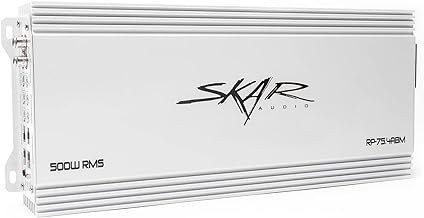
The Skar Audio RP-75.4ABM is identified in the product name as a 500-watt, full-range, Class AB, four-channel marine amplifier. The supplied product details do not include its RMS output, impedance ratings, environmental protection details, or installation specifications.
Best for: A shopper comparing four-channel amplifiers for a marine audio system. Its marine designation makes it more directly relevant to boat audio than the standard car amplifier models in this list.
Why it was selected: It offers a marine-focused alternative for buyers who need multiple speaker channels in a boat, rather than a home stereo amp or dedicated subwoofer monoblock.
Limitation: The available information is not enough to assess its continuous output or specific resistance to water and other marine conditions. Verify the complete manufacturer specifications and installation requirements before use.
Buying Guide: How to Choose a 500-Watt Speaker Amp
A “500-watt amp” label does not tell you everything about the amplifier’s usable power. Product listings may state maximum output, combined channel output, or RMS output. RMS ratings describe continuous power and are generally more useful for matching an amplifier with speakers. Compare ratings at the same impedance and check whether the figure applies per channel or to the whole amp.
Do you need a car, marine, or home amplifier?
Start with the setting. The Pioneer, standard Skar, and LEIGESAUDIO models are described for car audio. The RP-75.4ABM is identified as a marine model. The BT10A is a compact home stereo amplifier with Bluetooth in its product title. These categories are not interchangeable: connection types, installation needs, and intended use can differ.
For a boat, a marine designation is a useful starting point, but it does not establish exactly what environmental protection the amp offers. Check the manufacturer’s full documentation. For home passive speakers, choose a home amplifier with suitable speaker connections and power ratings. For a vehicle, confirm that the amplifier is appropriate for the vehicle’s audio setup.
How many channels do your speakers need?
- Two channels: A two-channel model such as the Pioneer can serve a left-and-right setup. Its bridged mode may suit a compatible single load, but confirm the permitted impedance and output details first.
- Four channels: A four-channel amplifier can power multiple speaker channels independently. The Skar RP-75.4AB lists 75 watts RMS per channel at 4 ohms and 125 watts RMS per channel at 2 ohms.
- One channel: A monoblock is intended for a single output channel and is commonly selected for a subwoofer. The LEIGESAUDIO model is specifically described as a subwoofer amplifier.
Channel count is not the same as the number of speakers an amp can safely drive. Wiring more than one speaker to a channel changes the load. Check the amplifier’s minimum supported impedance and the speakers’ wiring configuration before installation.
What is the difference between RMS and maximum watts?
RMS and maximum power should not be treated as equivalent ratings. The Pioneer, for example, is labeled 500 watts maximum but lists 60 watts RMS per channel at 2 ohms and 190 watts RMS in bridged mode. The four-channel Skar model lists 75 watts RMS per channel at 4 ohms or 125 watts RMS per channel at 2 ohms.
Use the continuous rating that matches your intended speaker load when comparing products. A large maximum-watt figure alone does not establish that an amplifier can continuously deliver that output to every channel. When a listing contains inconsistent figures, verify the exact model’s documentation instead of assuming the headline is the usable output.
How should amplifier power match speaker power?
Compare the amplifier’s RMS output per channel with the speaker’s recommended power range or continuous power handling. Also compare nominal impedance. A power rating that looks suitable at one impedance may change at another, as the Skar RP-75.4AB’s different listed RMS figures show.
Do not select an amplifier by wattage alone. Consider how many channels are needed, whether the speakers are full-range or subwoofers, and the load the finished wiring will present. If the speaker or amplifier specifications are unclear, consult the manufacturer or a qualified installer before connecting equipment.
Should you choose Class AB or Class D?
Class AB appears in the Pioneer and Skar full-range product names. The Pioneer’s feature text describes its design as balancing performance and efficiency. The LEIGESAUDIO is Class D, and its feature text says that design reduces power loss and supports a smaller, lighter build. These descriptions help explain the intended design, but they do not replace output, installation, or compatibility specifications.
Choose based on the amp’s actual role and verified ratings rather than class alone. A Class D monoblock for a subwoofer is not automatically a better replacement for a four-channel full-range amp, because they serve different system needs.
What should you verify before buying?
- Confirm whether the headline wattage is maximum or RMS, and whether it is per channel or total.
- Match the amplifier’s RMS output to the speakers at the correct impedance.
- Choose the right channel count for the number and type of speakers.
- For subwoofers, verify the final wired load and the amplifier’s supported impedance.
- For vehicle or marine installations, review the complete installation instructions and system requirements.
- Check unclear or conflicting specifications against documentation for the exact model.
Frequently Asked Questions
Is a 500-watt amplifier 500 watts RMS?
Not necessarily. A 500-watt figure may describe maximum output or combined channel output. Check the product’s RMS rating, channel configuration, and impedance before comparing it with speakers.
Which amplifier in this list is best for a subwoofer?
The LEIGESAUDIO model is the listed option specifically described as a mono Class D amplifier for car subwoofers. Its product name and supplied power figures conflict, so verify the model’s official output and supported load first.
Which option is best for four car speakers?
The Skar Audio RP-75.4AB is a four-channel car amplifier with stated RMS output of 75 watts per channel at 4 ohms or 125 watts per channel at 2 ohms. Match those ratings to the speakers and wiring load.
Can the BT10A replace a 500-watt amp?
It is not a direct 500-watt replacement based on the supplied information. The BT10A is listed as a two-channel home amplifier rated at 100 watts per channel, making it a different, lower-output product category.
Can I bridge a two-channel amplifier?
Some two-channel amplifiers support bridged operation. The Pioneer GM-A3702 is described as bridgeable, with 190 watts RMS listed in bridged mode. Check its supported load and connection instructions before using this configuration.
Is the marine model’s 500-watt rating enough to assess suitability for a boat?
No. The available details identify the RP-75.4ABM as a 500-watt, four-channel marine amplifier but do not provide its RMS output or specific environmental protections. Review the complete specifications before purchase.