
Best 80 Hz Low Pass Filter Options for Subwoofers and Audio Systems
Choosing the right 80 Hz low pass filter helps protect subwoofers, optimize bass performance, and reduce distortion in home audio or car setups. This guide highlights five solid picks and explains who each is best for, along with practical buying considerations. Suitable buyers include DIY audio enthusiasts, car audio installers, and home theater enthusiasts seeking simple, reliable bass management.
| Product | Best For | Key Benefit |
|---|---|---|
| Parts Express 80 Hz Low Pass 4 Ohm Crossover | 4 Ohm subwoofers | Clear low-pass control at 80 Hz |
| Parts Express 80 Hz Low Pass 8 Ohm Crossover | 8 Ohm systems | Compatibility with higher impedance drivers |
| FMOD Crossover Pair 70 Hz Low Pass | Vintage-style or specialized systems | Low-noise, 12 dB/octave slope |
| Skar Audio SK150HZBB-PR Elite Frequency Filters | 8″–12″ speakers | Broad filter options for bass management |
| YUEHISY Low Pass Filter 0.5MHz SMA Interface | Compact setups and RF-friendly applications | Compact, rugged design with 50 ohm impedance |
Parts Express 80 Hz Low Pass 4 Ohm Crossover
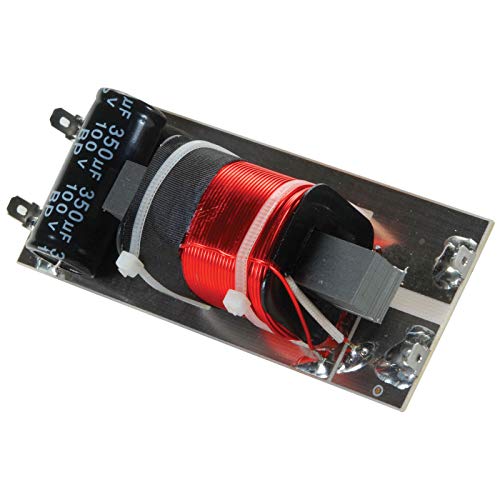
The 4 ohm low-pass crossover is designed for subwoofers in 4 ohm configurations. It handles power up to around 250 watts RMS and provides a straightforward low-pass filter at 80 Hz. Best for compact sub setups in sealed or small ported enclosures. Choose this if your system uses a 4 ohm driver and you want a simple, dedicated filter stage to prevent bass frequencies from entering higher-frequency drivers. A potential limitation is that it targets a specific impedance, so mismatched drivers may require another option.
Parts Express 80 Hz Low Pass 8 Ohm Crossover

The 8 ohm version accommodates higher impedance drivers. It shares the same 80 Hz cutoff with the 4 ohm model and supports up to approximately 250 watts RMS. Best for 8 ohm subwoofers or when integrating with amplifiers designed for higher impedance loads. Opt for this if your bass driver or amplifier is rated at 8 ohms to ensure efficient power transfer and stable operation. Limitation: not compatible with 4 ohm drivers without a different crossover version.
FMOD Crossover Pair 70 Hz Low Pass

This pair provides a 70 Hz low-pass option with a 12 dB/octave slope. It includes a high maximum driving impedance and demonstrates very low noise and distortion relative to its class. Best for users who want a slightly lower cutoff for deeper bass control or for vintage-style DIY builds. The data notes a 600 Ω driving impedance and a robust signal path. Choose this if you need a dedicated, low-noise crossover and can accommodate the 70 Hz target, otherwise a higher-frequency option may be needed for different sub configurations.
5pcs DC to 80 Mhz LFCN-80+ Low Pass Filter Conditioning Filters

These filters are designed for conditioning and EMI suppression with a DC to 80 MHz range, offering a practical low-pass function for RF and audio interfaces where impedance and noise isolation matter. Best for projects that blend RF and audio pathways or require compact, multiple-filter options. Note that these are not audio-only filters and are optimized for different signal domains; ensure the application aligns with audio playback needs.
Skar Audio SK150HZBB-PR Elite Frequency Filters

Elite frequency filters designed for bass blockers, sold as a pair. They eliminate frequencies 0–150 Hz at 4Ω or 0–75 Hz at 8Ω, making them adaptable for a range of bass-focused setups. Best for users with 8″–12″ drivers who want strong bass control and the option to tailor the cutoff with a paired set. Choose this if you need a robust, pair-ready solution for large-subwoofer systems. Limitation: primarily targeted at larger drivers; smaller enclosures may not extract the full benefit.
Skar Audio SK85HZBB-PR Elite Frequency Filters

Another Skar option, these elite filters target 0–85 Hz at 4Ω or 0–43 Hz at 8Ω. They are advertised as versatile for all speaker sizes, making them suitable for a range of subwoofer builds. Best for users who want deeper bass control across various enclosure sizes. Avoid this if your system requires a higher cutoff or much higher impedance compatibility beyond 8Ω.
YUEHISY Low Pass Filter 0.5MHz SMA Interface

YUEHISY offers a compact low-pass filter with a standard 50 ohm input/output impedance. It is built from aluminum alloy for ruggedness and measures 62x25x12 mm. Best for compact setups where space is limited or where RF-related filtering needs must align with a 50 ohm impedance. Use this if you need a small, robust module for a mixed-signal chain and can accommodate a slightly different frequency response than a traditional audio-only 80 Hz filter. Caution: verify impedance and frequency targets align with your audio components.
Buying Guide
- What impedance does my subwoofer require (4 Ω vs. 8 Ω)? Matching impedance improves power transfer and performance. If unsure, choose a crossover that explicitly lists your driver impedance.
- What is the intended cutoff frequency? An 80 Hz target is common for bass management, but some setups benefit from 70 Hz or 85 Hz. Pick a model that aligns with your enclosure size and listening goals.
- What is the slope or roll-off? Most options use 12 dB/octave or similar. Higher slopes reduce bass leakage into mid/high drivers but require careful integration with the amplifier and enclosure tuning.
- Are there space or mounting constraints? Compact modules, like the YUEHISY option, suit tight setups but verify connector types and mounting orientation.
- Power handling and heat considerations: Ensure the crossover can handle the amplifier’s power without saturating or distorting. Consider pair placement and ventilation in enclosed spaces.
- Operational environment: Home theater, car audio, or portable rigs may benefit from different filter tolerances and shielding. RF filtering options (like the DC-to-80 MHz models) suit mixed-domain applications but aren’t typical for audio-only paths.
FAQ
- What does 80 Hz low pass mean for my speaker system? It means frequencies above 80 Hz are attenuated, allowing bass to be managed by subwoofers while preventing higher frequencies from reaching the woofer array.
- Can I use any 80 Hz filter with any sub? Not always. Check the impedance and power handling to ensure compatibility with your driver and amplifier.
- Are two filters better than one for a single sub? Depending on your system, dual filters can offer more precise crossovers or protection, but a single well-matched unit is often sufficient for basic setups.
- Is a higher impedance crossover always better? Not necessarily. It must match your driver and amplifier to avoid wasted power or distortion.
- Do these filters affect sound quality? Yes, they influence how bass is routed and how cleanly subwoofers blend with main speakers. Proper alignment reduces distortion and improves integration.
- Is RF compatibility important for home audio? Generally not for standard audio paths, but RF-aware filters may be relevant in mixed systems or environments with strong interference.