
The best acoustic guitar pedal for worship depends on the sound you need and how you connect to the church sound system. The SONICAKE A Factory is best for players who want a simple preamp, reverb, and balanced XLR output; Sonic Wood adds chorus and delay; and LEKATO offers programmable effects and amp models. For focused needs, MOOER simulates acoustic tones from an electric guitar, while GOKKO provides live-oriented preamp and feedback controls.
| Pedal | Best For | Notable Features |
|---|---|---|
| SONICAKE A Factory | Direct acoustic sound reinforcement | Preamp, reverb, notch filter, XLR output |
| SONICAKE Sonic Wood | Core effects in one pedal | Preamp, two-band EQ, chorus, delay, reverb |
| LEKATO Multi Effects | Players who want presets and flexibility | Amp models, IRs, effects, Bluetooth |
| MOOER Acoustikar | Electric guitar players seeking acoustic-style tone | Three acoustic simulation modes |
| GOKKO GK-32 SpanishFly | Live tone shaping and feedback management | Preamp, DI-style output, anti-feedback control |
SONICAKE A Factory Acoustic Preamp
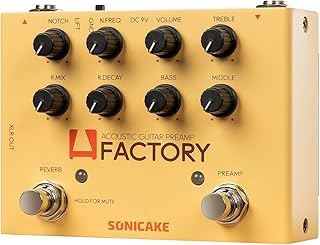
The SONICAKE A Factory combines an analog preamp with digital reverb for acoustic instruments. Its high-impedance input is intended for an instrument signal, and its balanced XLR output provides a direct connection option for a mixer or other compatible sound-system input.
Best for: Worship guitarists who want a straightforward acoustic signal path with reverb and a balanced output. The built-in notch filter has adjustable gain and frequency, which can help address whistling feedback in a live setting. A mute function is also included for silencing the signal between songs or during instrument changes.
Why it stands out: The combination of reverb, feedback control, and XLR output addresses several practical live-use needs without requiring a multi-effects setup. The notch filter can also help shape the sound when a particular frequency is problematic.
Limitation: The listed features identify reverb but do not list chorus or delay. Choose another option if those effects are essential to your worship arrangements.
SONICAKE Sonic Wood Multi-Effects Pedal

The Sonic Wood is an acoustic multi-effects pedal with an analog preamp, two-band EQ, chorus, delay, and reverb. Its feature list describes the preamp and EQ as a way to recreate a classic acoustic guitar amplifier sound and provide a warm, natural tone.
Best for: Players who want several common worship effects together in one pedal. Chorus can add width, while delay and reverb can help create space around sustained chords and arpeggios. The two-band EQ offers basic tone adjustment before the signal reaches the next part of the rig.
Why it stands out: Its effect selection covers common ambient and modulation needs without requiring separate chorus, delay, and reverb pedals. It is a practical choice for a compact board or a player building a simple acoustic effects chain.
Limitation: The supplied product information does not specify a balanced XLR output, so do not assume it can connect directly to a mixer in the same way as a pedal with a confirmed XLR output. Check the product details for the connections you require.
LEKATO Multi Effects Pedal With IR Loading

The LEKATO multi-effects pedal combines chorus, tremolo, delay, and reverb with nine amp preamp models and eight impulse response cabinet models. It supports third-party IR files, which users can import or manage through the specified USB software. The listed features also include Bluetooth 5.0, recording, and a built-in battery.
Best for: Worship guitarists who want to create and save different sounds for clean, rhythmic, and lead parts. The pedal offers preset, edit, and live modes. Its feature description says players can switch among three presets and modify effect chains for saved setups.
Why it stands out: The amp models, cabinet IR options, and multiple effects give players more sound-shaping flexibility than a pedal focused on preamp and reverb alone. Presets can be useful when a set list calls for distinct tones across songs.
Limitation: More editing options can mean more setup than a single-purpose pedal. Confirm the available output connections and workflow meet your church’s signal-chain requirements before choosing it for direct connection to a mixer.
MOOER Acoustikar Acoustic Simulator

The MOOER Acoustikar is an acoustic simulator designed to produce an acoustic-guitar-style sound from an electric guitar. It offers three modes: Piezo, Standard, and Jumbo. The listed product description says it is intended to restore an acoustic sound and texture when playing with an electric instrument.
Best for: Worship guitarists who primarily play electric guitar but need an acoustic-style part without changing instruments. The three modes provide different starting points for shaping the simulated tone.
Why it stands out: It addresses a different need from acoustic preamp pedals: creating an acoustic-like sound from an electric guitar rather than primarily shaping an acoustic pickup signal. It may be useful when a player needs to cover acoustic arrangements with an electric guitar already in the rig.
Limitation: The supplied feature information does not list a preamp, XLR output, reverb, or feedback controls. Choose a dedicated acoustic preamp instead if you need those functions for a plugged-in acoustic guitar.
GOKKO GK-32 SpanishFly Acoustic DI Pedal

The GOKKO GK-32 SpanishFly is an acoustic preamp and DI-style pedal intended to shape pickup tone before sending the signal to an amplifier, mixer, or pedalboard. Its listed controls include anti-feedback adjustment, EQ, and a treble boost function with an independent footswitch.
Best for: Acoustic players who need basic live tone shaping and a way to address feedback. The anti-feedback control is designed to help reduce unwanted feedback during performance, while the treble boost can add brightness and presence when a part needs more clarity.
Why it stands out: Its feature set prioritizes practical stage functions rather than a large bank of time-based effects. That focus may suit players who want to shape an acoustic pickup signal and manage feedback without building a complex effects chain.
Limitation: The provided product details do not list built-in delay, chorus, or reverb. If those effects are central to your worship sound, compare it with a multi-effects option or plan for separate pedals.
Buying Guide: How To Choose A Worship Guitar Pedal
Start with the instrument and signal path. A pedal designed to shape an acoustic pickup signal is not automatically the same as an acoustic simulator for an electric guitar. Decide whether you need to improve or control the sound of an acoustic instrument, or create an acoustic-style tone from an electric guitar.
Do You Need An XLR Output?
Check how your instrument currently reaches the sound system. A balanced XLR output can be useful when connecting a pedal directly to a compatible mixer input, but the listed information for these products does not confirm that every model has one. The SONICAKE A Factory specifically lists a balanced XLR output. For other models, verify the connection details before purchase rather than assuming an output type.
Also consider whether the pedal will sit before an amplifier, connect to a mixer, or be used in a larger pedalboard. The right choice depends on the church’s existing audio setup. If a sound technician handles the signal chain, ask which output and input connections are needed.
Which Effects Matter For Worship Music?
Reverb can add a sense of space to sustained chords and fingerpicked parts. Delay can create repeated notes or rhythmic layers, while chorus can add movement and width. These effects are not necessary for every arrangement, so choose based on the parts you play and the mix your team wants.
- Choose the A Factory if reverb, a notch filter, mute, and a listed XLR output are priorities.
- Choose Sonic Wood if you want a preamp, basic two-band EQ, chorus, delay, and reverb together.
- Compare the LEKATO if you want multiple effects, amp models, IR options, and programmable presets.
More effects can provide flexibility, but they may also require additional editing. If you prefer to make a small number of adjustments during rehearsal, a focused preamp may be easier to manage than a highly configurable processor.
How Important Is Feedback Control?
Feedback is a concern when a live acoustic instrument is amplified at stage volume. The A Factory lists an adjustable notch filter intended to eliminate whistling, while the GOKKO lists an anti-feedback control and footswitch. These features may help address feedback, but they do not guarantee that feedback will disappear in every room or stage arrangement.
Microphone placement, speaker direction, monitor level, and instrument position can also affect feedback. Ask the sound team to help identify the problem frequency and adjust the system as needed. A pedal’s feedback control is one part of managing the issue, not a replacement for good stage setup.
Will An Acoustic Simulator Suit Your Setup?
An acoustic simulator such as the MOOER Acoustikar is aimed at electric guitar players seeking acoustic-like tones. It is not a substitute for an acoustic preamp if your goal is to connect and shape an acoustic guitar pickup. Consider whether you need to switch between electric and acoustic-style sounds on one guitar or need a dedicated solution for an acoustic instrument.
For a worship player who changes roles during a set, a simulator could be relevant if the electric guitar is the source instrument. For someone playing a plugged-in acoustic guitar, prioritize features such as the appropriate input, EQ or preamp controls, feedback management, and the output connection required by the venue.
Do Presets And IR Files Help?
Presets can help organize sounds for different songs or playing roles. The LEKATO lists preset, edit, and live modes, along with amp models and IR loading. This may suit players who want to save and revisit different settings. If you only need a consistent acoustic tone with a little reverb, those extra options may not be necessary.
Before choosing a processor with software or imported files, consider whether you are comfortable editing settings and managing files. Check the manufacturer’s instructions for setup requirements and confirm the features you plan to use are supported by your intended workflow.
What Should You Check Before Buying?
- Confirm the pedal is intended for your instrument type: acoustic pickup or electric guitar.
- Match the available output to your amplifier, mixer, or other equipment.
- Identify which effects you will actually use during worship sets.
- Look for feedback controls if your stage environment makes feedback a concern.
- Consider whether you want simple controls or presets and deeper sound editing.
- Review the complete product specifications for power, connections, and setup details.
Frequently Asked Questions
What Is A Good First Pedal For Acoustic Worship Guitar?
A practical first pedal depends on the setup. The SONICAKE A Factory is a candidate for players seeking preamp, reverb, feedback control, mute, and a listed balanced XLR output. The Sonic Wood may be a better fit if chorus and delay are also priorities.
Do Worship Guitarists Need Reverb?
No. Reverb is optional, but it can add space to acoustic guitar parts. Use an amount that supports the arrangement without making the guitar unclear in the full band mix.
Can I Use An Acoustic Simulator With An Acoustic Guitar?
The MOOER Acoustikar is described as a simulator for producing acoustic-style sound with an electric guitar. It is not presented as a dedicated acoustic preamp for shaping an acoustic pickup signal.
Which Pedal Includes Feedback Controls?
The SONICAKE A Factory lists a notch filter with adjustable gain and frequency, and the GOKKO GK-32 lists an anti-feedback control. Their listed features are designed to help address feedback during live playing.
Which Option Offers The Most Effect Choices?
The LEKATO lists chorus, tremolo, delay, and reverb, plus amp preamp models and cabinet IR options. Sonic Wood offers chorus, delay, and reverb alongside an analog preamp and two-band EQ.
Can I Connect Every Pedal Directly To A Mixer?
Do not assume that every pedal has the same output. The A Factory specifically lists a balanced XLR output. Check the complete specifications of any other model and confirm that its connection matches the mixer or direct-input equipment in your church.