Best Acoustic Guitar Strings for Beginners: Easy Play, Clear Tone, Short Break-In
The best acoustic guitar strings for beginners prioritize light tension, smooth feel, and reliable intonation. These five sets are chosen for ease of fretting, reduced finger fatigue, and bright, clear tone that helps new players hear progress quickly. They suit players who want comfortable playability, steady tuning stability, and consistent projection across genres. The following options are organized to match common beginner needs: ultra-light comfort, versatile bright tone, and lightweight construction for faster progress.
Summary of top picks for easy playability
| Product | Gauge/Feel | Best For | |
|---|---|---|---|
| Ernie Ball Earthwood Extra Light | Extra Light (10-50) | Beginners with sensitive fretting hand | Easier tension, balanced tone |
| D’Addario EJ11 80/20 Bronze Light | Light (12-53) | Players seeking brighter projection | Bold, crisp acoustic sound |
| Zager Easy Play | Light feel, anti-fatigue coating | Those with finger pain or returning players | Less finger pressure required |
| Belfort Light 80/20 Phosphor Bronze | Light Gauge | Average strumming and fingerpicking | Pain-free playing with durability |
| Henry’s Strings Ultra Light 09-44 | Ultra Light (09-44) | All-around beginners | Bright, versatile tone |
Ernie Ball Earthwood Extra Light 80/20 Bronze Acoustic Guitar Strings

The Ernie Ball Earthwood Extra Light set uses 80/20 bronze for a bright, balanced tone with excellent projection. The Extra Light gauge reduces string tension, easing fretting across the fretboard. These wound strings combine 80% copper and 20% zinc around a high-carbon steel core for dependable playability. Best for beginners who want less effort typing notes and smoother, clear voice while learning chords.
Best for: players with sensitive fretting hands or those seeking easy action. Limitations: lighter strings can be more prone to buzz on very heavy picking or aggressive strumming on some guitar bodies.
D’Addario Acoustic Guitar Strings, 80/20 Bronze, EJ11, Light Gauge 12-53
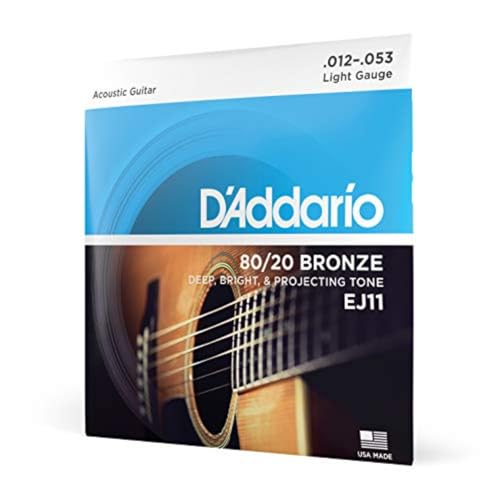
D’Addario EJ11 strings are precision wound on a hexagonal high-carbon steel core, delivering a bold, bright sound with crisp projection. The 80/20 bronze wrap wire highlights traditional acoustic brightness, making this set a strong choice for beginners who want clear tone and reliable intonation during early lessons.
Best for: players who want a bright, room-filling acoustic voice. Limitation: slightly more tension than ultra-light sets, which may require a smoother finger approach for absolute beginners.
Zager Easy Play Acoustic Strings
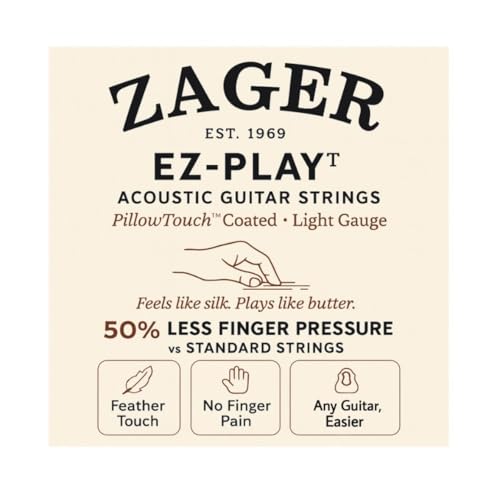
Zager Easy Play strings feature a patented soft-metal core and ultra-smooth coating, requiring less finger pressure than conventional sets. This design helps reduce finger soreness and fatigue, enabling longer practice. They are described as comfortable for players dealing with arthritis, hand fatigue, or those returning after a break. Best for: beginners who need a forgiving feel and extended practice sessions. Limitation: brand-specific feel, which may be different from standard bronze sets some players already know.
BELFORT® Quality Acoustic Guitar Strings – 80/20 Phosphor Bronze Light

Belfort LightGauge sets use 80/20 phosphor-bronze with a coating designed to resist rust and improve durability. They emphasize pain-free playing with reduced finger pressure and are marketed as all-rounders suitable for soft melodies and fingerstyle. Best for: beginners seeking a versatile, comfortable, long-lasting tone. Limitation: some players may prefer a warmer or mellower bronze tone, which these brighter phosphor-bronze strings deliver.
Henry’s Strings Ultra Light Acoustic Guitar Strings 09-44

Henry’s Ultra Light set uses a core steel with carbon and a noble bronze coating, delivering bright, clear tone with easy playability. The 09-44 gauge is a popular choice for beginners due to low tension and a forgiving feel. Best for: players seeking a versatile, highly playable set that works across styles. Limitation: slightly lighter gauge can produce less volume on very loud strumming unless amplified or miked.
Buying Guide
What makes a beginner-friendly string set?
Low to light tension, easy fretting, and consistent intonation help new players form correct technique without excessive finger fatigue. Bright, clear tone aids in hearing notes and scales as you learn.
Which gauge should a beginner start with?
Most beginners start with extra light or light gauges (around 9-12 to 50-53). These reduce tension and make fretting easier, especially on younger players or players with a gentle touch.
Should you choose phosphor-bronze or 80/20 bronze?
Phosphor-bronze (with a small coating) offers longer life and rust resistance with a bright, balanced tone. 80/20 bronze provides a brighter, crisper sound with more overt projection. Both are common; preference depends on tone and feel.
Coated vs uncoated for beginners
Coated strings last longer but can feel a touch slick and slightly duller to some players. Uncoated strings feel brighter and completer, but wear faster with frequent playing. Beginners should consider their playing frequency and comfort with feel when choosing.
Durability and maintenance considerations
Regular cleaning after playing helps extend string life. Check for smooth winding on the tuner posts to maintain tuning stability. If a finger picks aggressively, consider lighter gauges or coated options to reduce wear on the fingerboard and strings.
Frequently asked questions
- What gauge is best for a total beginner? – Extra light or light gauges (about 9-12 to 50-53) are typically easiest for first-timers.
- Do beginner strings sound different from standard sets? – Yes, brighter sets can help you hear notes more clearly, while lighter gauges reduce effort to press down notes.
- Should I choose coated or uncoated for practice? – Coated strings last longer; uncoated strings feel slicker and may sound brighter but wear faster.
- How often should beginners change strings? – When tone loses brightness or feel becomes noticeably rough, or every 1-3 months with heavy playing.
- Can I mix string brands on one guitar? – It’s generally best to use the same brand across all strings for balanced tension and tone, especially for beginners.
- Are these sets suitable for acoustic-electric guitars? – Most standard acoustic sets work with acoustic-electrics, but verify compatibility with your instrument’s nut and bridge design.