
The best acoustic preamp with reverb depends on whether you need a compact preamp pedal, several effects, or an amplifier with reverb built in. The SONICAKE A Factory is best for focused preamp and reverb use with feedback-control features, while the Sonic Wood adds chorus and delay. Fishman’s AcoustiVerb is best for reverb alone; its ToneDEQ offers preamp and DI functions with dual effects, and the Loudbox Mini Charge is an amplifier option.
| Product | Best suited for | Main distinction |
|---|---|---|
| SONICAKE A Factory | Preamp, reverb, and feedback control | Notch filter, mute, XLR output |
| SONICAKE Sonic Wood | Players seeking several effects | Preamp, EQ, chorus, delay, and reverb |
| Fishman AFX AcoustiVerb Mini | Adding reverb to an existing setup | Three reverb types and dual-path routing |
| Fishman Loudbox Mini Charge | Players who need an acoustic amplifier | Two channels, reverb, and chorus |
| Fishman ToneDEQ | Players needing preamp and DI functions | Three-band EQ, low cut, boost, and dual FX |
SONICAKE A Factory Acoustic Preamp
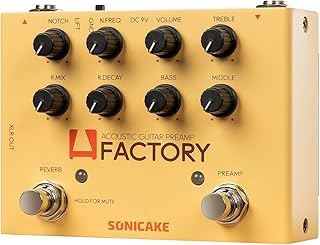
The SONICAKE A Factory combines an analog preamp with digital reverb in a pedal format. It is best for acoustic players who want basic tone shaping and ambience in one unit, rather than a separate reverb pedal and preamp. Its listed high-impedance input and balanced XLR output make it a practical choice to consider for a signal chain that needs those connection types.
The pedal includes a built-in notch filter and mute. The product features describe gain and frequency range adjustment for the filter, which is intended to help address whistling feedback and shape the sound. A 10-megohm input impedance is also listed, which the manufacturer says helps prevent tone loss.
- Best for: Acoustic performers who want preamp, reverb, feedback-control tools, and XLR output in one pedal.
- Why it stands out: It combines an analog preamp and digital reverb with a notch filter and mute.
- Limitation: The listed features do not specify multiple reverb types or additional effects such as chorus and delay.
Choose this if a focused acoustic preamp with reverb and feedback-related controls is the priority. Consider another option if you need several distinct effects in the same pedal.
SONICAKE Sonic Wood Multi-Effects Preamp

The Sonic Wood is an acoustic preamp pedal that combines a two-band EQ with chorus, delay, and reverb. It is best for players who want more than reverb but do not want to assemble a collection of separate effects pedals. The product is described as a one-stop gig solution for acoustic instrument players, with a set of effects aimed at different playing scenarios.
Its analog preamp and two-band EQ are described as recreating a classic acoustic guitar amplifier and providing a warm, natural sound. The feature list also names high-quality chorus, delay, and reverb effects. An XLR output is included, giving the pedal a connection option that may suit setups requiring a balanced output.
- Best for: Players who want preamp tone shaping, reverb, and additional modulation and delay effects in one unit.
- Why it stands out: It offers more effect variety than a preamp-and-reverb-only pedal.
- Limitation: The provided product details do not specify individual reverb types or detailed control ranges.
Choose this if chorus and delay are useful additions to your acoustic sound. The A Factory is a more direct fit if you would rather prioritize a notch filter and mute function over a broader effects selection.
Fishman AFX AcoustiVerb Mini

The Fishman AFX AcoustiVerb Mini is a dedicated reverb pedal rather than a combined preamp and reverb. It is best for acoustic players who already have a preamp or another way to shape and connect their instrument, and want to add reverb separately. Its three listed reverb types are hall, plate, and spring.
Controls include decay time, tone, and level. The pedal also offers true bypass with a buffered bypass option and an innovative dual-path routing feature. These details make it a useful comparison for players deciding whether they want an all-in-one acoustic preamp or separate components that can be arranged in a signal chain.
- Best for: Players who want choices among hall, plate, and spring reverb and already have preamp needs covered.
- Why it stands out: It provides three named reverb types and dedicated controls for decay, tone, and level.
- Limitation: The listed features do not include a preamp, EQ, or XLR output, so it does not replace a full acoustic preamp pedal.
Choose this if the reverb sound itself is your main goal. If you need preamp functions and reverb together, compare it with the SONICAKE pedals instead.
Fishman Loudbox Mini Charge Amplifier

The Fishman Loudbox Mini Charge is an acoustic guitar amplifier, not a standalone preamp pedal. It is best for players who want an amplifier with built-in effects rather than a small device to place on a pedalboard or connect directly to another system. The supplied specifications list 60 watts, two channels, reverb, chorus, master volume, and phase control.
This option can suit a practice or performance setup where an amplifier is needed and reverb is a desired effect. Its two channels may be relevant to players comparing an amp-based setup with a pedal-based one. The listed weight is 21.2 pounds, a practical consideration when portability matters.
- Best for: Acoustic players who want an amplifier with reverb and chorus built in.
- Why it stands out: It combines two channels and onboard effects in an amplifier format.
- Limitation: It is a 21.2-pound amplifier, so it is less compact than a pedal, and its listed features do not make it a standalone preamp pedal.
Choose this if you need an acoustic amplifier as well as effects. Avoid treating it as a direct substitute for a compact preamp pedal if your main requirement is a small signal-processing unit.
Fishman ToneDEQ Preamp And DI

The Fishman ToneDEQ is an acoustic instrument preamp and DI box with EQ and dual effects. It is best for players who place a high value on signal shaping and direct-output functions, and who want effects included in the same unit. Its listed features include a three-band EQ, low-cut filter, and boost function.
The product name identifies it as a preamp, EQ, and DI box with dual FX. However, the supplied feature details do not name the specific effects or confirm which one provides reverb. Check the current product information to confirm the included effect types if reverb is essential to your purchase.
- Best for: Players seeking preamp and DI functions with detailed EQ features and dual effects.
- Why it stands out: Its listed three-band EQ, low-cut filter, and boost function provide more explicit tone-shaping features than a reverb-only pedal.
- Limitation: The supplied information does not identify the dual effects, so reverb availability should be verified before choosing it specifically for reverb.
Choose this if EQ, low-cut, and boost are central requirements. If you need confirmed reverb types from the information available here, the AcoustiVerb Mini or Sonic Wood provides clearer effect details.
Buying Guide: How To Choose An Acoustic Preamp With Reverb
An acoustic preamp with reverb can mean a single pedal that handles both functions, a preamp paired with a separate reverb unit, or an amplifier with reverb built in. Decide which format fits your rig before comparing effect controls. The right choice depends on how you connect your instrument, whether you need other effects, and whether you need an amp or only signal processing.
Do You Need A Preamp, A Reverb Pedal, Or Both?
Choose a combined pedal if you want preamp and reverb functions in one unit. The SONICAKE A Factory is the clearest match among these products because its listed features explicitly include an analog preamp and digital reverb. Choose a dedicated reverb pedal if your existing setup already covers preamp and output needs. The Fishman AcoustiVerb Mini is designed around reverb, with hall, plate, and spring types.
A separate preamp and reverb can allow you to choose each device independently, but it also means checking how the units connect and how they fit into your existing signal chain. The supplied product details do not establish compatibility with every instrument or setup, so confirm connection requirements before buying.
Which Connections And Outputs Should You Check?
Compare your instrument’s output and the inputs available on the equipment you plan to use. The A Factory lists a high-impedance input and balanced XLR output. The Sonic Wood also lists an XLR output. These are useful details to compare when your setup calls for those connection types, but they do not guarantee that a particular venue, mixer, or amplifier will suit every configuration.
The ToneDEQ is identified as a preamp and DI box, but its supplied feature list does not detail its connectors. Review the full product specifications when connection options are a deciding factor. Likewise, a dedicated reverb pedal should be assessed as one part of a larger rig rather than assumed to replace preamp or DI functions.
How Much Tone Shaping And Feedback Control Do You Need?
For basic EQ and multiple effects, the Sonic Wood lists an analog preamp and two-band EQ, along with chorus, delay, and reverb. The ToneDEQ lists a three-band EQ, low-cut filter, and boost function. These features may suit players who prioritize more explicit tone-shaping options, although the listed details do not describe specific control ranges.
The A Factory is the product in this group whose listed features specifically call out a notch filter for addressing whistling feedback, with gain and frequency-range adjustments. Feedback behavior depends on the full instrument, room, speaker, and setup, so a filter should be considered a tool rather than a guaranteed solution.
Do You Want More Than Reverb?
If you want a simple ambience effect, the AcoustiVerb Mini offers three named reverb types. If you also want chorus and delay, the Sonic Wood lists all three effects alongside its preamp and EQ. The A Factory focuses on preamp, reverb, and feedback-related controls. The ToneDEQ lists dual FX, but the provided details do not identify them; confirm the exact effects before choosing it for a specific sound.
Would An Amplifier Be A Better Fit?
An amplifier with onboard effects may be the more suitable purchase if you need a speaker-equipped acoustic amp rather than a pedal. The Loudbox Mini Charge lists two channels, reverb, chorus, and 60 watts. Its listed weight of 21.2 pounds is worth considering if you need to carry equipment regularly. It is not the same type of product as a compact preamp pedal, so compare the format and role before choosing.
Frequently Asked Questions
What Is The Best Acoustic Preamp With Reverb In This List?
The SONICAKE A Factory is the most direct match because its listed features include an analog preamp and digital reverb. It also includes a notch filter, mute, high-impedance input, and balanced XLR output.
Which Product Offers More Than Reverb?
The SONICAKE Sonic Wood lists chorus, delay, and reverb, along with an analog preamp and two-band EQ. The Fishman Loudbox Mini Charge also lists reverb and chorus, but it is an amplifier rather than a pedal.
Does The Fishman AcoustiVerb Mini Include A Preamp?
The supplied features describe the AcoustiVerb Mini as a reverb pedal and do not list a preamp. It is best considered an add-on for a setup that already addresses preamp needs.
Does The Fishman ToneDEQ Definitely Include Reverb?
The supplied information identifies the ToneDEQ as a preamp, EQ, and DI box with dual FX, but it does not name the effects. Check the current product specifications to confirm reverb is included before buying it for that purpose.
Should I Choose A Pedal Or An Acoustic Amplifier?
Choose a pedal if you need a compact component for a larger signal chain. Choose an amplifier if you need an amp with built-in effects. The Loudbox Mini Charge is the amplifier option in this selection; the other products are pedals or preamp and DI equipment.