
The best acoustic guitar sound pedal depends on whether you need a simple preamp, feedback control, built-in effects, or a broader collection of tones. The SONICAKE A Factory is best for players seeking a focused preamp with reverb and a notch filter; the Sonic Wood suits players who want several core effects in one pedal. The MOOER GE100 offers a large range of presets and effects, while the ToneWoodAmp2 is designed for effects from the guitar body without requiring an amplifier. The GOKKO GK-32 is aimed at live players who want feedback control and a treble boost.
| Product | Best For | Standout Feature |
|---|---|---|
| SONICAKE A Factory | Preamp and feedback-conscious tone shaping | Notch filter and balanced XLR output |
| SONICAKE Sonic Wood | Core acoustic effects in one unit | Chorus, delay, and reverb |
| MOOER GE100 | Players who want many effects and presets | 66 effect types and expression control |
| ToneWoodAmp2 | Practice or playing without an amp | Effects that work from the guitar body |
| GOKKO GK-32 | Live acoustic players managing feedback | Anti-feedback controls and treble boost |
SONICAKE A Factory Acoustic Pedal
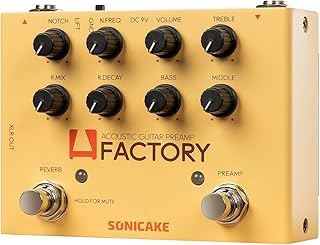
The SONICAKE A Factory combines an analog preamp with digital reverb for a compact acoustic tone-shaping setup. Its feature list also includes a notch filter, mute function, gain and frequency adjustments, a high-impedance input, and a balanced XLR output.
Best for: Acoustic players who want preamp shaping, reverb, and a tool for addressing feedback in one pedal. The adjustable notch filter is a useful distinction for players who need to target an unwanted ringing frequency, while the mute can support quiet signal changes on stage.
The maker lists a 10-megohm input impedance, intended to help prevent tone loss. The XLR output gives players a balanced-output option when connecting to suitable live audio equipment. Choose this model if those connections and controls matter more than having multiple modulation and time-based effects.
Limitation: The listed effects focus on preamp shaping and reverb. Players who specifically want chorus and delay in the same unit may prefer the Sonic Wood.
SONICAKE Sonic Wood Multi-Effects Pedal

The SONICAKE Sonic Wood is an acoustic preamp pedal with a two-band EQ and a set of core effects. Its listed effects include chorus, delay, and reverb, making it a practical option for players who want more than basic tone adjustment without assembling separate pedals for each effect.
Best for: Acoustic-electric players who want a single unit for preamp shaping and several common effects. The analog preamp and two-band EQ are described as recreating a classic acoustic guitar amplifier sound, with a warm, natural character. Chorus, delay, and reverb can serve different playing situations, from adding space to a part to making a tone fuller.
Choose the Sonic Wood if having these effects together is more important than a dedicated anti-feedback control or the A Factory’s listed notch filter. It is presented as an all-in-one gig solution for acoustic instrument players.
Limitation: The supplied product details do not list a notch filter or a dedicated anti-feedback control. Players whose main concern is feedback management should compare the A Factory and GOKKO GK-32.
MOOER GE100 Multi-Effects Pedal

The MOOER GE100 is a general-purpose guitar multi-effects pedal rather than an acoustic-specific preamp. It offers 66 effect types across eight effect modules, plus 80 preset patches and 80 user patches. Players can save preferred tones, and six assignable expression pedal parameters provide additional control over tone changes.
Best for: Players who value a broad effects library and saved setups, and who are comfortable selecting tones for an acoustic signal. The product also lists an adjustable output mode with a line-out setting intended to provide a good tone when playing without an amp.
Compared with the acoustic-focused SONICAKE pedals, the GE100 emphasizes effect variety and patch storage rather than acoustic-specific feedback features. It may suit a player who uses multiple guitar sounds and wants one unit for different setups.
Limitation: The listed information does not identify acoustic-specific features such as a notch filter, balanced XLR output, or dedicated acoustic preamp. Avoid choosing it solely for acoustic feedback control.
ToneWoodAmp2 Smart Guitar Effects

The ToneWoodAmp2 is described as a guitar effects system that works through the guitar’s body without requiring an amplifier. The product information also says it can be used off stage for practice or connected to an amp for live performance, and that its effects are intended to enhance the guitar’s natural sound.
Best for: Acoustic players who want to explore effects without making an amplifier central to their practice setup. It may also suit a player who wants one device for both unamplified-at-home use and amplified stage use, based on the maker’s stated use cases.
This approach differs from a conventional pedal that shapes the signal before sending it to an amplifier or other audio equipment. Consider how you want to hear the effects and how you plan to use the guitar before choosing between this design and a standard pedalboard device.
Limitation: The supplied details do not specify particular effect types, connection details, or guitar-mounting requirements. Check the full product information to confirm that its setup and effects fit your needs.
GOKKO GK-32 SpanishFly Preamp DI

The GOKKO GK-32 is an acoustic guitar preamp and DI pedal designed to shape pickup tone before sending the signal to an amp, mixer, or pedalboard. Its listed controls include an anti-feedback footswitch and knob, plus a separate treble boost footswitch for adding brightness and presence.
Best for: Live acoustic players who want direct tone shaping and specific controls for feedback and clarity. The anti-feedback function makes it a closer match for feedback-conscious stage use than a general multi-effects unit. The separate treble boost offers a distinct way to emphasize brightness when a tone needs more presence.
Choose the GK-32 if feedback management and a boost function are higher priorities than built-in chorus, delay, or reverb. Its stated signal path options also make it relevant to players planning to connect with an amp, mixer, or pedalboard.
Limitation: The supplied features do not list built-in reverb, chorus, or delay. Players seeking those effects in one box should compare the Sonic Wood.
Buying Guide: How To Choose An Acoustic Guitar Pedal
Do you need an acoustic preamp or a multi-effects unit?
A preamp-focused pedal is a direct choice when the main goal is shaping an acoustic pickup’s signal. The A Factory adds reverb and a notch filter, while the GK-32 focuses on preamp and DI use with anti-feedback and treble boost controls. The Sonic Wood combines a preamp and two-band EQ with chorus, delay, and reverb.
A multi-effects pedal is a better fit when you want many types of effects or saved sounds. The MOOER GE100 lists 66 effect types and separate preset and user-patch banks, but it is not described as an acoustic-specific pedal. Check whether its signal-shaping features suit your acoustic pickup and intended sound.
Is feedback control important for your playing situation?
Feedback can become a concern when an amplified acoustic guitar interacts with nearby speakers or stage sound. For a pedal with controls explicitly described for this purpose, consider the A Factory’s adjustable notch filter or the GK-32’s anti-feedback footswitch and control knob. These features are relevant if reducing unwanted ringing is a priority.
Do not assume that a pedal without a listed feedback feature will solve a feedback problem. If feedback is a recurring issue, prioritize a product with a specifically identified control and confirm how it operates in the manufacturer’s full documentation.
Which outputs and connections do you need?
Think through your signal path before choosing. The A Factory lists a balanced XLR output and a high-impedance input. The GK-32 is described as sending a shaped signal to an amp, mixer, or pedalboard. Those details may be useful for players planning a direct or pedalboard-based setup.
Connection requirements vary by instrument, pickup, and destination equipment. Confirm that the product’s actual input and output connections match your guitar and the equipment you intend to connect. The provided information does not specify every connection for every product in this guide.
Do you want effects at home without an amplifier?
The ToneWoodAmp2 is the clearest match in this group for players who want effects that work from the guitar body without requiring an amplifier. Its product description also identifies practice and amplified live performance as possible uses. The MOOER GE100 lists a line-out mode for playing without an amp, but it is a different kind of multi-effects unit.
Before deciding, consider where the sound needs to be heard and whether you want a conventional signal-chain pedal or an effects device designed to work through the guitar itself. Check setup and connection details for your particular instrument.
How much tone variety do you need?
If you want a few common acoustic effects in one pedal, the Sonic Wood lists chorus, delay, and reverb. If you need a large library of effects and saved patches, the MOOER GE100 offers more variety according to its feature list. For a simpler signal-shaping setup, the A Factory and GK-32 emphasize preamp functions and targeted controls.
More effects do not automatically mean a better choice. Select based on the sounds and controls you will actually use, especially if quick adjustments during a performance matter more than building a large collection of presets.
Frequently Asked Questions
What does an acoustic guitar pedal do?
An acoustic guitar pedal can shape a pickup’s tone or add effects before the signal reaches other audio equipment. Depending on the model, it may provide preamp controls, EQ, reverb, chorus, delay, feedback management, or several effect types.
Which pedal in this list includes a notch filter?
The SONICAKE A Factory lists a built-in notch filter with gain and frequency adjustment capabilities. It is intended to help address unwanted whistling and shape the sound.
Which option includes chorus, delay, and reverb?
The SONICAKE Sonic Wood lists chorus, delay, and reverb alongside an analog preamp and two-band EQ. It is the most directly specified option here for players seeking those three effects in one acoustic pedal.
Can I use an acoustic pedal without an amplifier?
The ToneWoodAmp2 is described as working from the guitar’s body without requiring an amplifier. The MOOER GE100 also lists an adjustable line-out mode for playing without an amp. Check each product’s setup requirements for your use case.
Which pedal is best for acoustic feedback control?
The GOKKO GK-32 lists an anti-feedback footswitch and control knob. The SONICAKE A Factory lists an adjustable notch filter for targeting unwanted ringing, so compare their control approaches and choose based on the features you need.