
The best AES/EBU-to-XLR cable depends mainly on the cable’s stated impedance, length, and connector configuration. For a short, specified 110-ohm run, the Hosa EBU-005 is a practical choice; the Castline Mogami 3080 models suit buyers seeking a stated 110-ohm cable in a very short length. Hosa’s 10- and 20-foot options serve longer runs, while the one-foot Castline cable is suited to close equipment placement.
| Product | Best For | Listed Length |
|---|---|---|
| Hosa EBU-005 | Short professional-use cable | 5 feet |
| Castline Mogami 3080 | Very short 110-ohm connection | 1 foot |
| Castline Mogami 3080 | Short 110-ohm connection | 3 feet |
| Hosa EBU-010 | Medium-length cable run | 10 feet |
| Hosa EBU-020 | Longer cable run | 20 feet |
Hosa EBU-005 5-Foot AES/EBU Cable

The Hosa EBU-005 is a five-foot AES/EBU digital audio cable with XLR3F-to-XLR3M connectors. Its listed 110-ohm impedance and three-pin XLR connector configuration make it a clear option for buyers seeking a short cable for professional digital-audio connections.
- Best for: Connecting nearby equipment when a five-foot cable is sufficient.
- Why it stands out: The listing specifically identifies a true 110-ohm AES/EBU cable and XLR3F-to-XLR3M connectors.
- Consider: Its short length may not reach equipment placed farther apart. Measure the route, including slack, before choosing.
Choose this model if its five-foot reach and female-to-male XLR arrangement match the equipment connection you need. It is a better fit than a longer cable when extra length would create unnecessary cable slack.
Castline Mogami 3080 1-Foot Cable
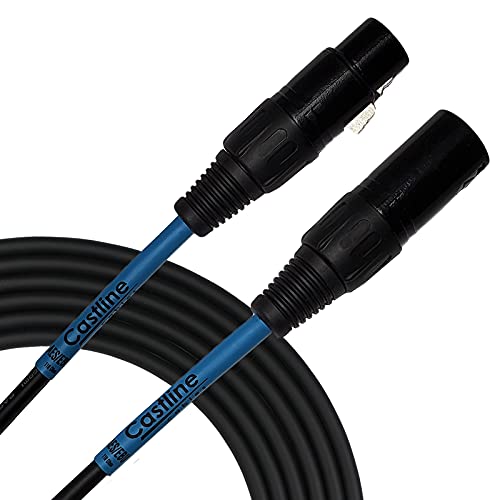
This Castline cable is a one-foot AES/EBU and DMX digital cable made with Mogami W3080 cable. The product listing specifies 110-ohm impedance, oxygen-free copper, and three-pin gold-plated XLR connectors. It is the shortest option in this selection.
- Best for: Equipment positioned close together, such as devices on the same rack or work surface.
- Why it stands out: The listing gives a specific 110-ohm rating, cable type, conductor material, and connector details.
- Consider: One foot allows little distance between devices. Avoid it if the cable must follow a longer or less direct route.
Choose this cable when minimizing excess length is important and the connected devices can sit very close together. The listing also identifies it as made in the USA. Its brief reach is the main practical limitation, so check connector spacing before buying.
Castline Mogami 3080 3-Foot Cable
The three-foot Castline model uses the listed Mogami W3080 cable for AES/EBU and DMX digital use. Its product details specify 110-ohm impedance, oxygen-free copper, and three-pin gold-plated XLR connectors. Compared with the one-foot model, it provides more reach while remaining a short cable.
- Best for: Short connections where one foot is too restrictive but a long cable is unnecessary.
- Why it stands out: Its listed impedance and construction details make it easy to compare with other digital-audio cable options.
- Consider: Three feet may still be insufficient if equipment is separated by a longer route. Confirm the needed path length.
Choose this version if you want a stated 110-ohm cable and need a little more flexibility than the one-foot option. Both Castline lengths share the listed cable and connector characteristics, so the key comparison is how much reach your setup requires.
Hosa EBU-010 10-Foot Cable
The Hosa EBU-010 is an AES/EBU cable with a listed length of ten feet. It is a straightforward option for buyers who need more reach than a short patch cable provides. The product information supplied for this model identifies its cable type and length but does not specify further construction details.
- Best for: Setups where connected devices are farther apart than a short patch cable can reach.
- Why it stands out: Its ten-foot length offers a middle ground between short cables and the 20-foot Hosa option.
- Consider: The provided listing details do not state a specific impedance or connector arrangement. Confirm that the product’s full specifications meet your equipment requirements.
Choose this model when ten feet suits the physical layout and you want a named AES/EBU cable. If your system requires a specifically documented 110-ohm impedance or a particular XLR gender arrangement, verify those details before purchase rather than assuming them from the cable name.
Hosa EBU-020 20-Foot Cable
The Hosa EBU-020 is an AES/EBU cable listed at 20 feet, making it the longest cable in this selection. Its length can suit installations where equipment is separated or the cable needs to follow a longer path. The supplied product details identify the cable type and length.
- Best for: Buyers who need a longer cable run than the five- or ten-foot options provide.
- Why it stands out: Twenty feet offers the most reach among these selected cables.
- Consider: The supplied details do not state the cable’s impedance or connector genders. Check the complete product specifications and your device connections before ordering.
Choose this cable when the route genuinely requires its added length. Avoid selecting a longer cable simply as a substitute for checking the installation: measure the path and allow enough slack for placement without leaving unnecessary excess.
Buying Guide: How to Choose an AES/EBU-to-XLR Cable
What does AES/EBU to XLR mean?
AES/EBU is a digital audio connection format, while XLR describes a connector style commonly used for balanced audio connections. A cable advertised for AES/EBU with XLR connectors is intended to carry a digital signal between compatible equipment. The connector shape alone does not establish that a cable is suitable for every digital-audio application.
Check that both devices support the connection type you intend to use. Then compare the cable’s stated impedance and connector genders with the requirements of the equipment. The product information in this selection is not equally detailed: the Hosa EBU-005 and Castline cables explicitly list 110-ohm impedance, while the supplied details for the EBU-010 and EBU-020 only state cable type and length.
Why does 110-ohm impedance matter?
AES/EBU digital audio cable is commonly selected by its stated impedance. Among these options, the Hosa EBU-005 and both Castline Mogami 3080 cables explicitly list 110 ohms. That makes their impedance easier to compare from the provided product details.
Do not assume that an unspecified cable has a particular impedance. If your application calls for a 110-ohm cable, check the complete product specification for any model whose supplied description does not confirm it. A clearly stated specification is more useful than relying on appearance or connector type.
Which cable length should you choose?
Measure the actual distance between devices and account for the path the cable must follow. A cable routed around a rack, desk, or other equipment may need more length than the straight-line distance suggests. Avoid choosing a cable that is just long enough to connect if it will be pulled tight.
- One foot: Best when devices are immediately adjacent.
- Three to five feet: Better for nearby equipment with some placement flexibility.
- Ten feet: A middle option for a longer connection.
- Twenty feet: Best when the route requires substantial reach.
Shorter cables can reduce excess slack, while longer cables provide more placement flexibility. The right choice is the shortest listed length that safely reaches along the intended route.
How should you check XLR connectors?
Match the cable ends to the ports on your devices. The Hosa EBU-005 listing specifically describes an XLR3F-to-XLR3M cable, while the Castline listings identify three-pin XLR connectors without stating gender in the supplied features. The EBU-010 and EBU-020 descriptions provided here do not identify connector gender.
Look at whether each device has a male or female XLR connection and confirm the cable has the opposite connector where needed. If a product listing does not state the connector arrangement, verify it before ordering. A cable with the wrong connector gender may not connect directly to your equipment.
Should you choose a specialty cable or a basic length option?
Choose based on verifiable details that matter to your setup. The Castline models list Mogami W3080 cable, 110-ohm impedance, oxygen-free copper, and gold-plated three-pin XLR connectors. The Hosa EBU-005 lists 110-ohm impedance and XLR3F-to-XLR3M connectors. Hosa’s ten- and 20-foot models are distinguished in the supplied information primarily by length.
More listed features do not automatically make a cable the best choice for every buyer. If your priority is a known length, compare reach first. If your priority is documented impedance or connector configuration, compare those specifications directly and verify any details not shown in the product summary.
Frequently Asked Questions
Can I use any XLR cable for AES/EBU digital audio?
Do not assume that every XLR cable is appropriate for AES/EBU. Check that the cable is identified for AES/EBU use and confirm the required impedance and connector configuration for your equipment.
Is an AES/EBU cable the same as an analog XLR cable?
They can use XLR-style connectors, but AES/EBU carries a digital audio signal. Connector shape alone does not make an analog cable and a digital cable interchangeable for every use. Check the cable’s stated application and the device specifications.
Which listed cable explicitly states 110-ohm impedance?
The Hosa EBU-005 and the one-foot and three-foot Castline Mogami 3080 cables explicitly list 110-ohm impedance in the supplied product information.
Which product is best for a longer run?
The Hosa EBU-020 is the longest selected option at 20 feet. Choose it only if that length suits the measured route, and verify any required impedance or connector details not included in the supplied description.
How do I decide between the one-foot and three-foot Castline cables?
Choose the one-foot version if the devices are extremely close together and the measured route allows little slack. Choose the three-foot model if you need more space between equipment. Both listings specify 110-ohm impedance and Mogami W3080 cable.