
The best alto saxophone jazz mouthpiece depends on your preferred tone, tip opening, and experience level. The BetterSax Burnin’ is designed for jazz and contemporary styles, while the SYOS Steady Tip 5 is described as balanced for jazz, pop, and concert band. The Yamaha 4C and BetterSax Classic offer approachable options; the listed SYOS Smoky is a tenor model, not an alto mouthpiece, so it is included only to clarify the instrument mismatch.
| Product | Best suited for | Key detail |
|---|---|---|
| BetterSax Burnin’ Alto | Jazz and big band players | Size 6, 0.078-inch tip opening |
| SYOS Steady Tip 5 Alto | Players seeking a balanced tone | Medium-high baffle; tip 5 |
| Yamaha 4C Alto | Beginners and general use | Designed for accessible sound production |
| BetterSax Classic Alto | Students and multi-band use | Balanced response and easy cleaning |
| SYOS Smoky Tip 8 Tenor | Tenor saxophonists only | Not an alto saxophone mouthpiece |
BetterSax Burnin’ Alto Mouthpiece

The BetterSax Burnin’ is the most explicitly jazz-focused alto option in this selection. Its listed size 6 and 0.078-inch tip opening give buyers specific sizing information to compare with their current setup. The product is described as precision-crafted for tone and playability, with intended use in jazz, big band, and contemporary styles.
Best for: Alto players who want a mouthpiece marketed for jazz ensembles and contemporary playing. Choose this if its stated tip opening suits your reed strength and playing approach.
Consideration: The supplied product information does not specify material, baffle design, or facing length. Players who need those details should confirm them before choosing.
SYOS Steady Tip 5 Alto Mouthpiece

The SYOS Steady is described as having a balanced, centered tone for jazz, pop, and concert band. Its medium-high baffle and Tip 5 opening are useful comparison points for players seeking one mouthpiece for several musical settings. The listing identifies it as crafted in France.
Best for: Players who want a jazz-capable alto mouthpiece with a stated balanced tone and a listed tip size. It is a better match than a jazz-only description for someone splitting time between jazz, pop, and concert band.
Consideration: “Balanced” is a tone description, not a guarantee of the sound each player will produce. The supplied listing does not give further material or facing specifications.
Yamaha 4C Alto Mouthpiece

The Yamaha 4C is an alto saxophone mouthpiece made from phenol resin plastic. Yamaha describes the 4C as designed so beginners can make a sound, and identifies it as the original-equipment mouthpiece included with its standard, intermediate, and professional series alto saxophones.
Best for: Beginners, students, and players who prioritize an accessible, straightforward mouthpiece rather than a specifically described jazz tone. It can also be a practical baseline for comparing a more jazz-oriented setup.
Consideration: The product details do not identify a jazz-focused baffle or tone profile. Choose another option if a particular jazz sound design is your main priority.
BetterSax Classic Alto Mouthpiece
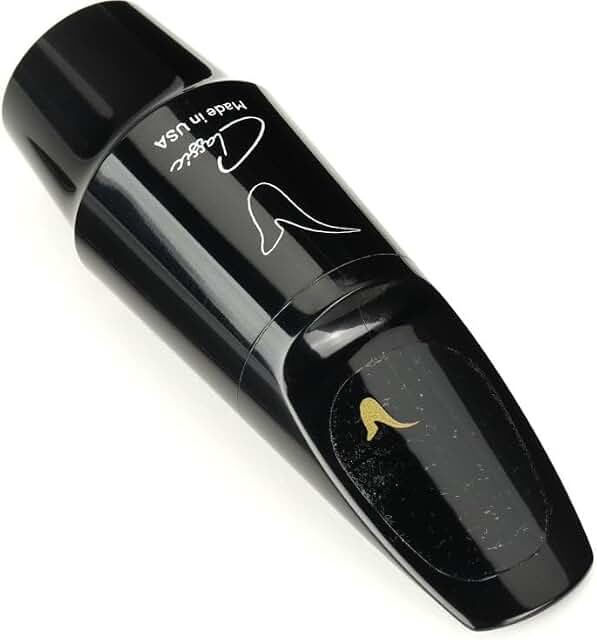
The BetterSax Classic is a plastic alto saxophone mouthpiece presented for concert band, jazz band, and marching band. Its listed features include a balanced design intended to respond evenly across the instrument’s range, durable construction, and a smooth, non-porous surface that is easy to clean.
Best for: Beginners and students who need an alto mouthpiece for multiple school or community band settings. It is selected for its stated range of uses and maintenance-friendly construction, rather than a specialized jazz tone description.
Consideration: The supplied details do not state a tip opening or baffle design, so players comparing jazz setups should verify those specifications.
SYOS Smoky Tip 8 Tenor Mouthpiece

This SYOS Smoky is explicitly listed as a tenor saxophone mouthpiece, not an alto model. Its description calls out a warm, dark jazz and soul tone, a low rollover baffle, Tip 8, and French manufacture. Those features may interest tenor players, but they do not make it an appropriate choice for an alto saxophone.
Best for: Tenor saxophonists seeking the listed warm, dark tone description. It is included here to help shoppers distinguish an instrument-specific listing from true alto saxophone jazz mouthpieces.
Important limitation: Do not choose this product for an alto saxophone. Select one of the alto models above when shopping for an alto setup.
Buying Guide: How To Choose An Alto Jazz Mouthpiece
Which tone are you trying to achieve?
Mouthpiece descriptions can help narrow choices, but they do not fully determine the sound. A player’s reed, embouchure, instrument, and playing approach also affect tone. In this group, the Burnin’ is explicitly positioned for jazz, big band, and contemporary styles. The SYOS Steady is described as balanced for jazz, pop, and concert band. The BetterSax Classic is presented for several band settings, while the Yamaha 4C emphasizes beginner accessibility.
What do tip opening and reed strength mean for selection?
Tip opening is the gap at the mouthpiece tip. A larger or smaller opening can change how a mouthpiece feels with a particular reed, but the product data here does not provide comparable opening measurements for every option. The Burnin’ lists a size 6 and a 0.078-inch tip opening; the SYOS Steady lists Tip 5. Do not assume that numbers from different brands use an identical scale. If possible, compare the model with your current mouthpiece and reed setup.
Should beginners choose a jazz-specific model?
Not necessarily. Beginners may find a clearly described, broadly usable mouthpiece easier to evaluate than one selected only for a target jazz sound. Yamaha says its 4C was designed so beginners can make a sound, and BetterSax describes its Classic as suitable for beginners and several band types. More experienced players may put greater weight on the listed tip opening, baffle, or tone description.
How important is the baffle description?
A baffle is part of the mouthpiece’s internal design and is often mentioned when describing tone. The SYOS Steady listing specifies a medium-high baffle, while the tenor Smoky listing specifies a low rollover baffle. The latter is not an alto candidate. The supplied details do not give a baffle description for the BetterSax models or Yamaha 4C, so avoid treating missing information as evidence of a particular design.
What should you check before ordering?
- Instrument: Confirm the listing says alto, not tenor. Mouthpieces are instrument-specific, and the SYOS Smoky product here is a tenor model.
- Tip information: Compare stated sizes carefully and ask a teacher or experienced player for guidance if you are unsure.
- Playing context: Consider whether you mainly play jazz, concert band, marching band, or several styles.
- Product specifications: Check details such as material, opening, and baffle when those factors matter to your setup.
- Maintenance: BetterSax identifies its Classic as easy to clean, and Yamaha lists phenol resin plastic for the 4C.
Frequently Asked Questions
Which listed mouthpiece is most specifically aimed at alto jazz?
The BetterSax Burnin’ is described for jazz, big band, and contemporary styles. The SYOS Steady is also listed for alto saxophone and described for jazz, pop, and concert band.
Is the SYOS Smoky Tip 8 suitable for alto saxophone?
No. The supplied product description identifies the SYOS Smoky as a tenor saxophone mouthpiece. Choose a model explicitly listed for alto saxophone instead.
Is the Yamaha 4C a jazz mouthpiece?
The provided details describe the Yamaha 4C as a beginner-accessible alto mouthpiece and original-equipment model. They do not identify a jazz-specific tone design.
Which option is described for both jazz and concert band?
The SYOS Steady is described for jazz, pop, and concert band. The BetterSax Classic is presented for concert band, jazz band, and marching band.
Can I select a mouthpiece by tip number alone?
No. Tip numbers are not enough to predict fit or sound, and sizing conventions may differ between brands. Consider the full product description, reed setup, and playing needs.