Best Amp for Electronic Drum Kits: Clear, Low-Noise Monitors for Practice and Live Jams
Choosing the right amp for an electronic drum kit depends on your space, volume needs, and whether you practice quietly or play with a backing track. The top picks below are compact, purpose-built monitors that pair well with electronic drums, keyboards, and practice setups. This guide highlights who each product is best for, plus practical notes on setup and limitations to help you compare at a glance.
Summary Of Selected Products
- Alesis Nitro Amp 70W 3″ Compact Electric Drum Monitor Speaker
- Avatar Electric Drum Amp 20W
- Coolmusic DM20 20W Bluetooth Personal Monitor
- Donner DDA-20SE 20W Dual-Driver Electric Drum Monitor
- Donner DDA-20 20W Wireless Drum Amplifier
Alesis Nitro Amp 70W 3″ Compact Monitor

This ultra-compact powered monitor is designed for Nitro kit users who want direct rack-mountable monitoring without headphones. It delivers a balanced sound with a 3″ driver and a 70W peak Class-D amp for practical practice at moderate volumes. Best for players who need quick, on-rack monitoring during lessons or small-space use.
Who it’s best for: home practice, in-rack usage, and lessons where minimal setup is preferred. Why selected: its direct mounting to Nitro racks streamlines monitoring without extra cables or stands. Limitation: lower overall low-end depth compared to larger cabinets.
Avatar Electric Drum Amp 20W

This compact edrum monitor is designed for home practice and small rehearsals. It delivers a full, balanced sound suitable for apartments or living rooms without overpowering neighbors. The built-in 3-band EQ helps tailor tones from snare to cymbals, with a 20–20kHz range for clear definition. Best for beginners and casual players who want simple plug-and-play performance.
Who it’s best for: entry-level players needing quick setup and decent room-fill sound. Why selected: small footprint with room-friendly volume. Limitation: may struggle with louder band practice scenarios.
Coolmusic DM80 80-Watt Drum Amp

An 80-watt drum amplifier with an 10-inch woofer and 3-inch tweeter, designed to deliver substantial bass and clear highs. Its 2-channel setup and 3-band EQ let you shape low, mid, and high frequencies precisely. Best for players seeking a robust monitor that can fill medium-sized rooms or small stages.
Who it’s best for: more serious practice sessions and small performances where room-filling sound is needed. Why selected: strong low-end response plus flexible tone shaping. Limitation: larger size and weight than ultra-compact models.
Donner DDA-20SE 20W Dual-Driver Monitor

This compact dual-driver monitor uses a 3″ woofer and a 0.75″ tweeter to deliver clear full-range drum sound with up to 80W peak power. It includes mounting hardware for easy angling toward the ears, plus Bluetooth for wireless playback. Best for home practice with simple wireless audio streaming.
Who it’s best for: players who want Bluetooth playback and on-ear monitoring without cables. Why selected: compact yet capable with adjustable sound direction. Limitation: Bluetooth latency can affect real-time drumming if used with delays from devices.
Donner DDA-20 20W Wireless Drum Amplifier
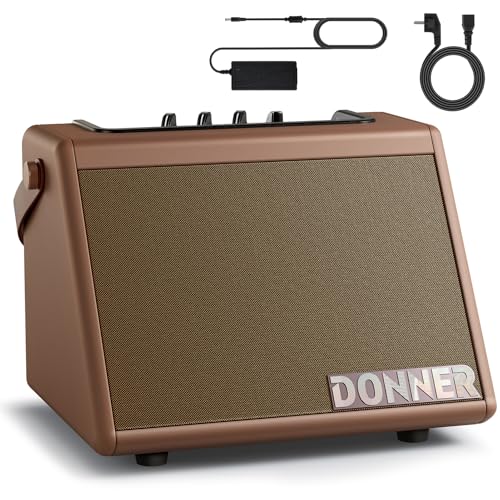
The DDA-20 wireless amplifier combines a 6.5″ woofer and a 2.0″ tweeter, providing clear, detailed drum sound with a built-in Bluetooth connection. It’s designed for home practice and light street performances, with a compact form factor and easy setup. Best for players who value wireless music playback and simple operation.
Who it’s best for: home practitioners and buskers who want cordless audio streaming. Why selected: flexible Bluetooth playback and compact, mountable design. Limitation: might not deliver deep bass in large rooms at higher volumes.
Buying Guide: What To Consider When Choosing A Drum Amp
- Sound footprint: For apartment practice, prioritize compact monitors with low room-fill output. For small studios or modest stages, larger woofers deliver more depth.
- Power and headroom: Higher wattage helps maintain clean sound at higher volumes. Consider peak power versus continuous power for a realistic expectation.
- Speaker configuration: Dual-driver setups (woofers plus tweeters) provide better frequency balance across drums and cymbals.
- Connectivity: Look for multiple inputs (drum kit, backing tracks, keyboard) and Bluetooth or USB for playback. DI outputs can help connect to external systems.
- Mounting and direction: If space is at a premium, choose rack-mountable or angle-adjustable monitors to keep sound directed toward your ears.
- Bluetooth latency: Wireless playback is convenient but can introduce delay with real-time drumming. Use wired connections for practice if timing is critical.
- Durability and warranty: Durable housings and reasonable warranties support long-term use in practice rooms or gigs.
- Budget alignment: Compare features such as EQ, inputs, and Bluetooth against price to identify the best value for your setup.
Practical Setup Tips
- Position the amp at ear level or slightly below to ensure clear monitoring of the snare and cymbals.
- Use a simple EQ to avoid harsh highs or boxy mids that obscure drum articulation.
- When using Bluetooth, keep the practice device within a clear line-of-sight to minimize interference.
- For small spaces, consider a single monitor per drummer to prevent phase issues and keep the mix coherent.
Frequently Asked Questions
- What is the best drum amp for quiet practice? A compact 20W to 30W monitor with good EQ and headphone out is ideal for apartments. Look for models with low-frequency depth and clear highs.
- Do I need Bluetooth on a drum amp? Bluetooth is convenient for playing along with tracks, but wired connections offer better timing accuracy for real-time drumming.
- Can I use a keyboard amp for a drum kit? Some drum amps are designed for multiple instruments. Ensure the input sensitivity and EQ are suitable for drums to avoid muddiness.
- Is a larger speaker always better for drums? Not necessarily. Larger speakers provide deeper bass, but in small rooms, a compact monitor with a good woofer can deliver adequate depth without overwhelming space.
- Should I buy a rack-mountable amp? If your kit already uses a rack, a rack-mountable amp reduces clutter and aligns the monitor with your ear level for better sound.
- What should I avoid when selecting a drum amp? Avoid models with limited EQ control or poor driver configuration, which can overly color or distort the drum sound at practice volumes.