Best Amps With Phono Input for Turntables and Home Audio
Top picks for amplifiers with built-in phono inputs are ideal for turntable enthusiasts who want a single, tidy setup. This guide highlights five dependable options, each suited to different listening needs—whether you’re building a compact home theater, a desktop setup, or a dedicated vinyl station. You’ll find models that pair well with various turntables, Bluetooth features, and multiple inputs for versatile listening. Below is a quick summary table to help you compare at a glance.
| Product | Best For | Why Selected |
|---|---|---|
| Nobsound 300Wx2 Stereo Amplifier with Phono Input (NS-13G) | Audiophiles seeking high power | Phono input plus 4Ω 2x300W Class D output; sturdy cooling; premium components |
| Sony STRDH190 2-ch Home Stereo Receiver | Casual listeners with multiple sources | Phono input, Bluetooth, and multiple RCA inputs; reliable brand |
| Versatile home theater and karaoke | Phono input, Bluetooth, USB, RCA, mic inputs; flexible remotes | |
| Pyle PA9HBU Wireless Bluetooth Home Stereo Amplifier | All-in-one convenience | Phono input, HDMI, Optical/Coaxial, USB; wide source coverage |
| Denon PMA-600NE Bluetooth Stereo Amplifier | Analog-focused listening with modern inputs | Built-in phono preamp, DAC, and Bluetooth; solid, compact design |
Nobsound 300Wx2 Stereo Amplifier With Phono Input

Best for high-power vinyl playback in a compact form. The Nobsound NS-13G uses a Texas Instruments TPA3255 chip delivering 300W×2 into 4Ω, with ultra-low distortion (0.005% THD) and a 107dB SNR. It includes a MM phono input and RCA options for TVs, PCs, and streaming devices. A banana output and 3.5mm AUX passthrough enable subwoofers or multi-room setups without extra adapters. Good for audiophiles who want room-filling sound from a turntable-based system. Cautions: thermal management is essential at higher volumes; ensure adequate ventilation to maintain quiet operation.
Best for: Audiophiles needing strong power and a dedicated phono path.
Why selected: Combines high output, low distortion, and broad connectivity in a chassis designed for quiet, stable operation.
Sony STRDH190 2-ch Home Stereo Receiver

This receiver is a practical choice for everyday listening with a built-in phono input and Bluetooth connectivity. It offers 100 watts per channel (8 ohms) with a broad set of inputs including 4 stereo RCA, 3.5mm, and a phono jack, making it easy to integrate turntables, Blu-ray players, TVs, and more. Best for: casual listeners who want simple setup and reliable performance. Caution: Phono input is optimized for MM cartridges; compatibility may vary with certain moving-coil designs.
Donner MAMP2 Stereo Receiver

Offers broad source support and flexible speaker configuration, including a dedicated phono input. It delivers up to 60W per channel RMS into 4–8 ohms and supports Bluetooth 5.3, USB up to 64 GB, RCA, AUX, and FM radio. Best for: home theaters or multi-room systems that require versatile inputs and a simple remote. Caution: Does not specify HDMI input; plan connections accordingly for modern TVs.
Pyle PA9HBU Wireless Bluetooth Home Stereo Amplifier
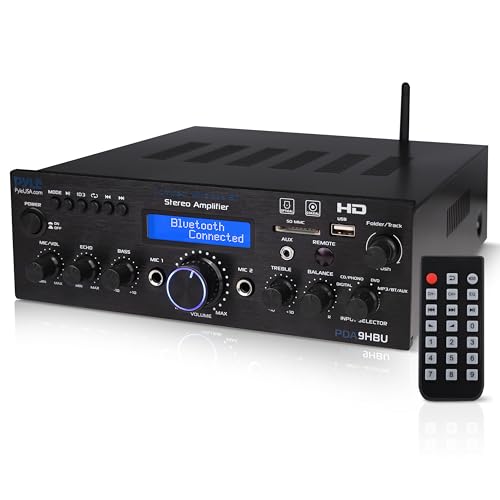
An all-in-one amplifier with broad input support, including a built-in phono preamp, HDMI, optical, coaxial, USB, SD, and Bluetooth. This model suits living rooms or offices where multiple digital and analog sources coexist. Best for: users who want convenient, single-box integration of phono with modern digital inputs. Caution: HDMI functionality is limited to basic passthrough; verify requirements for high-bandwidth video needs.
Denon PMA-600NE Bluetooth Stereo Amplifier
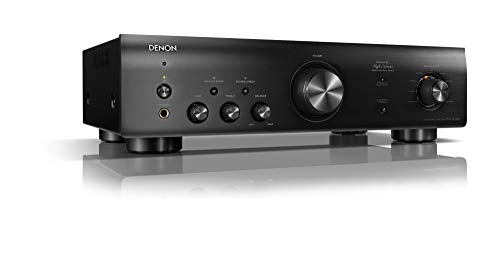
The Denon PMA-600NE is a compact, analog-forward amplifier with a built-in DAC and phono preamp. It supports Bluetooth and provides multiple digital inputs (2 optical, 1 coaxial) plus a phono input. Best for: listeners who value clean analog sound with optional digital sources. Caution: May be less feature-rich for strictly digital or gaming setups; focus on vinyl and classic audio first.
Buying Guide
- Phono stage type: Determine whether you need a MM (moving magnet) or MC (moving coil) phono input. Most affordable amps support MM cartridges; MC support is rarer and often requires a dedicated stage.
- Power and speaker matching: Check your speaker impedance (4–8 ohms) and ensure the amp’s rated power aligns with your speakers for clean, dynamic output without distortion.
- Input versatility: If you own multiple devices, look for multiple RCA inputs, digital inputs, and wireless options like Bluetooth to minimize cable clutter.
- Remote and ease of use: A responsive remote and clear front-panel controls help when switching sources or adjusting tone without reaching for the amp.
- Thermal design and noise: Amps with good heat sinking and quiet operation prevent thermal throttling and unwanted hum at higher volumes.
- Size and placement: Consider room layout; slim profiles fit shelves, while larger units may require extra space for airflow.
FAQ
Do I need a separate phono preamp if my turntable has one built in?
If your turntable includes a built-in phono preamp, you can connect directly to line inputs on many receivers or amps. If not, you’ll need an external phono preamp or an amp with a dedicated phono input.
Is Bluetooth on an amp enough for high-fidelity audio?
Bluetooth is convenient but can introduce compression. For best fidelity, use wired connections when possible, and reserve Bluetooth for casual listening.
Can I run multiple speakers from these amps?
Most listed models support 2-channel stereo with compatible impedance. If you want multi-room or multi-speaker setups, verify speaker configuration options in the product specs.
What’s the difference between an integrated amp and a receiver?
An integrated amp provides amplification and basic preamp functions, while a receiver combines amplification with a built-in tuner and sometimes more streaming features. For vinyl-focused setups, an integrated amp with a phono input is often sufficient.
How important is SN ratio and THD?
Higher SN (signal-to-noise) ratio and lower THD (total harmonic distortion) indicate cleaner sound. These specs matter for critical listening and overall dynamic range.